


Most businesses start looking for Flodesk alternatives not because of design shortcomings, but because they hit operational limits—rigid automation, shallow analytics, limited ecommerce integrations, and a pricing model that no longer undercuts the competition.
This page evaluates 10 email marketing platforms that offer stronger automation workflows, deeper integrations, and more scalable pricing for growing lists. Each option is ranked by overall value, with breakdowns covering free plans, ecommerce capabilities, multichannel features, and migration difficulty to help you find a practical replacement for your business plan.
Capterra, G2, Trustpilot, and Reddit to create an objective evaluation. Learn more about our review methodology
How We Evaluated Flodesk Alternatives
- Automation Depth: We prioritized platforms offering complex conditional logic and multi-path, behavior-based triggers, which go beyond Flodesk’s recently introduced “Yes/No” branching.
- Pricing Scalability: We analyzed cost efficiency as lists grow—a critical comparison now that Flodesk has shifted to a standard tiered pricing model for new users, removing its former “flat-rate” advantage.
- Ease of Migration: We tested how seamlessly contacts, custom templates, and automations transfer from Flodesk, emphasizing platforms that offer dedicated onboarding support.
- Ecosystem & Deliverability: We audited integration breadth (beyond Flodesk’s basic Shopify/Zapier connections) and granular email deliverability controls like custom SPF/DKIM/DMARC authentication.
- Overall Value: We assessed long-term ROI for small-to-mid-sized businesses, determining which tools offer superior features and customer support compared to Flodesk’s design-centric but increasingly expensive ecosystem.
Why Businesses Are Leaving Flodesk
Most businesses don’t leave Flodesk because of design—they leave when operational limits start affecting growth.
The Automation Wall
Flodesk’s streamlined approach breaks down as soon as you attempt to run a complete customer lifecycle. The Lite plan caps you at a single automation workflow, and even on the Pro plan, the lack of native A/B testing within workflows prevents you from optimizing performance.
The moment you need a standard Welcome Series running alongside a separate Lead Magnet delivery—or try to split-test a subject line to improve open rates—the system blocks you.
For a growing business, this matters because you are forced to pay premium prices just to access standard functionality, and without the ability to test and optimize automation paths, you leave revenue on the table by guessing at what converts.
No More “Flat-Rate” Pricing
Arguably one of the best Flodesk’s Features—flat-rate pricing—is no longer available to new users. The “unlimited users and unlimited emails” is gone as of late November 2025, when Flodesk transitioned to tiered, subscriber-based pricing plans.
Pricing now scales with subscriber count, but without the feature depth to justify the jump. For a business hitting 5,000 subscribers, the Lite plan costs significantly more than competitors while offering fewer tools.
This inflates Customer Acquisition Costs without providing revenue-driving features, effectively eating into profit margins as the list grows.
Integration Dead Ends
Flodesk has limited native integrations, no real built-in CRM, and usually needs to be paired with Zapier (or similar tools) for deeper syncing and automation.
That can create a “Zapier tax”: Zapier’s Free plan includes 100 tasks/month and only two-step Zaps, while multi-step automations and conditional logic require paid plans (starting around $240/year billed annually).
It also adds an extra failure point—if a Zap breaks, leads may not sync until it’s fixe—a risk that doesn’t exist on platforms with deeper native integrations like Sender or ActiveCampaign.
Analytics Gaps That Cost Money
The link between email efforts and actual sales breaks because Flodesk provides “vanity metrics” (opens and clicks) rather than deep revenue attribution. At the stage where a business needs to see which specific automation path drove a sale on Shopify or WooCommerce, Flodesk offers no native answers.
You cannot optimize what you cannot measure, letting your email marketing efforts go to waste; without revenue heatmaps or attribution, marketing spend becomes guesswork rather than a calculated investment.
Support Limitations
Flodesk offers limited customer support, as it’s “email only”. This lack of real-time assistance becomes critical during high-traffic moments, specifically during product launches or Black Friday sales when technical glitches are most likely to occur.
In a live launch environment, waiting 24-48 hours for an email response is unacceptable; if an automation misfires or an integration disconnects while your cart is open, the inability to get help via chat transforms a manageable technical glitch into significant revenue loss.
Top Flodesk Competitors At a Glance
| Platform | Best For | Free Plan | Starting Price (lowest paid tier) | Key Strength |
| Sender | SMBs wanting unlimited automation + customer support | Yes | $7/month | Advanced automation & 24/7 human live chat support |
| Klaviyo | High-volume Ecommerce brands | Yes | $20/month | Deep revenue attribution & advanced analytics |
| Kit | Professional creators selling digital products | Yes | $33/month | Native monetization & sponsorship tools |
| ActiveCampaign | Growing teams with complex sales cycles | No | $15/month | Multi-path logic & CRM integration |
| Mailchimp | Beginners needing massive integration lists | Yes | $13/month | 300+ native connections to eliminate Zapier |
| MailerLite | Solopreneurs needing dynamic segmentation | Yes | $7.5/month | Real-time behavior-based list updating |
| Brevo | Budget-conscious multichannel marketers | Yes | $8/month | Integrated SMS, WhatsApp, and transactional mail |
| Beehiiv | Newsletter-first growth & ad revenue | Yes | $43/month | Built-in ad network and referral systems |
| Drip | Mid-market DTC brands | No | $39/month | High-level ecommerce behavior tracking and advanced reporting |
| GetResponse | Educators using funnels + webinars | Yes | $19/month | All-in-one sales funnels and webinar hosting |
Quick Picks: Find the Perfect Flodesk Alternatives Fast
Use this list to quickly match your business needs with the right email marketing platform.
- Best Free Plan: Sender (2,500 subscribers and 15,000 emails/month with full automation access included on the free tier.)
- Best for Ecommerce: Klaviyo (Deep behavioral tracking, predictive analytics, and native revenue attribution for Shopify, BigCommerce, and WooCommerce.)
- Best for Startups/SMBs: Sender (Combined email and SMS marketing with 24/7 live chat support starting at $7/month.)
- Best Budget Option: Brevo (Email, SMS, and WhatsApp from one dashboard with a free tier covering up to 300 emails per day on 100,000 contacts.)
- Best for Enterprise/Agencies: ActiveCampaign (900+ native integrations, built-in CRM, and multi-path automation with conditional logic and lead scoring.)
- Best for Content Creators: Kit (Native monetization tools, paid newsletter support, and seamless integrations with Teachable and Gumroad.)
Top 10 Flodesk Alternatives (Ranked by Value)
Not sure Flodesk is giving your email marketing the results you need? You’re in good company. Let’s take a look at some of the best Flodesk alternatives that will deliver more power and flexibility for your campaigns.
Sender — Best Scalable Email Platform for SMBs
Sender is an email and SMS marketing platform designed for small and mid-sized businesses that need advanced automation features, deliverability, and multichannel capabilities without enterprise-level complexity or cost. It‘s often cited as one of the top Flodesk competitors for small businesses for offering broader functionality at a lower price point.

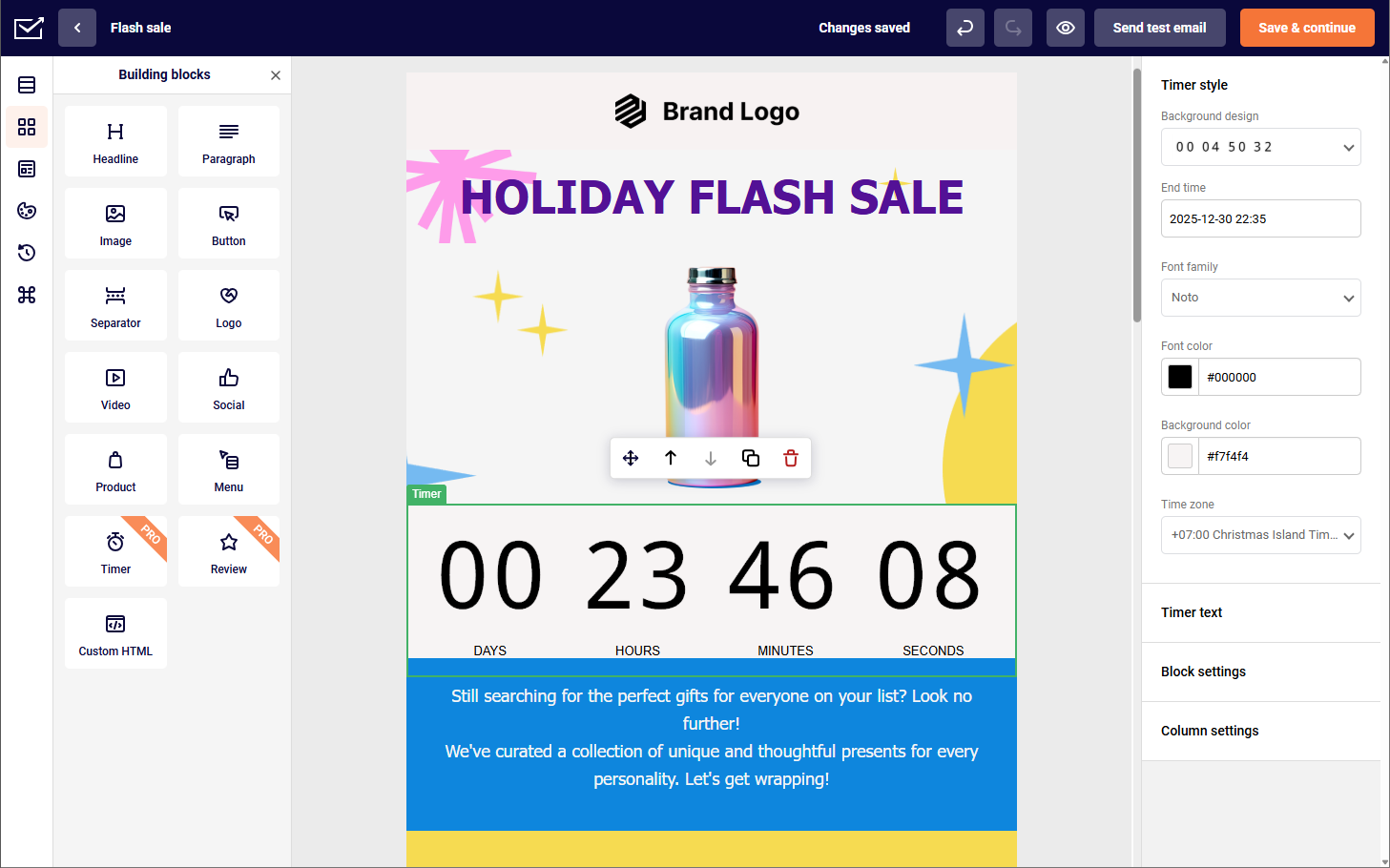
The drag-and-drop builder supports responsive templates comparable in design quality to Flodesk, while also including marketing automation features such as multi-trigger workflows and conditional branching—available even on the free plan. Sender also provides built-in landing pages, signup forms, and advanced segmentation tools across all tiers.
Pricing starts at $7/month for 1,000 subscribers, which includes SMS marketing, landing pages, and advanced automation features. At 5,000 contacts, Sender charges $23/month with marketing automation included, while Flodesk Lite costs $48/month at the same list size without automation. Sender’s free tier covers 2,500 contacts with 15,000 monthly email sends and full automation access.
Customer support is available 24/7 via live chat, with typical response times under 10 seconds. Flodesk currently offers email-only support with response windows of 24–48 hours.
Migration: Easy—CSV/TXT/XLSX import (with field mapping + custom fields).
Key Advantages
- Full automation workflows vs. Flodesk’s limited sequences: Access complex branching logic with unlimited email automation steps, even on the free tier.
- Native transactional emails: Send order confirmations and receipts directly (Flodesk doesn’t offer this).
- Scales pricing based on volume, not flat-rate jumps: Sender offers significantly lower costs for lists over 5,000 subscribers, 5,000 contacts on Flodesk Lite costs $48/month, while Sender charges $23/month and also includes advanced automation.
- Dedicated IP Address availability: Sender offers Dedicated IPs on Professional plans, this gives you 100% control over your sender reputation. Flodesk does not offer dedicated IP addresses at all.
- 24/7 Live Chat vs. Flodesk’s Email-Only Support: While Flodesk users wait 24–48 hours for an email reply, Sender provides real-time troubleshooting to keep your campaigns running.
Key Features
- Intuitive drag-and-drop editor with customizable templates;
- Robust automation builder with multi-trigger workflows;
- Built-in landing pages and signup forms;
- Email A/B testing up to 8 variations;
- Detailed analytics and reporting tools;
- Seamless ecommerce store integration (Shopify, WooCommerce, etc.).
Best For
Sender is best for SMBs, ecommerce business owners, and startups looking for maximum value without sacrificing features. Ideal for budget-conscious marketers who need robust marketing automation, email and SMS marketing capabilities, and excellent deliverability without enterprise pricing.
Sender pricing
Here’s an overview of Sender’s pricing:
- Free: $0 (2,500 contacts—15,000 emails/month);
- Standard: $7/month (1,000 contacts—12,000 emails/month);
- Professional: $14/month (1,000 contacts—24,000 emails/month);
- Enterprise: Custom pricing.
How to Migrate from Flodesk to Sender
- Export & Import: Export your Flodesk segments as a CSV and upload them to Sender using the intuitive field mapper.
- Recreate Automations: Use Sender’s visual workflow builder to rebuild your sequences with added conditional logic.
- Update Forms: Replace Flodesk forms with Sender’s high-converting popups or embedded forms.
- Authenticate Domain: Set up your SPF, DKIM, and DMARC records within Sender to protect deliverability.
- Get Free Migration Support: Message Sender’s 24/7 live chat for migration assistance.
See why businesses choose Sender:
Klaviyo — Ecommerce Automation & Revenue Tracking
Klaviyo is the go-to email marketing solution for ecommerce businesses. With tailored features including advanced email segmentation capabilities and predictive product recommendations, it’s one of the best ecommerce email marketing tools on the market.

From my experience settling the Flodesk vs. Klaviyo standoff, its behavioral targeting went far beyond Flodesk’s basic subscriber management. I could create email campaigns based on purchase history, browsing behavior, and customer lifetime value—data Flodesk doesn’t natively capture at the same level.
Advanced automation workflows for product recommendations and browse abandonment sequences make it possible to react to real shopping behavior, not just email engagement, which is where Flodesk still shows clear limitations for ecommerce sites.
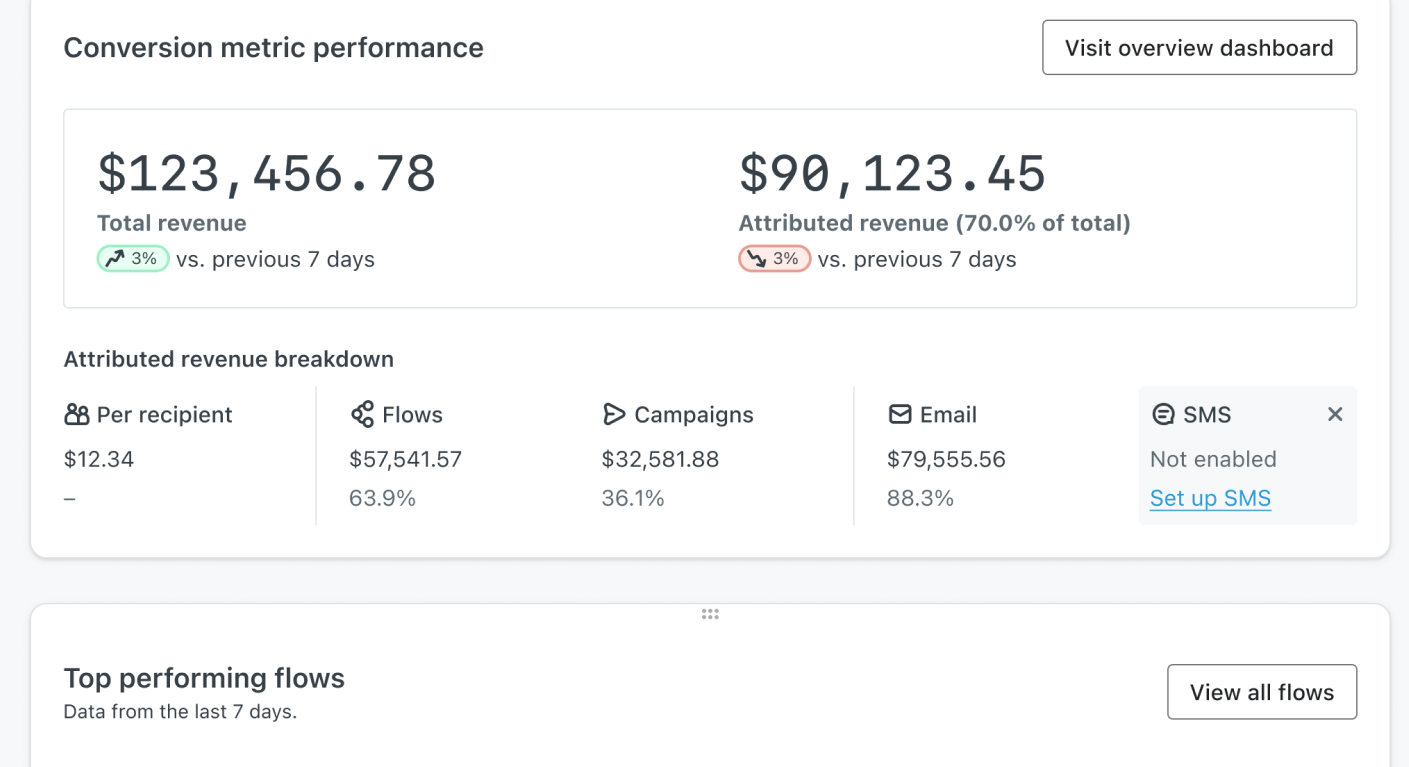
While more complex than Flodesk, the ROI justifies the investment. Revenue attribution shows exactly which emails drive ecommerce sales—offering far deeper insights than Flodesk’s basic email analytics, making Klaviyo one of the top Flodesk alternatives for ecommerce.
Migration: Moderate—self-serve imports + guides; agencies/partners available.
Key Advantages
- Direct Revenue Attribution: Track exactly how many dollars each email generates in your store. Flodesk only tracks opens and clicks, leaving you guessing about your actual ROI.
- Predictive Analytics (AI): Automatically identify your highest-value customers and “at-risk” churners using AI—data Flodesk doesn’t capture.
- Deep Ecommerce Triggers: Trigger automated emails based on specific products viewed or items left in a cart. Flodesk’s Shopify integration is more limited.
Key Features
- Advanced segment builder with “And/Or” logic;
- Personalized product recommendation blocks;
- Native SMS and Push Notification synchronization;
- Integration with major ecommerce platforms (Shopify, BigCommerce, WooCommerce).
Best For
Klaviyo is best suited for ecommerce stores serious about maximizing revenue through email. Ideal for Shopify, BigCommerce, and WooCommerce online stores that need deep user behavior tracking, predictive analytics, and revenue attribution.
Klaviyo pricing
- Free: $0 (250 contacts—500 email sends);
- Email: $20/month (500 contacts—5,000 emails/month);
- Email+SMS: $20/month (500 contacts—5,000 emails/month);
- Enterprise: Custom price.
Kit (ConvertKit) — Built for Content Creators
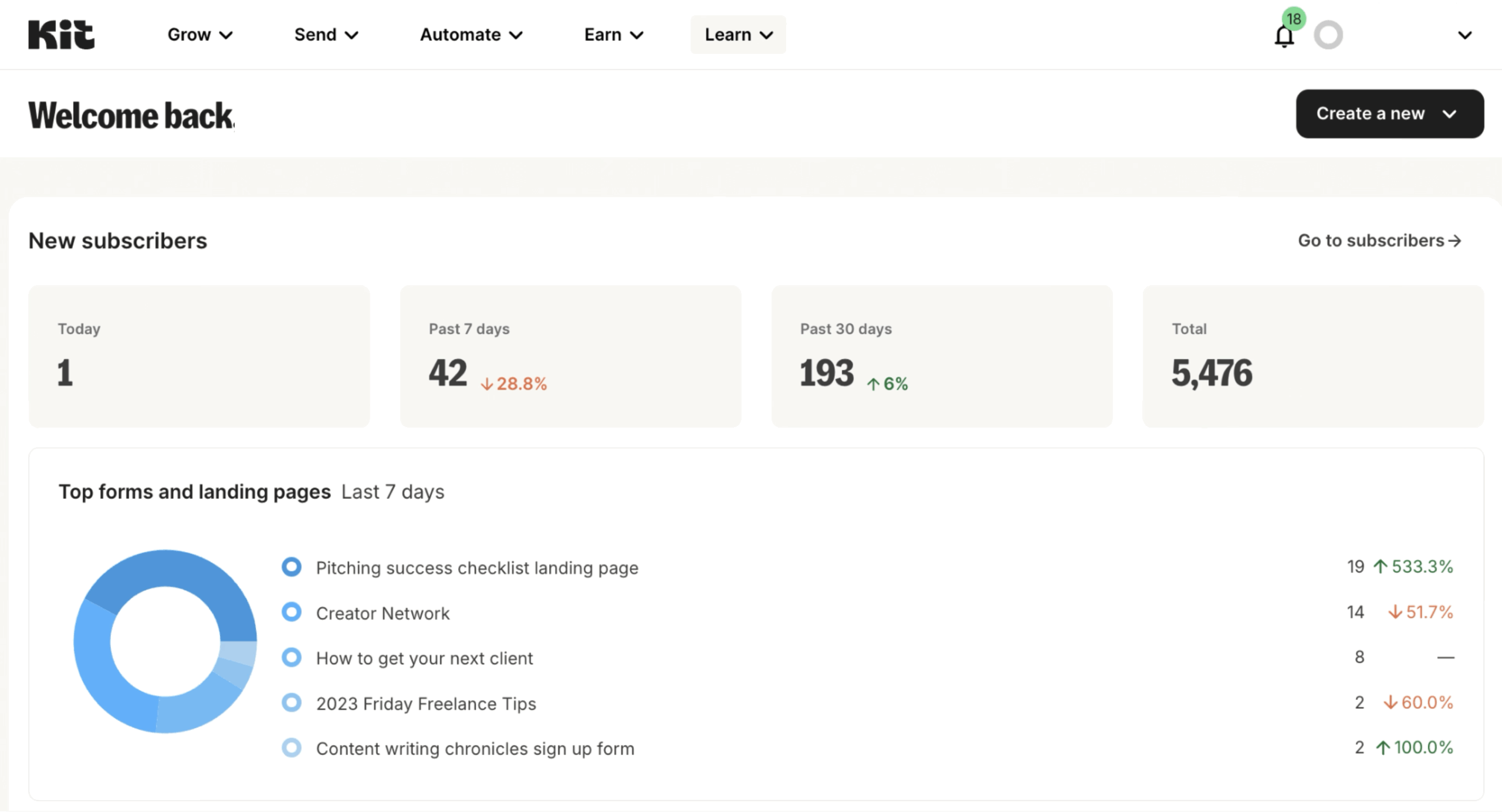
Kit is widely known as the top email marketing software for creators. Its tagging system organizes subscribers intuitively by interests, engagement, and purchase history—a feature that already gives this Flodesk alternative an upper hand in the Flodesk vs. Kit debate.

I loved how Kit’s automation templates cater to creator scenarios like course launches and content upgrades. Unlike Flodesk’s basic welcome emails—even if they look sleek and eye-catching—with Kit I could build sophisticated nurture sequences that guide subscribers through the entire engagement journey.
The creator economy integrations work seamlessly with course platforms and membership sites like Teachable and Thinkific. While the interface feels less polished than Flodesk’s design-first approach, Kit’s functionality actually helps creators monetize audiences effectively rather than just looking good in inboxes.
Migration: Easy—Free migration service on paid plans for accounts with 5,000+ subscribers (self-serve imports available for everyone).
Key Advantages
- Built-in Ad Network & Sponsorships: Monetize your list directly through Kit’s sponsorship network. Flodesk is strictly a “send” tool and offers no internal revenue streams.
- Visual Automation Rules: Set up “If/Then” rules that work across your entire account, not just within one sequence.
- Newsletter Recommendation Network: Grow your list for free by partnering with other creators. Flodesk provides no internal growth tools, leaving “list building” entirely to you.
Key Features
- Text‑focused email editor with minimalistic templates;
- Tagging‑based subscriber organization;
- Built‑in creator monetization tools (tips, subscriptions);
- Automation sequences designed for creator workflows.
Best For
Kit offers advanced tools for content creators, bloggers, podcasters, course creators, and coaches who want to build and monetize their audience. It’s perfect for creators selling products in digital form, online courses, or paid newsletter subscriptions who value simplicity over complex marketing features.
Kit pricing
- Free Newsletter plan: $0 (10,000 contacts—Unlimited sends);
- Creator: $33/month (1,000 contacts—Unlimited sends);
- Creator Pro: $66/month (1,000 contacts—Unlimited sends).
ActiveCampaign — Complex Automation for Growing Teams
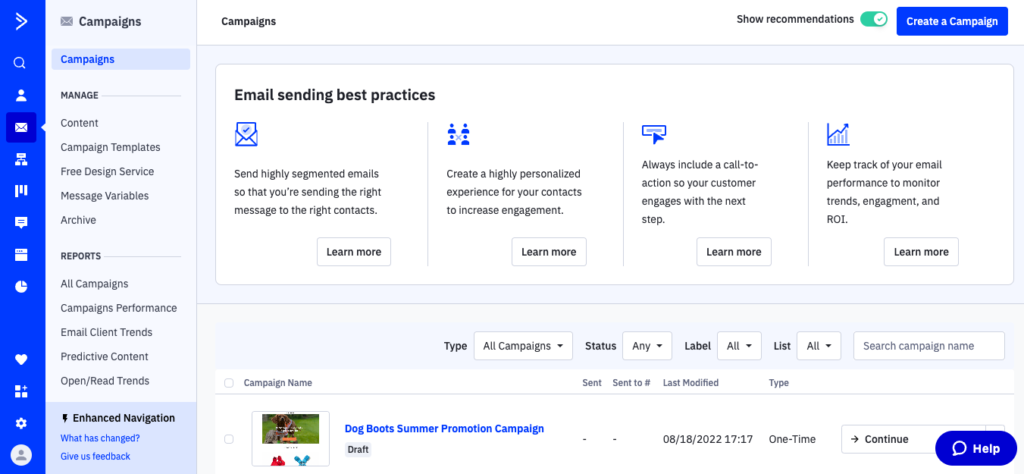
ActiveCampaign offers advanced marketing automation capabilities that go far beyond Flodesk’s simpler tools, enabling the creation of sophisticated automated workflows with conditional logic to manage complex business processes.
Built-in CRM tools let you manage customer relationships beyond basic email metrics. Machine learning optimizes everything from send times to content, while predictive analytics identify churn risks and upgrade opportunities—insights I found to be completely absent from Flodesk.
I’ve built marketing funnels with ActiveCampaign that would require multiple tools or third-party integrations elsewhere. The learning curve is steeper than Flodesk, but for teams ready to invest in advanced capabilities, ActiveCampaign delivers enterprise functionality that shouldn’t be overlooked by businesses looking for cost-effective Flodesk alternatives for marketing automation.
Migration: Moderate—Free migration/onboarding is available.
Key Advantages
- Omnichannel Multi-Path Logic: Create complex journeys that include SMS, site messages, and Facebook Custom Audience updates. Flodesk is limited to simple linear email sequences.
- Integrated Sales CRM tools: Manage your leads and sales pipeline in the same place as your marketing. Flodesk lacks any CRM functionality.
- Split Testing within Automations: You can test entire workflow paths, experiment with different wait times or sequence orders to find the highest-converting path, a level of optimization Flodesk’s linear sequences can’t provide.
Key Features
- Visual automation builder with conditional logic;
- Integration with 900+ third‑party apps;
- SMS and email multi‑channel automation;
- Dynamic content blocks in email campaigns.
Best For
ActiveCampaign is the go to platform for small business owners and marketing teams that need sophisticated automated workflows and CRM integration to nurture personal customer relationships. Ideal for B2B companies, agencies, and teams with complex customer journeys requiring conditional logic, lead scoring, and sales automation.
ActiveCampaign pricing
- 14-day free trial: $0 (1,000 contacts—100 email sends);
- Starter plan: $15/month (1,000 contacts—10,000 emails/month);
- Plus plan: $49/month (1,000 contacts—10,000 emails/month);
- Pro plan: $79/month (1,000 contacts—12,000 emails/month);
- Enterprise: $145/month (1,000 contacts—15,000 emails/month).
Mailchimp — Beginner-Friendly Email Marketing Platform
Mailchimp, one of the veterans of email marketing, remains a popular choice for small businesses taking their first steps beyond Flodesk. It features an easy-to-use interface while offering significantly more sophisticated automation, making it one of the best visual email builder alternatives to Flodesk.

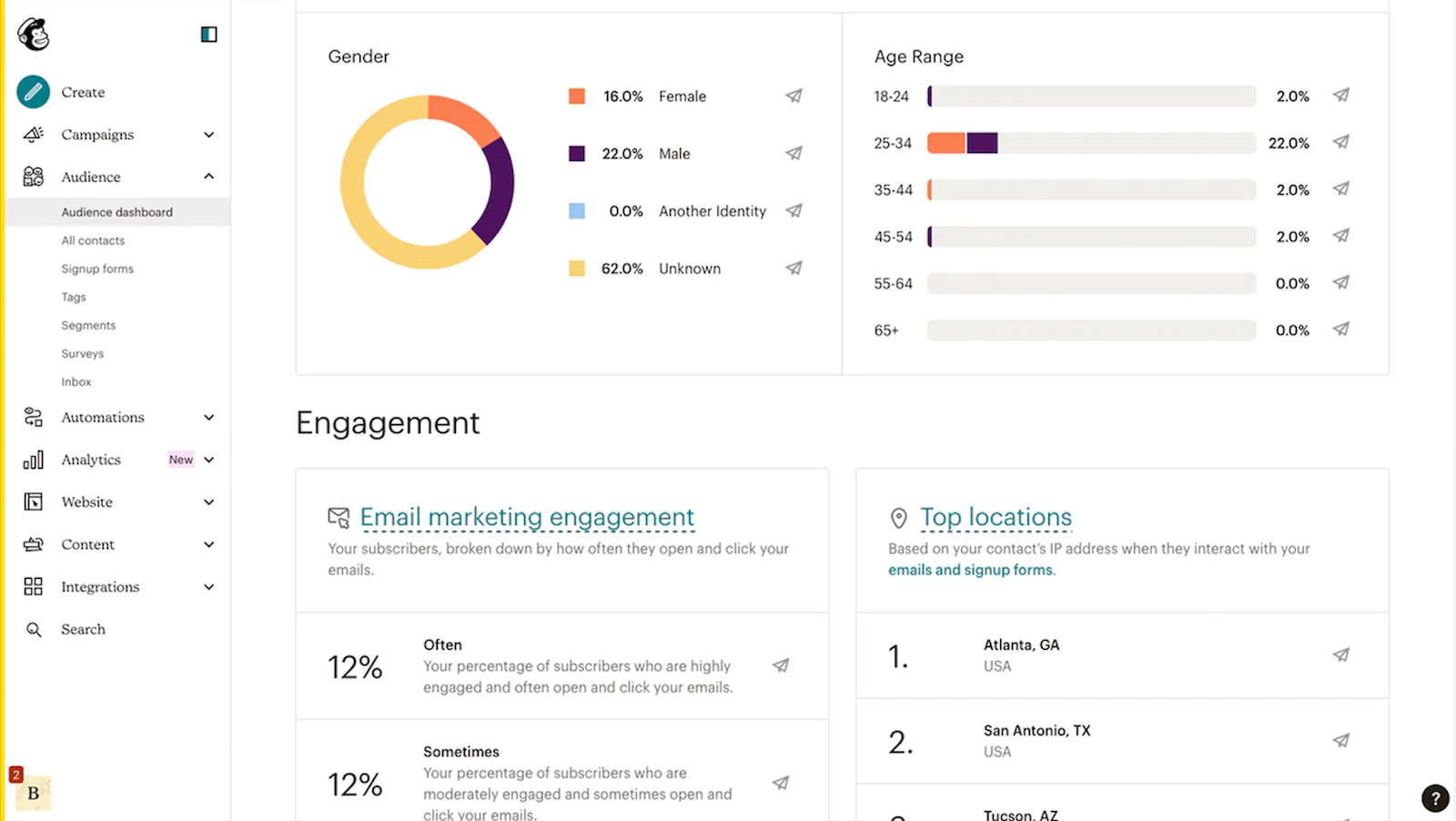
The first thing that struck me was how intuitive Mailchimp’s drag-and-drop email automation builder is—you can create behavior-based sequences without technical expertise. Meanwhile, the reporting dashboard provides useful, data-driven insights without overwhelming newcomers.
The integration ecosystem is Mailchimp’s biggest advantage in the Flodesk vs. Mailchimp debate. I’ve connected everything from my CRM to ecommerce platforms without a steep learning curve.
The main drawback is that Mailchimp’s costs escalate quickly with list growth (and they count inactive subscribers too), making it expensive for larger databases compared to Flodesk alternatives like Sender or MailerLite.
Migration: Easy—Built-in import tools and extensive documentation.
Key Advantages
- 300+ Native Integrations: Connect to almost any software without needing Zapier.
- Dynamic Content Blocks: Show personalized text or images to specific segments within a single email. While Flodesk requires sending separate campaigns to different groups, Mailchimp lets you toggle block visibility for automated relevance in one send.
- Advanced Reporting: Access heatmaps and comparative data to see which links are performing over time.
Key Features
- Visual Customer Journey Builder;
- Drag-and-Drop editor with user-friendly interface;
- Basic CRM for managing audience demographic data;
- Social media ads management and post scheduling;
- Built‑in customizable templates and creative assets.
Best For
Mailchimp is often the pick of beginners and small businesses looking for a recognizable brand with an easy learning curve. Ideal for teams that need extensive third-party integrations and a polished template library.
Mailchimp pricing
- Free plan: $0 (250 contacts—500 emails/month);
- Essentials: $13/month (500 contacts—5,000 emails/month);
- Standard: $20/month (500 contacts—6,000 emails/month);
- Premium plan: $350/month (10,000 contacts—150,000 emails/month).
MailerLite — Lightweight Email Marketing for Small Teams
MailerLite strikes the ideal balance, combining email marketing software capabilities and user-friendly design that’s often attributed to Flodesk. The user-friendly interface maintains visual appeal while adding enterprise-level features that actually work.

MailerLite’s automation builder uses intuitive workflows that make sense immediately, there’s no steep learning curve. I was able to create automated sequences based on subscriber behavior and engagement, and with ecommerce integrations in place, even tailor segments and messages around purchase history, helping me optimize for more personalized email campaigns. Compared to Flodesk, the automation and segmentation options felt broader and easier to scale without relying on workarounds.
What won me over in the Flodesk vs. MailerLite discourse was how MailerLite balances power with simplicity. Advanced segmentation feels natural, and the free tier is genuinely usable—letting businesses send campaigns, run automations, and learn what actually works before committing.
Compared to Flodesk’s Free plan that doesn’t even allow email sends, MailerLite feels like a real starting point rather than a locked demo.
Migration: Easy—Dedicated import tools and migration guides.
Key Advantages
- Retroactive Segmentation: Create a new segment and instantly pull in all historical data. In Flodesk, you often have to manually filter and “bulk-move” people to update groups.
- Workflow A/B Testing: Optimize your results by split-testing entire steps within an automation. While Flodesk limits testing to subject lines, MailerLite lets you test wait times, sequence orders, or email versions to determine the highest-converting path.
- Built-in Website & Blog Builder: Go beyond landing pages. Build a full-functioning website with SEO tools included. Flodesk only offers “Link in Bio” style pages.
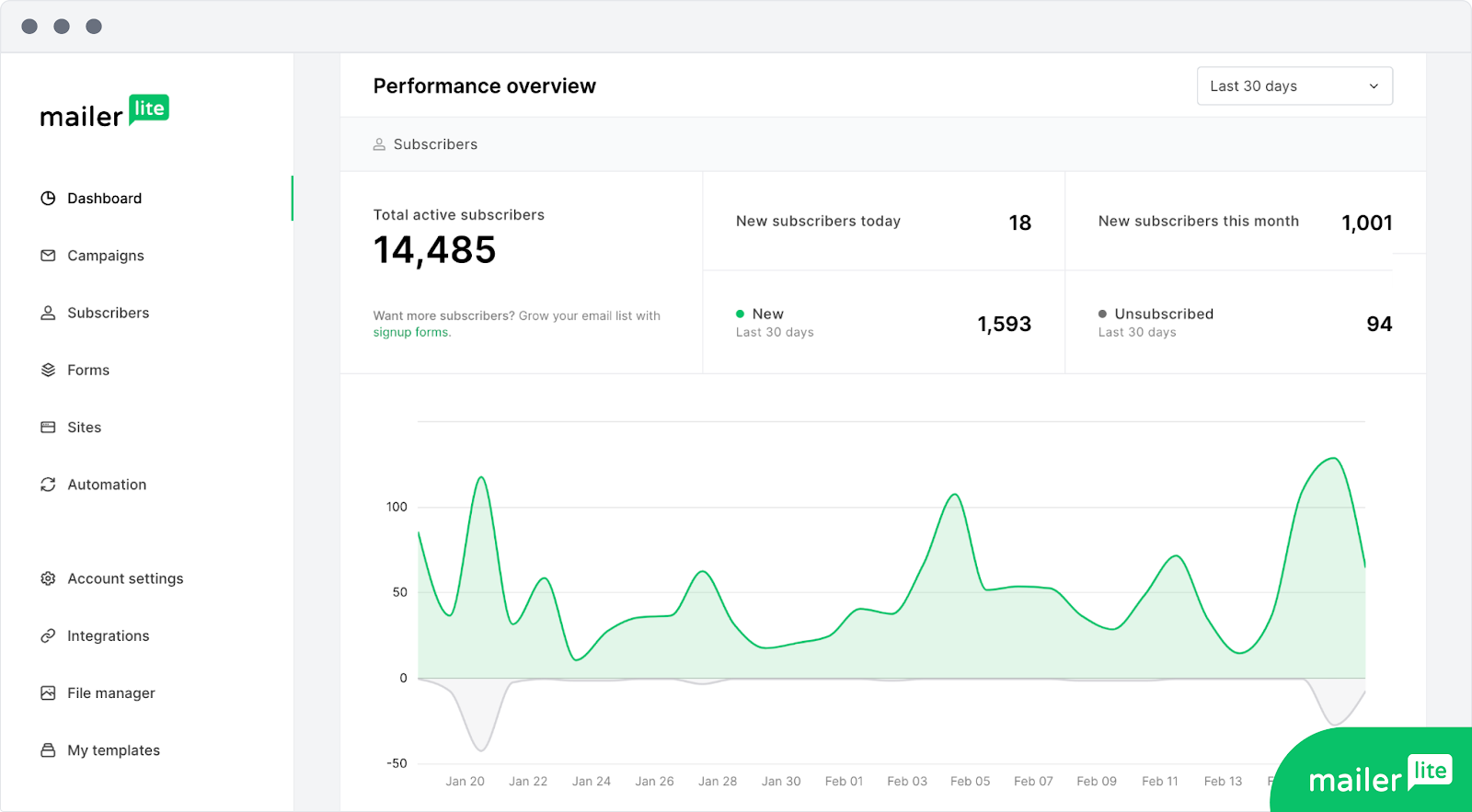
- Click-Map Analytics: See exactly where people are clicking in your emails to optimize your layout. Flodesk provides only basic stats.
Key Features
- Interactive content blocks (quizzes, surveys);
- Drag‑and‑drop editor with a user-friendly interface;
- Multi-trigger Automations;
- Embedded forms and pop‑ups for lead capture.
Best For
MailerLite is best for small businesses, freelancers, and solopreneurs who want professional email marketing without complexity or high costs. Perfect for those looking for Flodesk alternatives that have similar design quality with better automation and pricing.
MailerLite pricing
- Free forever plan: $0 (500 contacts—12,000 emails/month);
- Growing Business: $7.5 (500 contacts—Unlimited email sends);
- Advanced: $15/month (500 contacts—Unlimited email sends);
- Enterprise: Custom price.
Brevo — Multichannel Email Campaigns on a Budget
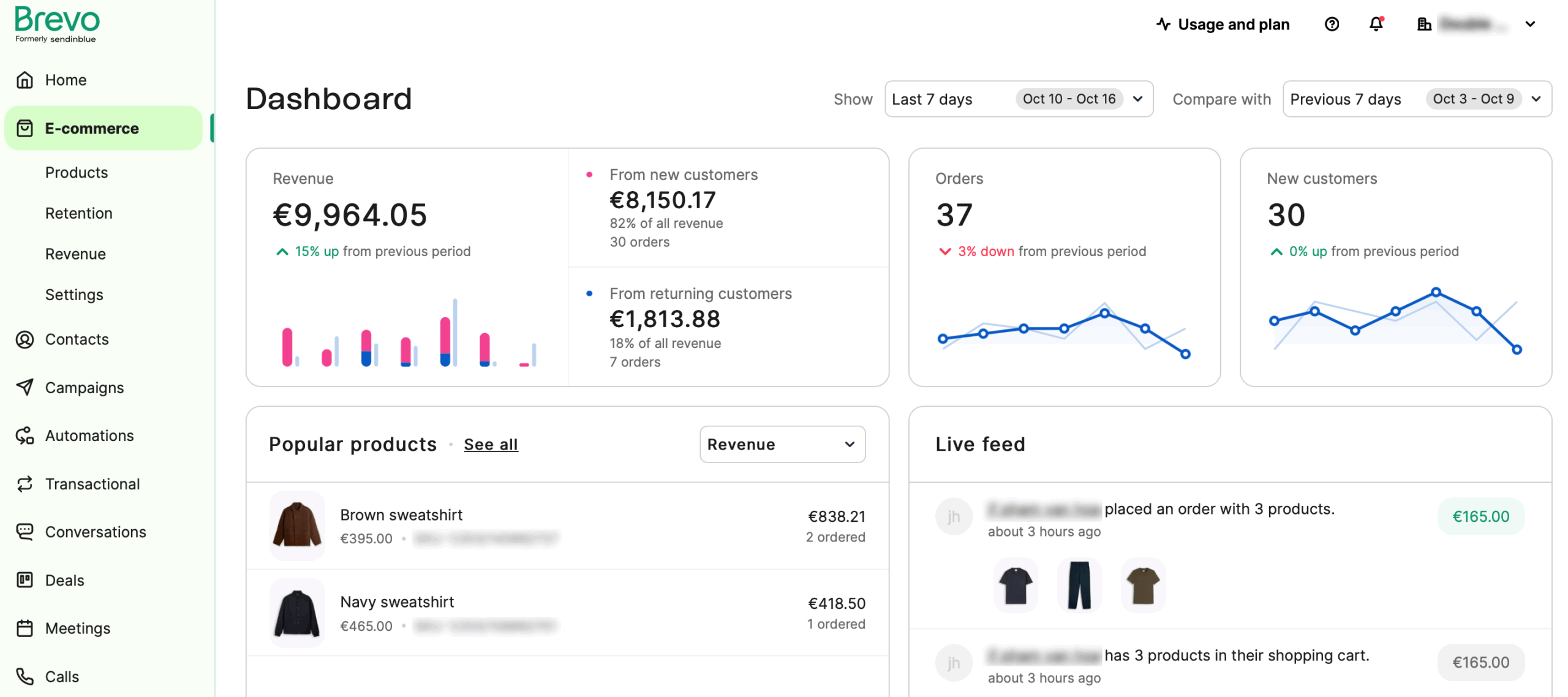
Brevo combines email, SMS, and chat marketing in one affordable platform. The unified experience eliminates tool switching while providing cross-channel insights.
Brevo is built for cross-channel journeys, not just pretty emails. I could trigger SMS or WhatsApp follow-ups based on email engagement—and even route real-time conversations through live chat—all inside the same platform. It also feels like a more complete marketing stack, with built-in CRM components and transactional messaging support that Flodesk simply isn’t designed to handle.
While its automation isn’t as deep as ActiveCampaign’s enterprise-grade workflows, Brevo delivers a lot of capability for the price—especially if you want Flodesk alternatives with true multichannel marketing without paying purely based on contact count.
Migration: Easy—CSV import with field mapping.
Key Advantages
- True Multichannel Marketing (WhatsApp & SMS): Brevo allows you to send native WhatsApp and SMS campaigns from the same dashboard as your email. Flodesk is strictly limited to email.
- Integrated Sales CRM & Deal Pipeline: Brevo includes a built-in CRM where you can manage “Deals” and sales stages—functionality that is completely absent in Flodesk.
- Heatmap Reporting & Advanced Analytics: Get valuable insights on where users are clicking within your layout with visual heatmaps. Flodesk provides only high-level percentage data, making it harder to optimize your customer interactions for actual conversions.
Key Features
- Native transactional email (SMTP/API) support;
- Real-time Live Chat and Chatbots for your website;
- “Send Time Optimization” powered by machine learning;
- Landing Pages & Signup Forms for lead capture and list growth.
Best For
Brevo is best for Small business owners and lean marketing teams that want multichannel messaging (email + SMS/WhatsApp) and a broader “marketing stack” feel (automation, CRM features, and transactional messaging) in one place.
Brevo Pricing
- Free plan: $0 (100k contacts—300 emails/day);
- Starter: $8/month (500 contacts—5,000 emails/month);
- Standard plan: $16/month (500 contacts—5,000 emails/month);
- Professional plan: $449/month (2M contacts—150,000 emails/month);
- Enterprise: Custom price.
Beehiiv — Newsletter-First Platform for Audience Growth
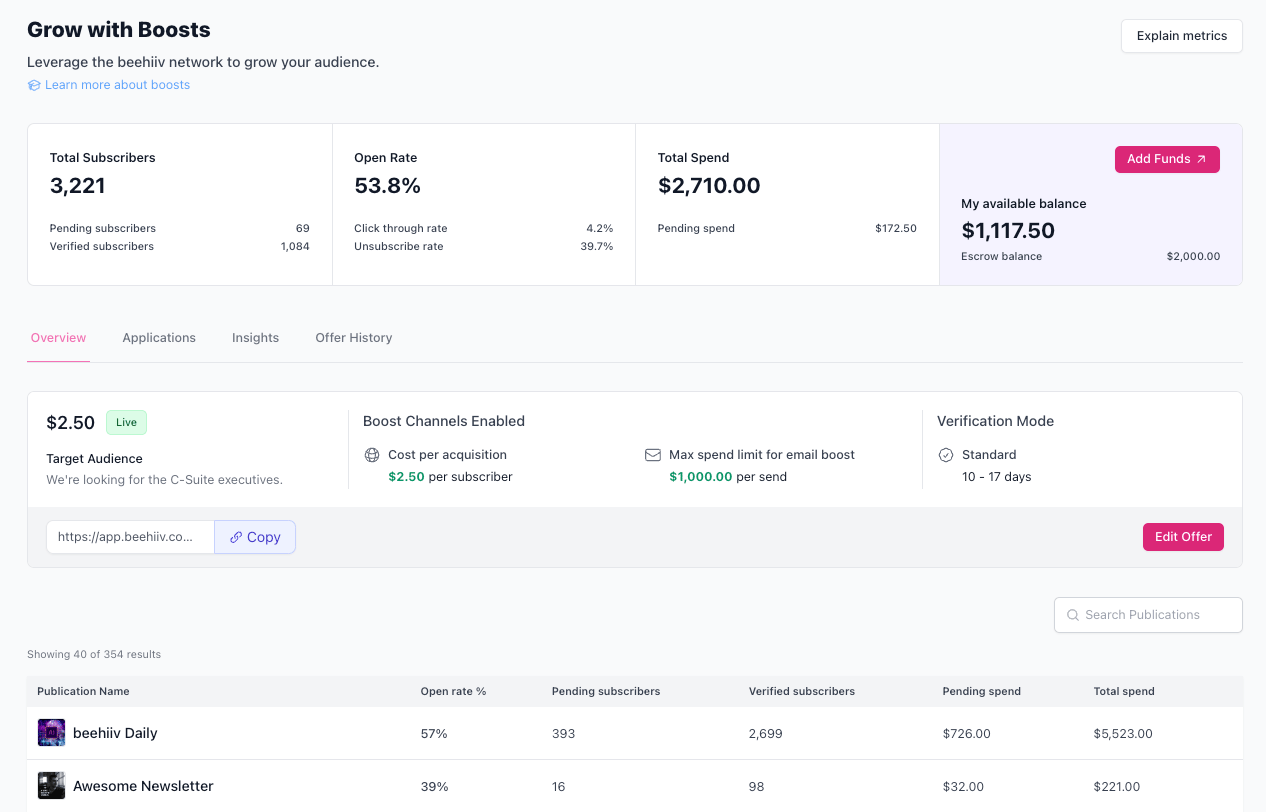
Beehiiv focuses on one thing: helping newsletter creators grow and monetize. While most email platforms treat newsletters as an afterthought, Beehiiv builds everything around them—ad networks, paid subscriptions, Boosts, customer survey functionality, referral programs, and audience growth tools included.

What impressed me most is how Beehiiv treats monetization as a core feature, not an add-on. The Ad Network matched me with relevant sponsors, the Boost feature pays you to recommend other newsletters, and paid subscriptions take zero platform cut—just Stripe’s processing fee.
The growth tools actually deliver. I’ve seen referral programs drive organic signups, and every newsletter automatically gets an SEO-optimized web version that brings in search traffic. For creators serious about building a media business, Beehiiv removes the usual friction between “growing an audience” and “making money from it.”
Migration: Moderate—Import tools available, some manual setup required.
Key Advantages
- Built-in Referral Program: Beehiiv includes a native referral system that rewards readers for inviting friends—a viral growth feature that Flodesk completely lacks.
- SEO-Optimized Web Presence: Every newsletter you send is automatically published as a high-quality blog post indexed by Google. While Flodesk emails “disappear” after they are sent, Beehiiv content continues to drive organic search traffic to your brand.
- Advanced Audience Polls & Surveys: Embed interactive polls directly in your emails to collect data and segment your audience based on their answers. Flodesk requires third-party form tools to achieve this level of subscriber insight.
Key Features
- Premium subscription tiers (0% platform fees aside from Stripe);
- Detailed analytics for engagement and attribution tracking;
- Referral and viral growth tools;
- Custom web domains and newsletter-first website templates.
Best For
Beehiiv is well suited for newsletter creators and media companies focused on audience growth and monetization. Ideal for independent journalists, content creators, and publishers who want built-in revenue streams through ads, sponsorships, and paid subscriptions without platform fees.
Beehiiv Pricing
- Launch (Free) plan: $0 (2,500 contacts—Unlimited sends);
- Scale plan: $43/month (1,000 contacts—Unlimited sends);
- Max plan: $96/month (1,000 contacts—Unlimited sends);
- Enterprise: Custom price.
Drip — Ecommerce Automation Specialist
Drip positions itself as the email automation platform built specifically for ecommerce brands. Behavior-based automations, revenue tracking, and native store integrations come standard—making it a strong fit for online brands looking for Flodesk alternatives that want serious email capabilities without the enterprise price tag or unnecessary complexity.
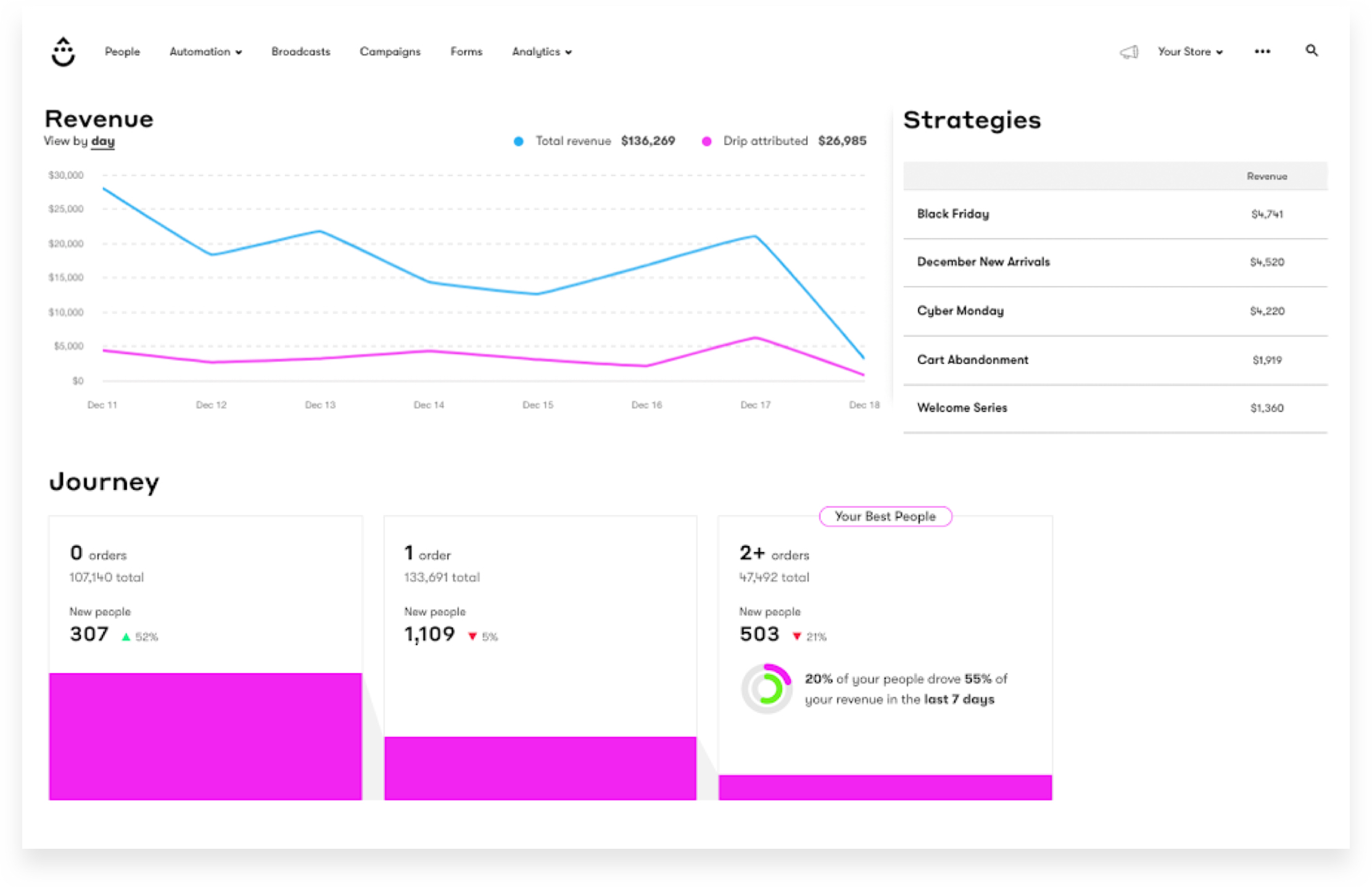
Drip’s visual workflow builder made creating complex marketing automation sequences surprisingly intuitive. Pre-built playbooks for ecommerce scenarios—welcome series, abandoned cart, post-purchase—get you running quickly without starting from scratch.
Where Drip really clicked was behavioral segmentation. I could target customers based on what they browsed, what they bought, and how they engaged—without stitching together workarounds.
With native store integrations and the Shopper Activity API, Drip captures on-site behavior even for custom storefronts, and its revenue attribution factors in email clicks and on-site interactions to show which campaigns actually drive sales. For stores ready to get serious about email, that level of visibility changes how you think about every send.
Migration: Easy—Free migration support for lists over 17,500 contacts.
Key Advantages
- Dynamic “Shopper” Profiles: Drip builds a profile of every user’s browsing history on your site, allowing you to send more personalized campaigns. Flodesk only knows if they opened an email.
- Detailed Revenue Attribution: See exactly how much money each individual automation and email generated for your store. Flodesk lacks deep revenue tracking for external stores
- Hyper-Personalization: Use “Liquid” code to show different products to different people in the same email.
Key Features
- Deep native integrations with Shopify and BigCommerce;
- Visual workflow builder;
- On-site pop-up builder with behavioral triggers;
- Advanced segmentation features;
- A/B testing for subject lines and automation steps.
Best For
Growing ecommerce brands that need powerful automated workflows without Klaviyo’s premium pricing. Ideal for DTC brands, online course sellers, and small businesses selling physical or digital products who want behavior-based email segmentation.
Drip Pricing
- Starts at $39/month (2,500 contacts—Unlimited sends).
GetResponse — Email Marketing with Funnels & Webinars
GetResponse has evolved from a simple email marketing platform into a comprehensive marketing platform that combines email, webinars, funnels, and even course creation under one roof, making it an attractive choice among Flodesk alternatives.
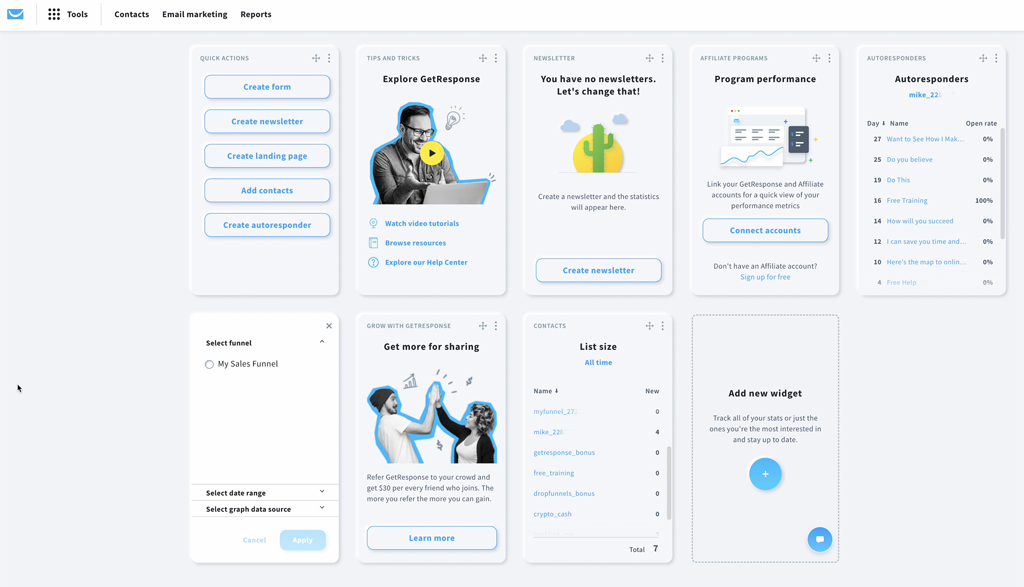
GetResponse fills gaps Flodesk doesn’t even try to address. It bundles webinars, conversion funnels, and advanced automation capabilities in one platform—so you’re not forced into extra subscriptions or a patchwork of third-party tools.
What surprised me was how connected it feels. I could create landing pages, plug them into a funnel, run a webinar, and automate follow-ups and conversion tracking from the same dashboard. And with the Creator plan adding course creation and premium newsletters, it becomes a much more complete “creator + marketing” stack than anything you can realistically build inside Flodesk.
Migration: Easy—Built-in migration tools and 24/7 customer support.
Key Advantages
- All-in-One Sales Funnels: Build your landing pages, set up a webinar, and automate follow-ups in one visual flow. Flodesk only handles the email part.
- Native Webinar Hosting: Host live or on-demand webinars for up to 1,000 attendees without a separate Zoom or Demio subscription.
- AI Campaign Generator: Describe your business, and the AI builds your entire landing page, email sequence, and ads automatically.
Key Features
- Advanced automation capabilities with unlimited triggers and conditions;
- Landing pages and conversion funnel builder (one landing page builder on the free plan);
- Google and Meta ad management within the platform;
- SMS and Web Push notifications.
Best For
GetResponse is best for businesses wanting an all-in-one marketing platform that combines email, webinars, funnels, and course creation. Perfect for coaches, consultants, and educators who need webinar hosting alongside email marketing, and creators looking to monetize content.
GetResponse Pricing
- Free tier: $0 (500 contacts—2,500 emails/month);
- Starter plan: $19/month (1,000 contacts—Unlimited sends);
- Marketer plan: $59/month (1,000 contacts—Unlimited sends);
- Creator plan: $69/month (1,000 contacts—Unlimited sends);
- Enterprise: Custom pricing.
FAQs
Why are businesses switching away from Flodesk?
Most businesses leave Flodesk after reaching operational limits rather than design issues. Common triggers include capped automation workflows on lower plans, the absence of native A/B testing within sequences, limited analytics that track opens and clicks but not revenue attribution, and a pricing model that now scales with subscriber count without a corresponding increase in features. These gaps become costly as lists grow beyond a few thousand contacts.
Which of the Flodesk alternatives is best for ecommerce stores?
It depends on the scale and complexity of the store. Klaviyo offers native revenue attribution, predictive analytics, and deep behavioral triggers for Shopify and WooCommerce, making it a common choice for data-driven ecommerce stores.
Sender also supports ecommerce integrations with Shopify and WooCommerce alongside built-in SMS, at a lower price point suited to small businesses and online stores, making it one of the cheapest Flodesk alternatives.
Is there a free email marketing platform with full automation?
Sender offers a free plan that includes 2,500 contacts, 15,000 monthly email sends, and access to multi-step automation workflows with conditional logic. Most other email marketing tools with free plans either restrict automation to paid tiers or impose significant limits on the free tier.
Flodesk’s free tier, by comparison, allows template building but does not support sending basic email campaigns, making it less functional as a starting point.