


Choosing the right newsletter platform can be challenging given the wide range of tools available and the differences in features, pricing, and ease of use. Identifying the best fit often requires comparing how platforms handle core newsletter needs such as content creation, audience management, and delivery.
That said, this guide provides a structured newsletter platform comparison based on practical evaluation. Below you’ll find the list of hand-picked platforms, each great in their own unique way, followed by a breakdown of their features.
Best Newsletter Platforms: The Fast Verdict
| Your situation | Go to |
| Starting a text-first creator newsletter | Beehiiv or Substack |
| Running a Shopify or WooCommerce store | Omnisend |
| Starting from zero with a tight budget | Sender or Mailchimp |
| Building complex B2B automation sequences | ActiveCampaign |
| Care most about beautiful, branded emails | Flodesk |
| Need CRM + email in one place | HubSpot |
| Sending occasionally to a large list | Brevo |
| Want the cheapest high-volume sending (technical setup OK) | MailBluster |
| Need email + webinars + funnels in one tool | GetResponse |
| Running events or nonprofit communications | Constant Contact |
| Want polished templates + client reporting | Campaign Monitor |
How We Tested Newsletter Platforms
Each newsletter platform was tested on its entry-level paid plan, with a standardized 1,000-contact list (where applicable) that had interacted with a newsletter in the last 90 days.
Features evaluated per platform:
- Email builder
- Automation depth (trigger types, conditional logic, branching)
- List/segment management
- Form builder
- Email deliverability
- Support responsiveness on the entry-level plan
- Customer reviews (G2, Capterra, Trustpilot, Reddit)
- Pricing model
Deliverability testing: We used third-party data to evaluate deliverability, relying on tools like GlockApps and EmailTooltester to benchmark inbox placement, spam rates, and domain reputation. Tests were conducted in-house using identical campaign setups across platforms to ensure consistency.
User reviews: We gathered customer feedback from platforms like G2, Trustpilot, and Capterra, analyzing recurring themes, such as ease of use, support quality, pricing transparency, and feature reliability. To avoid cherry-picking, we focused on patterns across a large volume of recent reviews and balanced both positive and negative feedback to reflect real user sentiment.
What was not tested: Enterprise features (SSO, dedicated IPs, custom SLAs), SMS sending at volume, and transactional email infrastructure beyond basic SMTP. This review is aimed at SMBs, independent creators, and agencies with lists of up to 50,000 contacts.
Pricing methodology: All pricing is verified as of May 2026. Annual billing discounts are noted separately from monthly pricing, with all prices being shown in USD. We highly recommend analyzing each platform’s pricing page directly before purchasing a subscription.
Capterra, G2, Trustpilot, and Reddit to create an objective evaluation. Learn more about our review methodology
Top 13 Newsletter Platforms at a Glance
| Platform | Starting at | Free plan | Best for | Deliverability score | Our rating |
| Sender | $7/mo | Yes – 2,500 subscribers, 15,000 emails/mo | SMBs, ecommerce brands, content marketers | 90% | 4.8/5 |
| Omnisend | $16/mo | Yes – 250 contacts, 500 emails/mo | DTC brands, retailers, subscription businesses | 75.1% | 4.6/5 |
| MailBluster | $0.60 per 1,000 emails | Yes – 3,000 email sends (one-time) | Startups and small businesses | N/A | 4.6/5 |
| Mailchimp | $10/mo | Yes – 250 contacts, 500 emails/mo | Solopreneurs, beginners, local businesses | 89.5% | 3.8/5 |
| Constant Contact | $12/mo | No – 30-day trial only | Nonprofits, small teams, event-based businesses | 91.7% | 4.2/5 |
| GetResponse | $15/mo | No – 14-day trial only | Educators, coaches, marketing teams | 89.5% | 4.1/5 |
| Beehiiv | $43/mo | Yes – 2,500 subs, unlimited emails | Writers, indie publishers, content creators | N/A | 4.2/5 |
| Flodesk | $19/mo | Yes – list building only (no sending) | Designers, coaches, lifestyle brands | N/A | 4.6/5 |
| Campaign Monitor | $11/mo | No – 30-day trial only | Agencies, designers, premium brands | 77.46% | 4.1/5 |
| HubSpot | $15/mo | Yes – 2,000 emails/mo | SaaS startups, agencies, service businesses | 79.8% | 3.7/5 |
| ActiveCampaign | $15/mo | No – 15-day trial only | B2B companies, agencies, high-volume marketers | 93.4% | 4.1/5 |
| Brevo | $9/mo | Yes – 300 emails/day | Businesses on a budget, mixed marketing and transactional sends | 74.4% | 4.5/5 |
| Substack | 10% of revenue from paid subscriptions | Unlimited subscribers and email sends | Writers, independent journalists & publications | N/A | 2.9/5 |
13 Best Newsletter Platforms in 2026
Finding the right newsletter platform isn’t just about picking a name off a list—it’s about choosing the one that actually works for you and your pricing plans budget.
I’ve tested these tools, explored all the features, and dug into what makes each one shine (or fall short). Let’s walk through the best email newsletter platforms for an in-depth email marketing services comparison.
Sender
Honest positioning: A beginner-friendly email marketing platform with strong newsletter automation and customization options – not built for heavy CRM-syncing and lead scoring.
Note: Sender is owned by the same company that publishes this article. For further information, read the disclosure and Methodology sections.

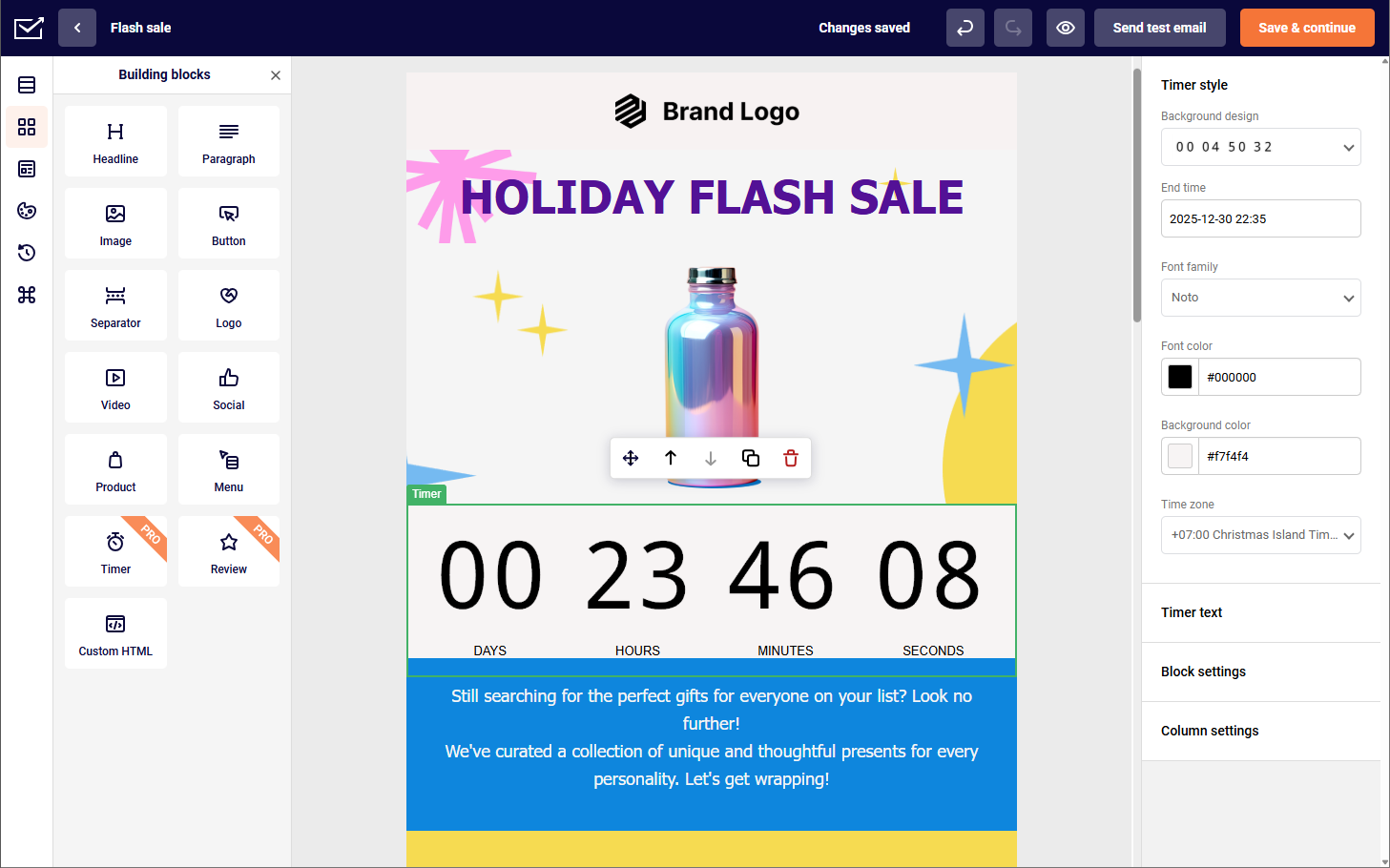
I started my Sender hands-on by running some tests across a welcome sequence, a promotional newsletter campaign, and a basic re-engagement flow.
The drag-and-drop editor is fast: building a clean, on-brand email from a template took around 15 minutes, with an HTML fallback available when the visual builder hit its limits. The free plan includes automation, segmentation, and signup forms without aggressive upsells, something you usually don’t see at this tier.
Where I hit a ceiling was in CRM-style depth. Contact records and scoring are fairly limited, especially when it comes to tracking multi-channel behavior.
At the end of the day, Sender works both as a free newsletter platform for testing the waters and an easy-to-use marketing tool for fast-expanding SMBs.
Key Features
- Automation workflows. Visual workflow builder with standard triggers like opens, clicks, and time delays. Segmentation is rule-based and updates in real time, but doesn’t go particularly deep on behavioral logic.
- Landing page builder. Template-based pages with built-in forms and basic styling controls. They connect directly to lists and automations, but flexibility is limited compared to dedicated page builders.
- Custom events. Supports tracking actions via API or integrations (e.g., purchases, page views). Useful for triggering flows and updating segments, though the implementation is fairly straightforward rather than advanced.
Honest Weaknesses
- The Standard plan limits subscribers to 1,000 – fewer than the free plan’s 2,500 limit – which is counterintuitive and catches users off guard when they first upgrade.
- Limited integration ecosystem – Sender connects with essential tools, but its range of native integrations is narrower than larger platforms. Teams with more complex tech stacks may need to rely on third-party connectors or custom workarounds to keep systems in sync.
Best for
- Small businesses needing affordable, capable email marketing without complexity;
- Ecommerce brands running automation and segmentation on a budget;
- Creators who want strong email tools without paying premium platform fees.
Not a Good Fit
- If you want to connect niche apps – compared to industry giants, Sender has a smaller library of native “one-click” integrations.
- If you need deep CRM-style contact records or granular scoring based on multi-channel behavior.
Pricing
- Free: Up to 2,500 subscribers, 15,000 emails/month;
- Standard: From $7/month* for up to 12,000 monthly emails and 1,000 subscribers;
- Professional: From $14/month for up to 24,000 monthly emails and 1,000 subscribers;
- Enterprise: Custom pricing.
*Pricing scales with contact count. Verify current tiers at sender.net/pricing
Omnisend
Honest positioning: The strongest email platform for ecommerce, built natively for Shopify stores, but overkill for content newsletters.

I ran Omnisend in parallel with a test WooCommerce store over two months, specifically to evaluate its product picker, abandoned cart flows, and SMS integration – features that only make sense in an ecommerce context.
The Shopify and WooCommerce integrations installed cleanly and synced product data without manual configuration, which is exactly what you want. The abandoned cart sequence worked without any hiccups on the first try.
What I hadn’t anticipated, however, was how much of the interface assumes you’re selling something. So if you’re running a content-first newsletter, many of the most prominent features simply don’t apply to you, with the dashboard starting to feel cluttered.
Key features
- Pre-built ecommerce automations. Abandoned cart, post-purchase follow-up, and win-back sequences that connect directly to store data without manual mapping;
- SMS + email in one workflow. Genuinely unified, not bolted on; you can build a sequence that sends email first, then SMS if no open within 24 hours;
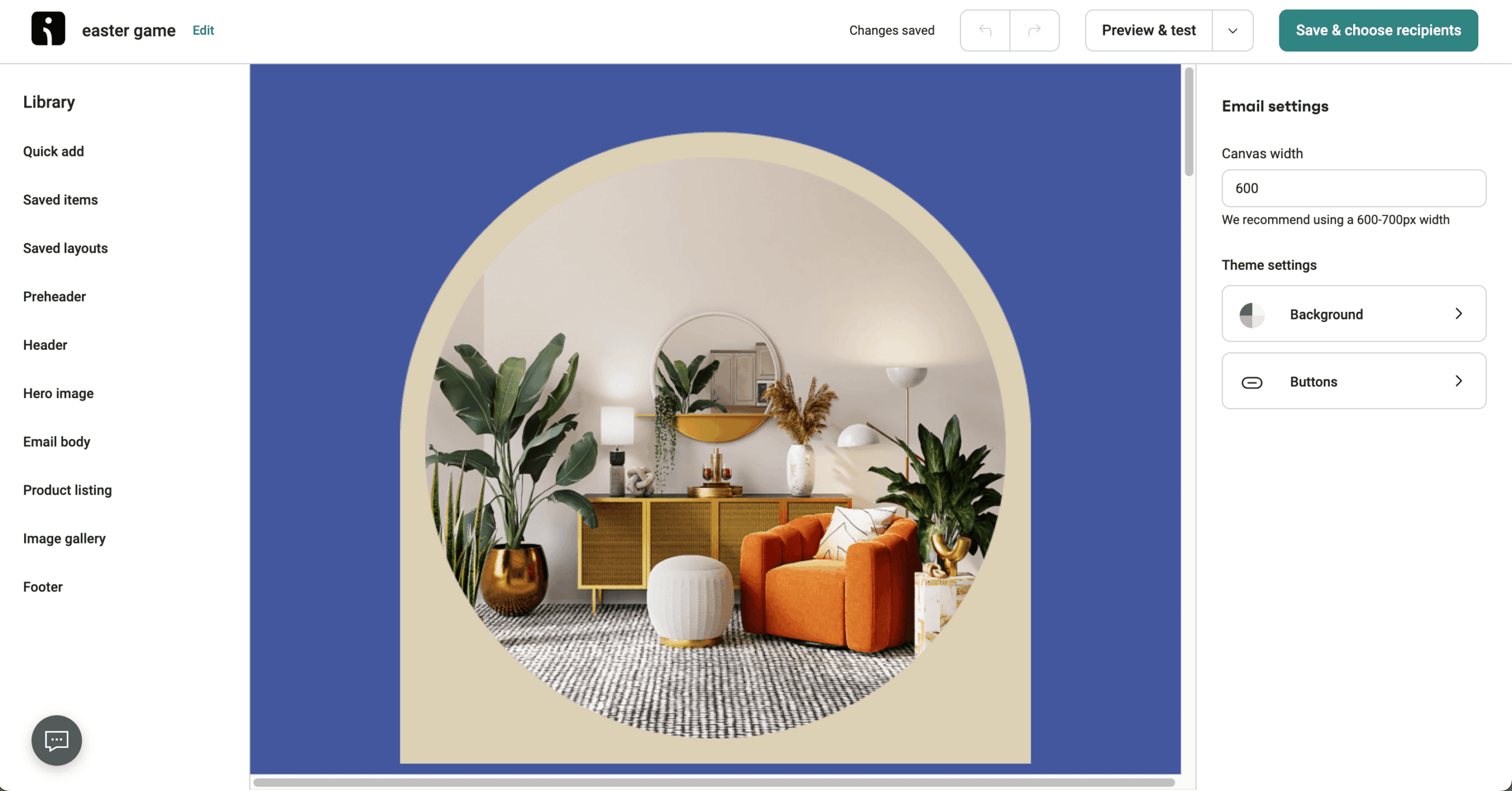
- Product picker in email builder. Pulls live product images, prices, and links from your store; dramatically faster than building product blocks manually;
- Segmentation on purchase behavior. Filter subscribers by what they bought, how much they spent, or how recently they purchased.
Honest weaknesses
- If you’re not running an ecommerce store, roughly half the platform is irrelevant – the free plan limits to 500 emails/month, which is restrictive for content-only newsletters;
- The email template library is functional but not as design-forward as Sender; visual customisation requires more manual work;
- Pricing scales quickly on larger lists – at 10,000 contacts, the monthly cost climbs noticeably; Klaviyo becomes a serious competitor at this tier.
Best for
- Shopify and WooCommerce merchants who want email + SMS automation that connects to store data natively;
- Ecommerce brands building lifecycle flows (welcome, post-purchase, re-engagement) without a dedicated developer;
- Retailers with SKU-heavy catalogs where manual product block creation would be time-prohibitive.
Not a Good Fit
- You’re a content creator or publisher without an ecommerce component. You’ll pay for infrastructure you won’t use;
- Your list is under 500 and you’re on the free plan. The monthly send limit will constrain any meaningful campaign cadence.
Pricing
- Free: Up to 250 contacts, 500 emails/month;
- Standard: From $16/month* – 500 contacts, 6,000 emails/month; full automation access;
- Pro: From $59/month – up to 2,500 contacts, unlimited emails, advanced reporting.
*Pricing scales with contact count. Verify current tiers at omnisend.com/pricing.
MailBluster
Honest positioning: The cheapest way to send high-volume email if you’re comfortable with technical setup – powerful but barebones, and not designed for marketers who want an all-in-one, polished platform

I tested MailBluster by running it through Amazon SES with a small batch campaign and a basic welcome sequence, focusing on setup, cost efficiency, and day-to-day usability. The SES integration worked as expected, but getting everything configured – domain verification, sending limits, and credentials – required more manual setup than most platforms.
Once it was running, though, it was extremely efficient. Sending costs stayed minimal, and the core features – tagging, simple automations, and reporting – all worked reliably without unnecessary complexity.
What really surprised me about MailBluster was how little abstraction there is. MailBluster doesn’t try to guide you or simplify the process – it assumes you’re comfortable managing the infrastructure. For non-technical users, that’s friction. For cost-conscious teams, it’s the trade-off that makes it worthwhile.
Key features
- Pay-as-you-go pricing. Usage-based model tied to Amazon SES – you’re paying per 1,000 emails sent, not per contact; extremely cost-efficient at scale, but requires you to manage sending infrastructure yourself;
- Amazon SES integration. Direct connection to AWS SMTP for low-cost delivery and high scalability; no abstraction layer, which keeps costs down but shifts setup, reputation management, and configuration onto you;
- Tag-based segmentation. Subscriber tagging for grouping and targeting campaigns; flexible enough for basic personalization, but without the depth of behavior-based or real-time segmentation systems.
Honest weaknesses
- The setup is technical by default – you’ll need to configure Amazon SES, verify domains, and move out of sandbox mode before sending at scale;
- Automation and segmentation are basic – suitable for simple campaigns, but lacking the depth and flexibility of more advanced marketing platforms;
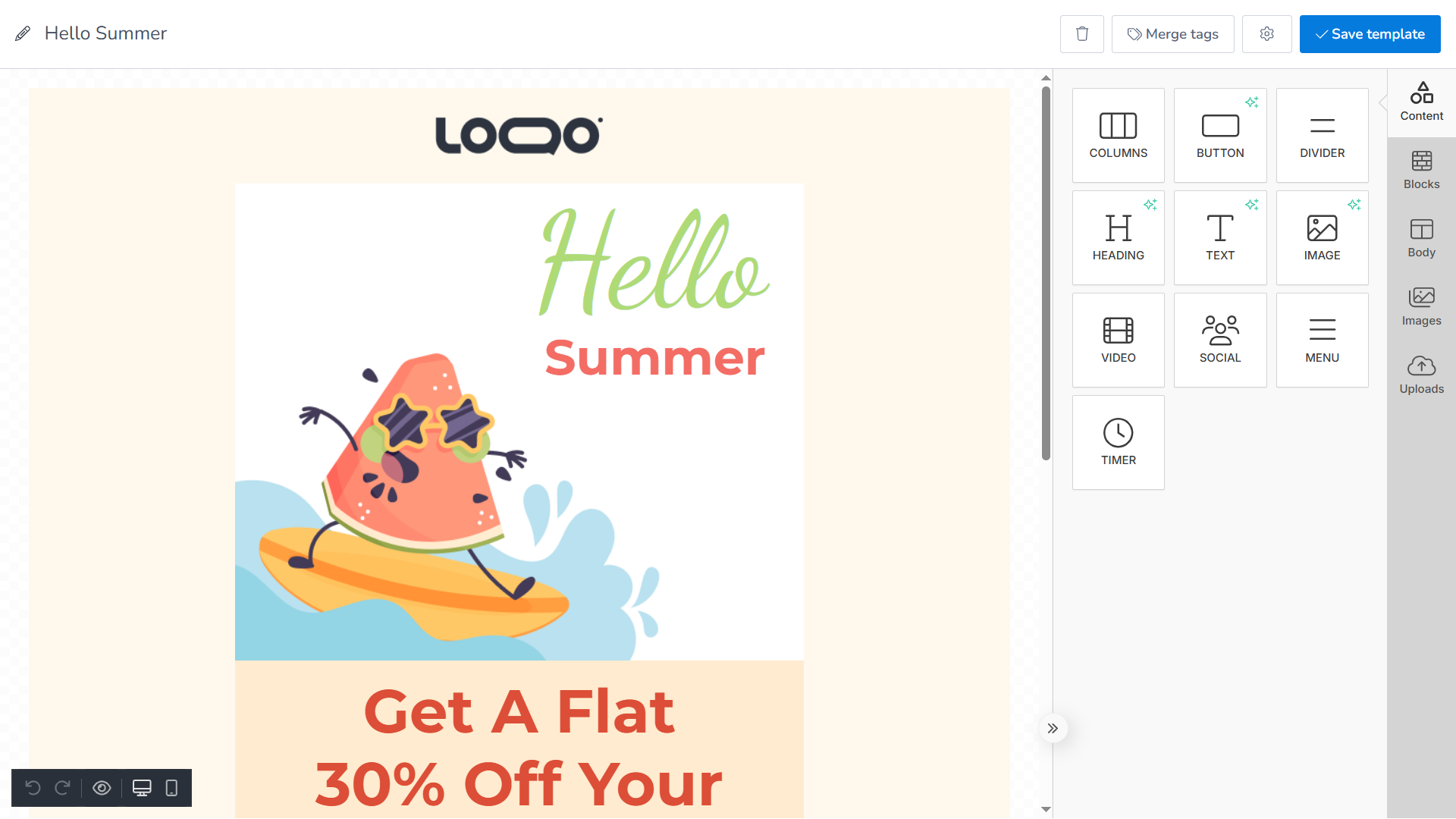
- The interface is functional but not rudimentary – templates and the builder feel limited compared to more design-focused tools;
Best for
- Teams that prioritize cost efficiency over convenience and are comfortable handling technical setup;
- Startups or projects sending at scale where per-email pricing is significantly cheaper than subscriber-based tools;
- Developers or technical operators who prefer direct control over infrastructure and delivery;
Not a Good Fit
- You want a polished UI, templates, and an all-in-one marketing platform – this is closer to an engineering tool than a marketing suite;
- You’re not comfortable managing AWS setup, deliverability, and sender reputation yourself.
Pricing
- Starter plan: $0* for 3,000 total emails, with basic features + branding on emails.
- Pro plan: $60 yearly subscription fee for unlimited emails, with an additional $0.60 charge per 1,000 emails.
*Pricing scales with monthly email count. Verify current tiers at https://mailbluster.com/#pricing.
Mailchimp
Honest positioning: A beginner-friendly, widely integrated email platform that’s easy to start with – but becomes restrictive and relatively expensive as your needs grow.

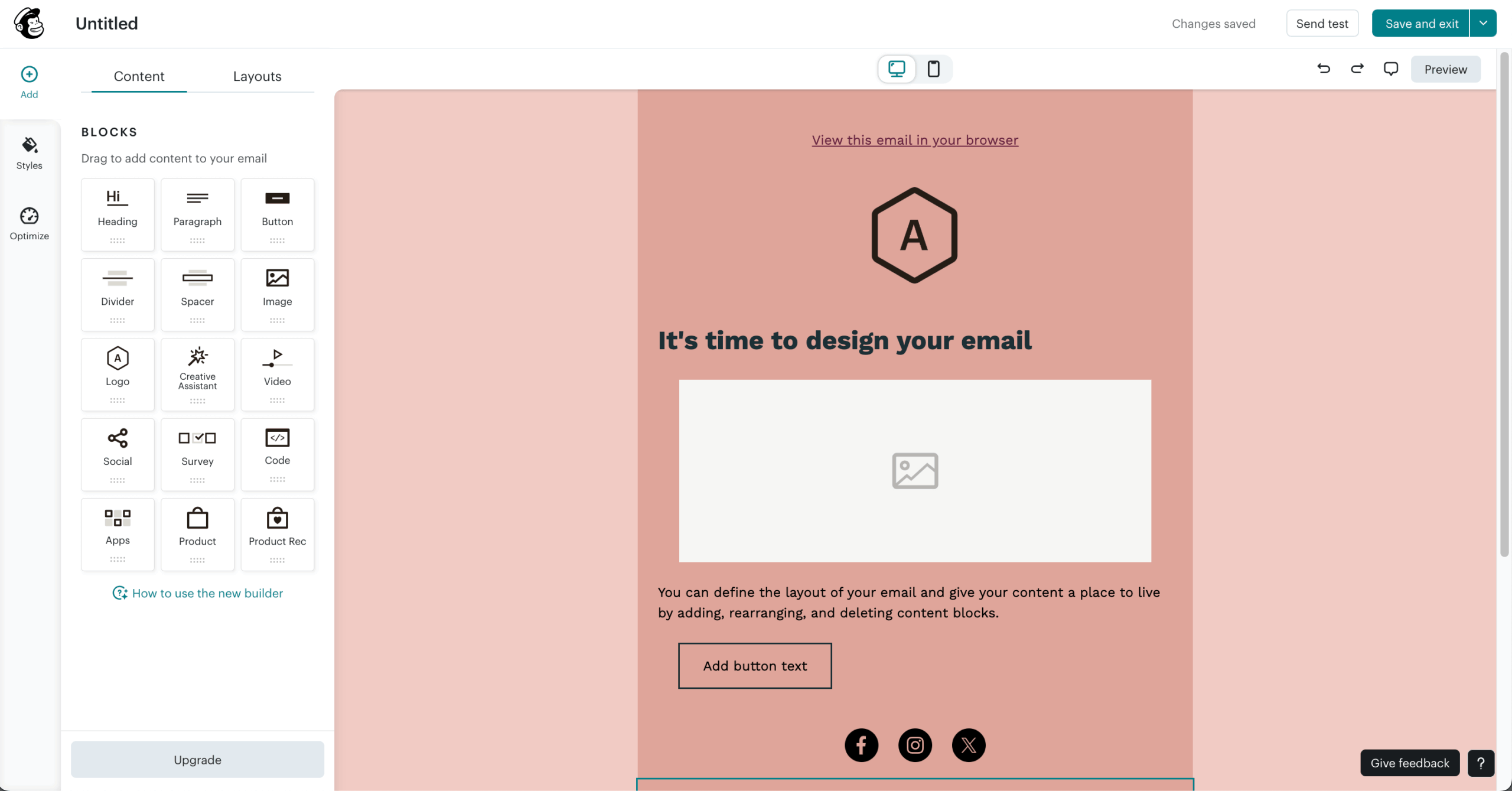
Mailchimp is an interesting newsletter solution, since it does work straight out of the gate, but slowly starts showing its edges. Building a clean, on-brand email from a template, for instance, took around 10 minutes. Connecting Shopify and Google Analytics through native integrations was straightforward – once synced, purchase activity and contact behavior fed into segments automatically.
Where the limits showed up was in cross-audience segmentation. Mailchimp keeps audiences siloed, so combining contacts across lists isn’t possible with simple filters.
For straightforward campaigns, it works well–but the ceiling appears quickly, especially given the pricing.
Key Features
- Drag-and-drop campaign builder. Template-driven editor with pre-styled layouts and content blocks; easy to get a clean email out quickly, though deeper customization often requires working within template constraints;
- Built-in reporting and insights. Standard metrics like opens, clicks, and basic audience data; useful for early-stage campaigns, but lacks deeper behavioral tracking or attribution;
- Extensive integrations. Connects with Shopify, WordPress, and a wide ecosystem of third-party tools; strong compatibility, though setup can vary depending on the integration.
Honest weaknesses
- CRM functionality is limited – Contact management works for basic use, but pipelines, deal tracking, and sales-focused automation aren’t built out in a meaningful way;
- Segmentation feels restrictive – Simple filters are easy to apply, but more advanced behavioral targeting and conditional logic are restricted or gated behind higher-tier plans;
- Reporting covers the basics only – Campaign metrics are clear, but deeper attribution and lifecycle insights are harder to access without additional tools or upgrades.
Best for
- Small businesses running straightforward campaigns without complex automation needs;
- Users who rely on integrations and want a tool that connects easily with other platforms;
- Early-stage creators building an initial list with simple newsletters.
Not a Good Fit
- You need advanced analytics for your newsletters. Basic metrics like opens, clicks, and top-level engagement are easy to access, but more advanced analysis is either limited, simplified, or pushed into higher-tier plans and connected integrations;
- You want full control over design and workflows without template or plan restrictions.
Pricing
- Free Plan: Up to 250 subscribers and 500 emails/month;
- Essentials Plan: $10/month for up to 500* contacts and 5,000 monthly emails;
- Standard Plan: $16/month for up to 500 contacts and 6,000 monthly emails;
- Premium: $305/month for up to 10,000 contacts and 15x your max contact list monthly emails.
*Pricing scales with contact count. Verify current tiers at mailchimp.com/pricing.
Constant Contact
Honest positioning: A straightforward newsletter and small-business marketing platform built for ease of use, events, and hands-on support – but less advanced for automation, segmentation, and modern growth workflows.
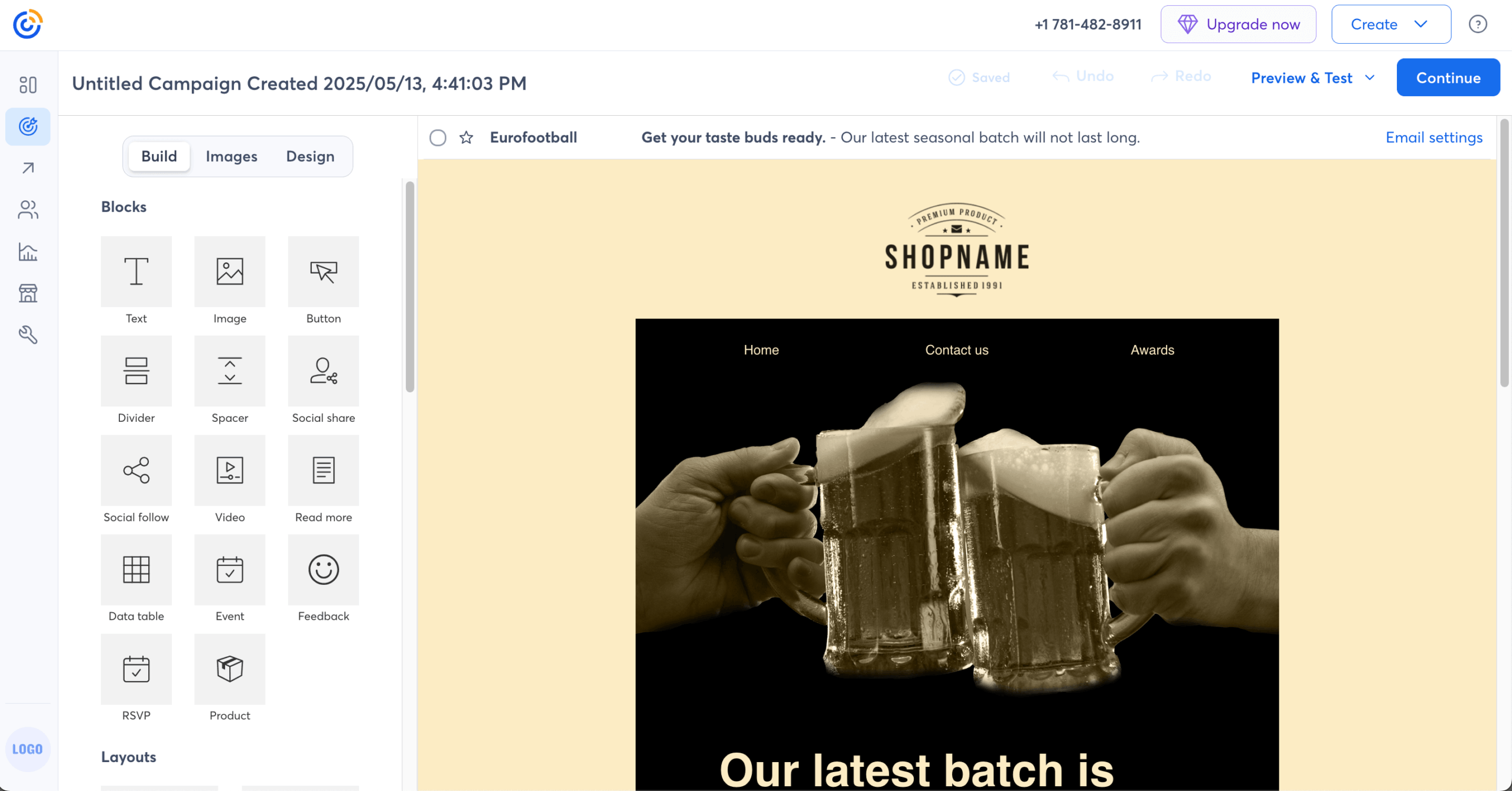
To kick off Constant Contact testing, I set up an event with registration, ticketing, and automated confirmation emails in around 30 minutes – everything handled inside one system without connecting external tools like Eventbrite. The resend-to-non-openers feature is configured in three steps inside the campaign editor, which is meaningfully faster than building a conditional flow from scratch.
Where the limitation shows up is its list management. Building a segment across two separate lists required a manual merge rather than a filter condition – overhead that more unified platforms, such as Sender or Klaviyo, handle natively.
All in all, for event-driven communication without complex funnels, Constant Contact covers the essentials cleanly.
Key Features
- Built-in event management. Create registration pages, collect payments, and send automated reminders from the same platform; tightly integrated with email campaigns, making it practical for event-driven communication without external tools;
- Template-driven email builder. Library of 600+ pre-designed templates tailored to nonprofits, retail, and small businesses. Easy to use, though customization is somewhat constrained compared to more flexible builders;
- Resend to non-openers. Automatically resend campaigns to subscribers who didn’t open the initial email; useful for improving overall reach without building separate segments, though it’s a fairly basic tactic compared to more advanced engagement-based automation.
Honest weaknesses
- Automation is limited – Triggers, conditions, and multi-step workflows are fairly basic, making it difficult to build more advanced or nuanced customer journeys;
- Behavioral targeting has a ceiling – Lifecycle-based segmentation is possible at a basic level, but deeper, real-time behavior tracking and targeting are constrained;
- Restrictive CRM capabilities – There’s no meaningful support for deal tracking, lead scoring, or sales-focused workflows within the platform;
- Journey building is short-form – Simple sequences work fine, but modeling longer, more complex customer paths quickly becomes difficult.
Best for
- Organizations focused on consistent communication rather than complex automation or funnels;
- Nonprofits running campaigns, fundraising, or community outreach with simple workflows;
- Event-based businesses that need registration, reminders, and follow-ups in one place;
- Local businesses sending regular updates, promotions, or newsletters without technical overhead.
Not a Good Fit
- Businesses running ecommerce operations that need advanced product-driven automations and structured sales funnels;
- Analytics-focused marketers who depend on predictive insights and granular attribution tracking.
Pricing
- Free trial: 30 or 60-day trial only;
- Lite Plan: $12/month for up to 500 contacts and 5,000 monthly emails;
- Standard Plan: $35/month for up to 500 contacts and 6,000 monthly emails;
- Premium Plan: $80/month for up to 500 contacts and 12,000 monthly emails.
*Pricing scales with monthly email count. Verify current tiers at https://www.constantcontact.com/pricing.
GetResponse
Honest positioning: An all-in-one marketing platform that goes beyond newsletters with funnels, landing pages, and automation – but overbuilt and less focused if you just want a simple newsletter tool.

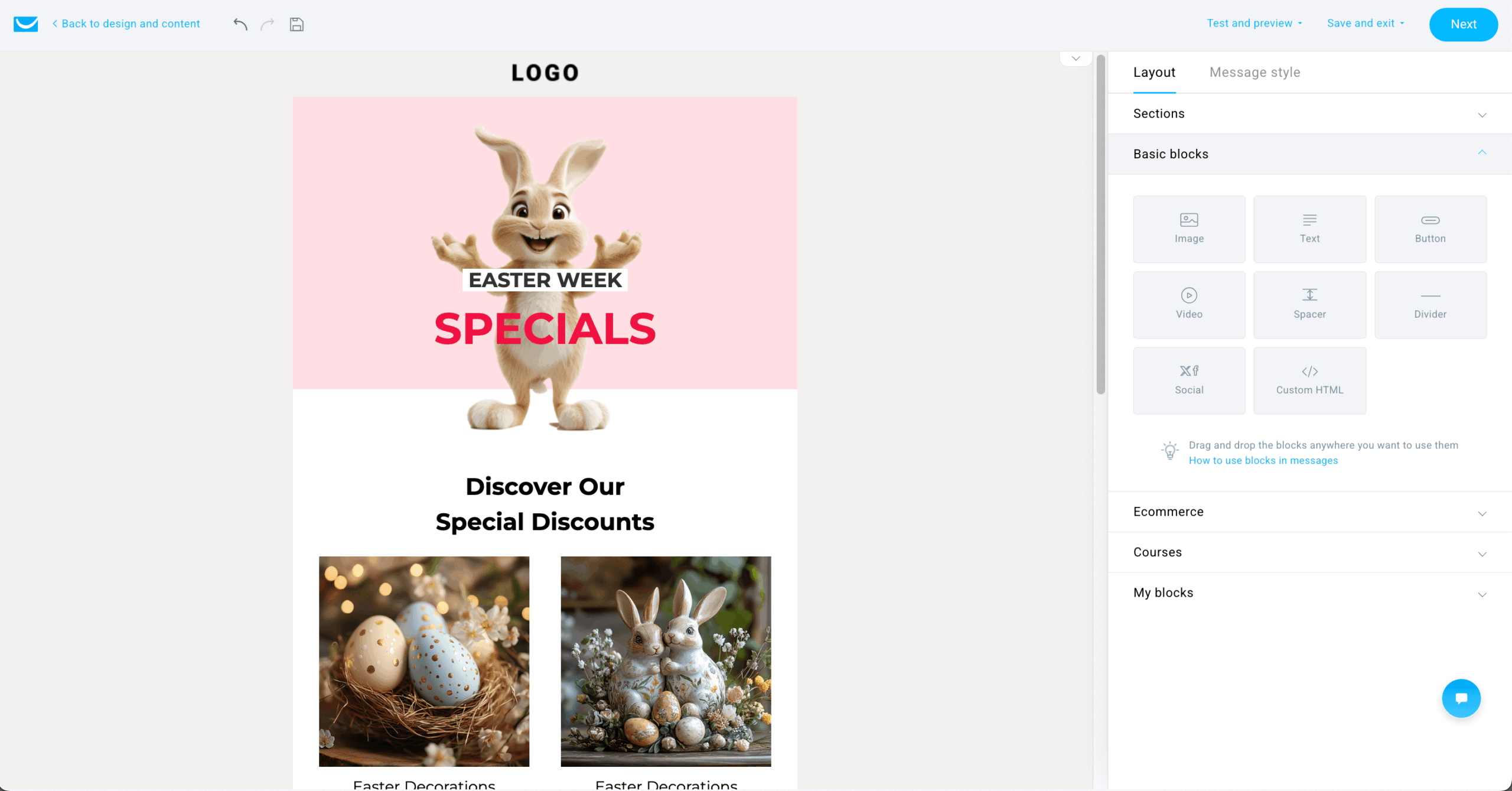
To see how GetResponse fares against other newsletter platforms, I built a full webinar funnel – landing page, automated reminders, and attendance-based follow-up sequences. The whole process took around 45 minutes.
The automation builder took some orientation in the first session, but the logic became intuitive once the structure clicked. The AI email generator produced a usable subject line in under 2 minutes, though the body copy needed more editing than expected.
Where I hit friction was the landing page editor – getting a form to display correctly on mobile required manual adjustments that a dedicated tool like Unbounce handles automatically. A minor gripe that doesn’t disqualify GetResponse from the top newsletter platform list.
Key Features
- Automation builder. Map complex workflows visually using drag-and-drop triggers, actions, and filters.
- Landing page creator. Build signup pages and simple sales funnels without leaving the platform.
- Webinar hosting. Run live webinars and automatically follow up with attendees via email.
- AI campaign tools. Get instant subject line suggestions and layout optimization tips while building campaigns.
Honest weaknesses
- The interface has a learning curve – GetResponse brings email, funnels, webinars, and automation into one platform, but that also makes the dashboard feel heavier than simpler newsletter tools;
- Advanced features sit behind higher tiers – automation depth, custom CSS, and more flexible campaign controls often require upgrading beyond the entry plan;
- Templates are useful but uneven – there are plenty to choose from, but some feel dated, and deeper design customization can require HTML work or a higher-tier plan.
Best for
- Educators or coaches running webinars, courses, or session-based promotions;
- Marketing teams building multi-step campaigns with more advanced automation needs;
- Businesses focused on growing and segmenting larger subscriber lists over time.
Not a Good Fit
- You want a simple newsletter tool for regular content updates without funnels, webinars, or advanced automation;
- You’re on a tight budget and only need basic email sending, since GetResponse’s stronger features sit on higher tiers.
Pricing
- Free Trial: 14-day trial only (no permanent free plan);
- Starter Plan: Starting at $15/month for 1,000+ subscribers and unlimited email sends;
- Marketer Plan: Starting at $48/month for 1,000+ subscribers and unlimited email sends;
- Creator Plan: Starting at $55/month for 1,000+ subscribers and unlimited email sends;
- Enterprise (MAX): Custom pricing for 100,000+ subscribers.
*Pricing scales with monthly email count. Verify current tiers at https://www.getresponse.com/pricing.
Beehiiv
Honest positioning: A creator-first newsletter platform built for publishing, growth, and monetization – powerful for building a media-style newsletter business, but limited for traditional email marketing, automation, and integrations.

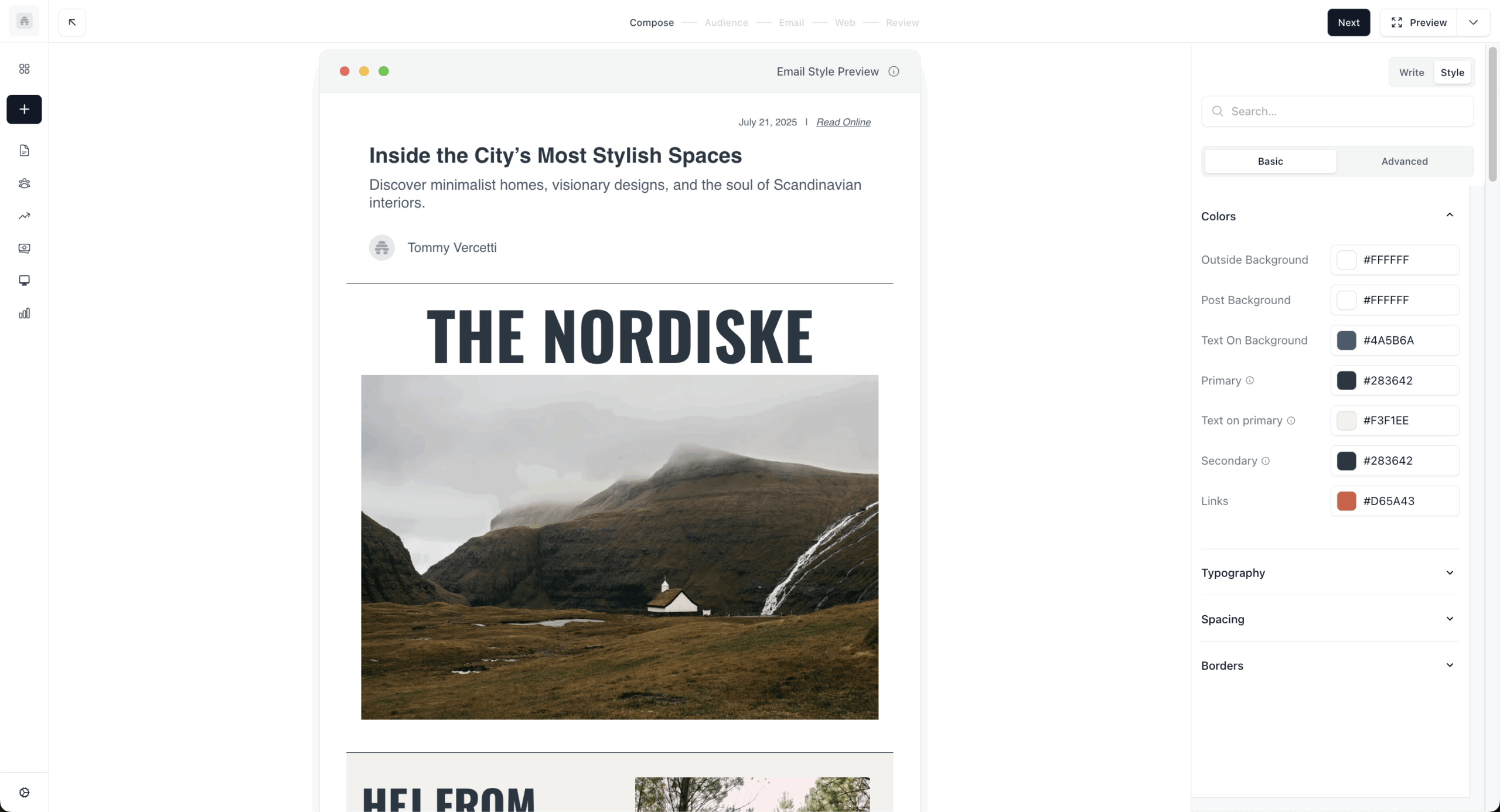
I ran a content-driven newsletter on Beehiiv for several weeks, testing the referral system and Boost network alongside the core publishing flow. The referral program generated around 40 new subscribers from a single campaign without paid promotion – more than I’d expected from a built-in tool. A Boost placement cost roughly $1.50 per subscriber acquired, which is competitive for passive list growth.
The editor is genuinely distraction-free – clean text, minimal formatting options, no unnecessary controls. You can tell it’s built by people who write newsletters themselves.
Where it fell short was design flexibility – customizing email layout beyond basic formatting requires knowledge of CSS, which non-technical users will definitely not find straightforward. Of course, since Beehiiv is closer to Ghost and Substack than to Sender, that is expected.
Key Features
- Referral program. Reward readers for inviting friends with easy-to-manage tracking links built into the platform.
- Boosts network. Get paid exposure by promoting other newsletters and pay others to promote yours.
- Monetization options. Add paid subscriptions or sponsorship placements directly in your newsletter.
- Clean writing interface. Focused, text-first editor that keeps formatting minimal and distraction-free.
Honest weaknesses
- Beehiiv’s automation is limited – it works for basic welcome flows and subscriber journeys, but lacks the depth of traditional email marketing platforms;
- Integrations are thinner than expected – many connections rely on Zapier or workarounds rather than native, direct integrations;
- Design flexibility has a ceiling – newsletters look clean, but deeper layout customization and brand control are more limited than in visual-first builders.
Best for
- Content creators focused on growing and monetizing a newsletter audience;
- Independent publishers building subscription or sponsorship-driven revenue streams;
- Writers who prefer a clean, distraction-free, text-first editing experience;
- Teams managing multiple newsletters or publications from a single dashboard.
Not a Good Fit
- You want full control over design, layouts, and highly customized newsletter templates;
- You’re running product-driven lifecycle campaigns rather than content-first newsletters.
Pricing
- Free Plan: Up to 2,500 subscribers with unlimited emails;
- Scale Plan: $43/month for up to 1,000 subscribers with unlimited emails;
- Max Plan: $96/month for up to 1,000 subscribers with unlimited emails;
- Enterprise: Custom pricing.
*Pricing scales with contact count. Verify current tiers at https://www.beehiiv.com/pricing.
Flodesk
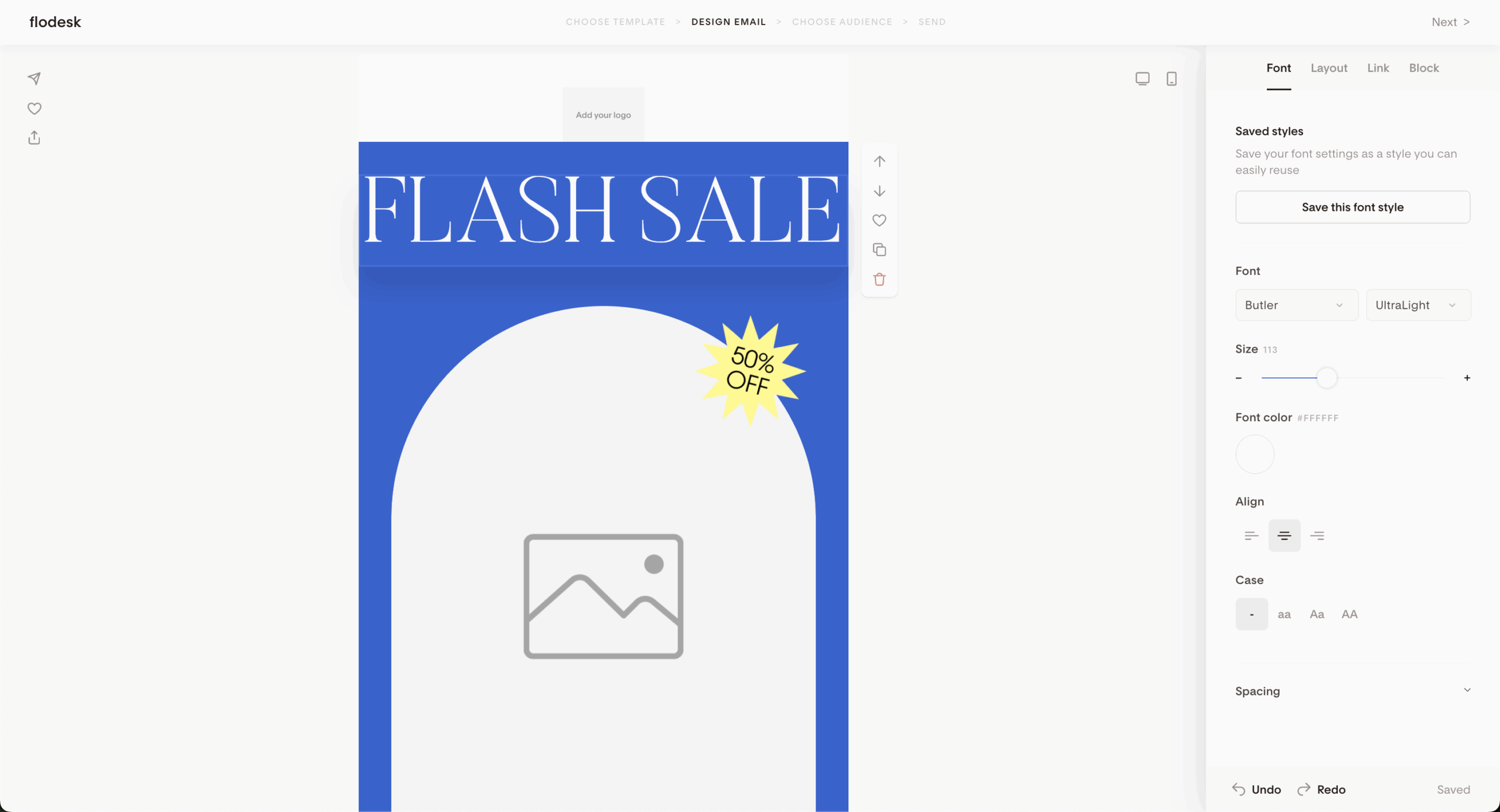
Honest positioning: A design-first newsletter platform for creators and small brands who care about how emails look – limited in automation depth, integrations, and data-driven marketing, but simple to use and visually polished.

I began my hands-on of Flodesk from the template editor by recreating a branded newsletter from scratch. Matching fonts, colors, and spacing took around 20 minutes without touching code – faster than most builders I’ve used for the same task. The templates are genuinely polished starting points rather than generic placeholders.
I also set up a Flodesk Checkout page for a digital product in around 15 minutes. It worked without a hiccup, though customization options were more limited than a dedicated tool like Gumroad.
It’s worth mentioning that the automation builder handles basic nurture sequences well. The ceiling shows up, however, it is for anything behavior-driven or conditional. So if you need advanced segmentation, multi-branch workflows, or triggers based on user actions, you’ll run into limitations pretty quickly.
Key Features
- Stylish templates. Prebuilt, on-brand designs that make every newsletter look consistent and polished;
- Flodesk Checkout. Built-in tool for selling digital products, services, or downloads directly through your email platform; removes the need for a separate ecommerce setup;
- Visual automations. Build simple nurture sequences with intuitive triggers and timed delays;
- Brand customization. Easily match fonts, colors, and logos across all emails for consistent identity.
Honest weaknesses
- Automations are fairly basic – straightforward sequences work well, but complex behavioral triggers, branching workflows, and lead scoring are outside Flodesk’s comfort zone;
- No native A/B testing feature – while there are ways to simulate it, Flodesk doesn’t offer built-in A/B testing for subject lines or other email elements like many competing platforms, including Substack, do;
- Limited integration ecosystem – core tools are covered, but many connections rely on Zapier, and the native ecosystem is thinner than Mailchimp or HubSpot.
Best for
- Design-focused marketers who prioritize visually polished, on-brand emails;
- Lifestyle and creative brands where aesthetics play a central role in communication;
- Small teams that want simple automation and predictable sending without complexity.
Not a Good Fit
- You’re a creator focused on audience growth, discovery, or simple monetization offered by platforms like Substack or Beehiiv;
- You rely on detailed analytics, A/B testing, or data-driven optimization.
Pricing
- Free Plan: For growing your list only (no monthly emails);
- Lite Plan: $19/month for unlimited emails and up to 1,000 subscribers;
- Pro Plan: $25/month for unlimited emails and up to 1,000 subscribers;
- Everything Plan: $49/month for unlimited emails and up to 1,000 subscribers.
*Pricing scales with contact count. Verify current tiers at https://flodesk.com/pricing.
Campaign Monitor
Honest positioning: A polished email platform for teams that care about clean design, reliable sending, and client-ready reporting – but less compelling if you need advanced automation, CRM depth, or strong value at scale.

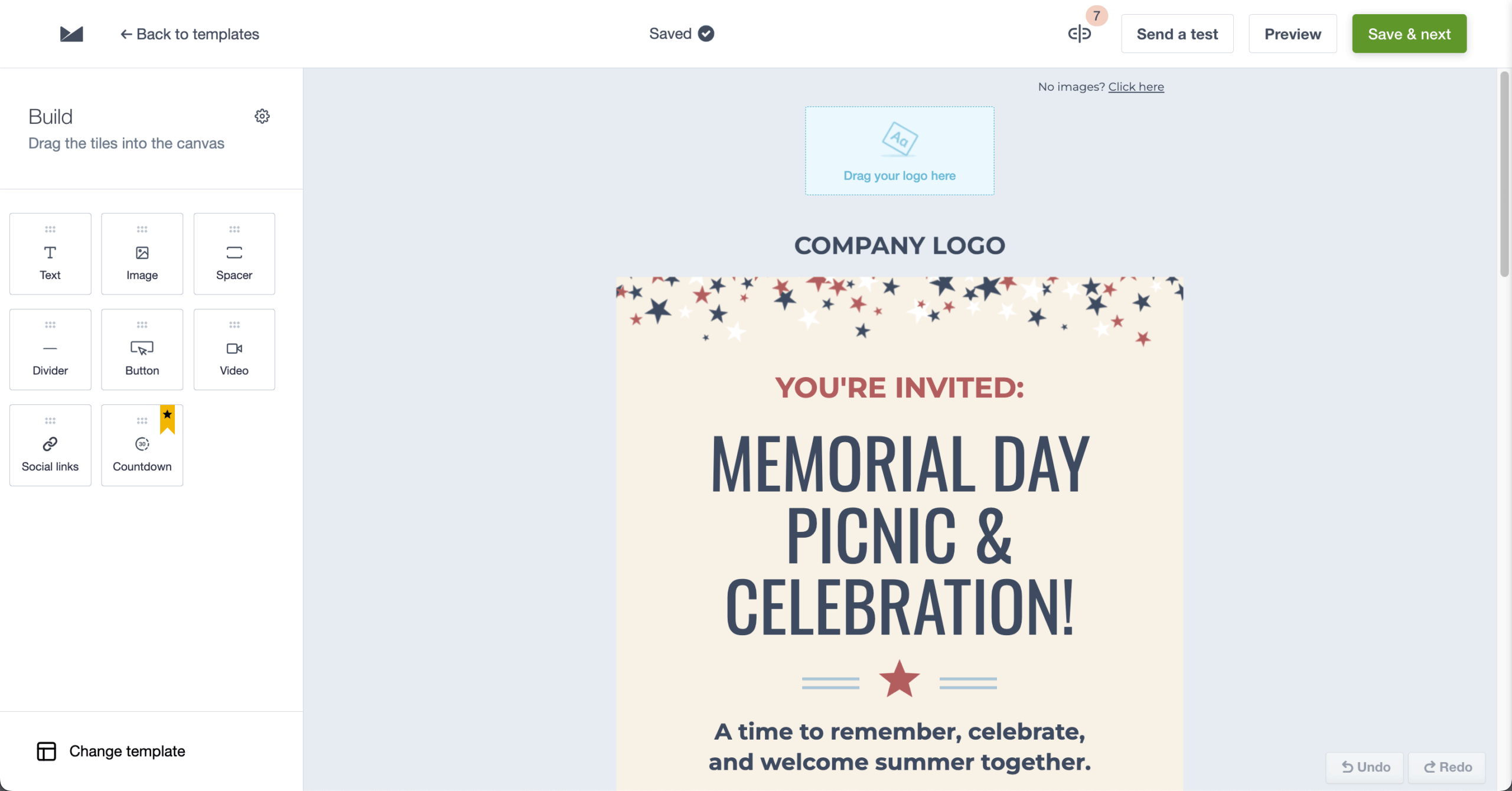
Reporting is where Campaign Monitor earns its place for agency use. I pulled a campaign performance summary after a client send – the layout was presentation-ready without reformatting, which saves meaningful time compared to platforms where data needs cleanup before sharing.
One practical warning on list management: contacts appearing on multiple lists count separately toward your total. I noticed this when a segment overlap pushed my contact count into a higher billing tier unexpectedly – a quiet cost inflation that’s worth auditing before your list grows.
CRM integration covers contact data syncing with tools like Salesforce, but stops short of sales workflow automation – deal stages and task triggers aren’t part of the picture.
For agencies prioritising design and reporting over automation depth, it delivers cleanly.
Key Features
- Visual journey designer. Create multi-step email sequences using a clear drag-and-drop interface.
- High-quality templates. Professional designs with strong mobile responsiveness and brand flexibility.
- Segmented campaigns. Send targeted content based on list behavior, preferences, or engagement history.
- Detailed reporting. Track open times, geolocation, and click heatmaps to refine future sends.
Honest weaknesses
- Automation depth is limited – workflows handle basic sequences well, but complex branching and behavior-based logic are harder to build;
- Pricing quickly ramps up as you scale – especially with how contacts are counted across lists, which can inflate costs quickly;
- No all-in-one ecosystem – lacks built-in landing pages, CRM, or multichannel features, so additional tools are often required.
Best for
- Agencies that need client-ready reporting and white-label presentation;
- Medium-sized teams collaborating across multiple users and roles;
- Teams that prioritize clear reporting and visibility into engagement metrics.
Not a Good Fit
- You need advanced automation with complex branching and behavior-based workflows;
- You’re looking for strong CRM integration or sales pipeline features.
Pricing
- Free Trial: 30-day trial only (no permanent free plan);
- Lite Plan: $11/month for up to 500 subscribers and 2,500 emails/month;
- Essentials Plan: $28/month for up to 500 subscribers and unlimited email sends;
- Premier Plan: $153/month for up to 500 subscribers and unlimited email sends;
- Enterprise Plan: Custom pricing.
*Pricing scales with contact count. Verify current tiers at https://www.campaignmonitor.com/pricing/.
HubSpot
Honest positioning: A CRM-first marketing platform where newsletters work best as part of a broader sales and customer lifecycle system – powerful if your team already uses HubSpot, but expensive and overbuilt for simple newsletter sending.

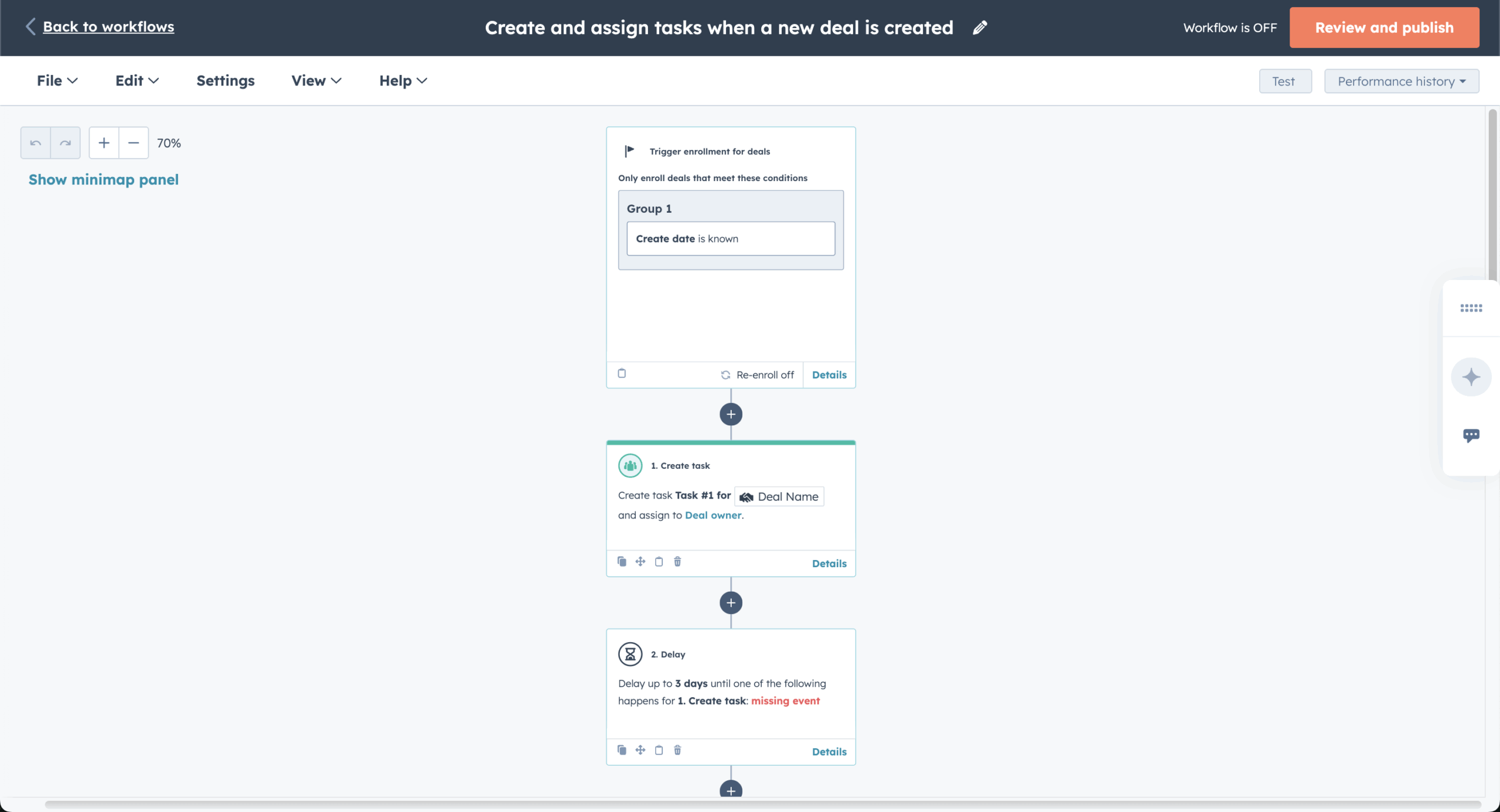
I set up a lead capture flow in around 20 minutes, most time spent building the one-step trigger automation myself – since that’s as far as HubSpot’s Starter plan goes. That said, the free tier covers basic sending and forms, but the features that justify HubSpot for serious newsletter use sit behind the Marketing Hub Professional plan, which comes with an eye-watering $1030/month price tag – though a 14-day trial is available and came in handy for this review.
Another gripe I had with HubSpot: dynamic content blocks that change based on lifecycle stage are buried under a non-intuitive menu path. It took two documentation searches to find the right configuration screen, which wasn’t as smooth as one would expect.
Key Features
- CRM integration. Every email interaction syncs automatically with contact records for complete visibility.
- Automation workflows. Trigger sequences based on deal stages, form submissions, or user activity.
- Native lead scoring + lifecycle automation. HubSpot ties scoring, segmentation, and workflows directly to CRM data, so actions like email opens or page visits can move contacts through pipelines automatically.
Honest weaknesses
- Pricing jumps quickly – the most useful automation, reporting, and CRM-driven marketing features sit behind higher-tier plans;
- Setup can feel heavy – HubSpot is powerful, but configuring properties, lists, workflows, and reporting takes more work than simpler newsletter tools.
Best for
- B2B marketers who need marketing and sales data connected in one system;
- Teams already using HubSpot CRM and want to extend it into email and automation;
- Growing businesses scaling from simple campaigns to more structured workflows;
- Service-based businesses managing client communication, deals, and follow-ups together.
Not a Good Fit
- You want a simple, lightweight newsletter tool without CRM complexity – HubSpot’s CRM-centric setup adds layers (contacts, pipelines, workflows) that can feel excessive for basic newsletters;
- You’re on a tight budget – key features like automation, reporting, and segmentation sit behind higher tiers, so costs rise quickly as your list grows.
Pricing
- Free Plan: Up to 2,000 contacts and 2,000 emails/month with basic CRM and email tools;
- Starter Plan: $11/month for up to 1,000 contacts with advanced email features and automation;
- Professional Plan: $927/month for up to 2,000 contacts with advanced marketing automation and reporting;
- Enterprise Plan: $3,863/month for up to 10,000 contacts with full marketing suite and custom reporting.
*Pricing scales with contact count. Verify current tiers at https://www.hubspot.com/pricing/bundle.
ActiveCampaign
Honest positioning: A powerful automation-first email platform with built-in CRM capabilities – strong for behavior-driven marketing and complex workflows, but overkill for simple newsletters and slower to learn.
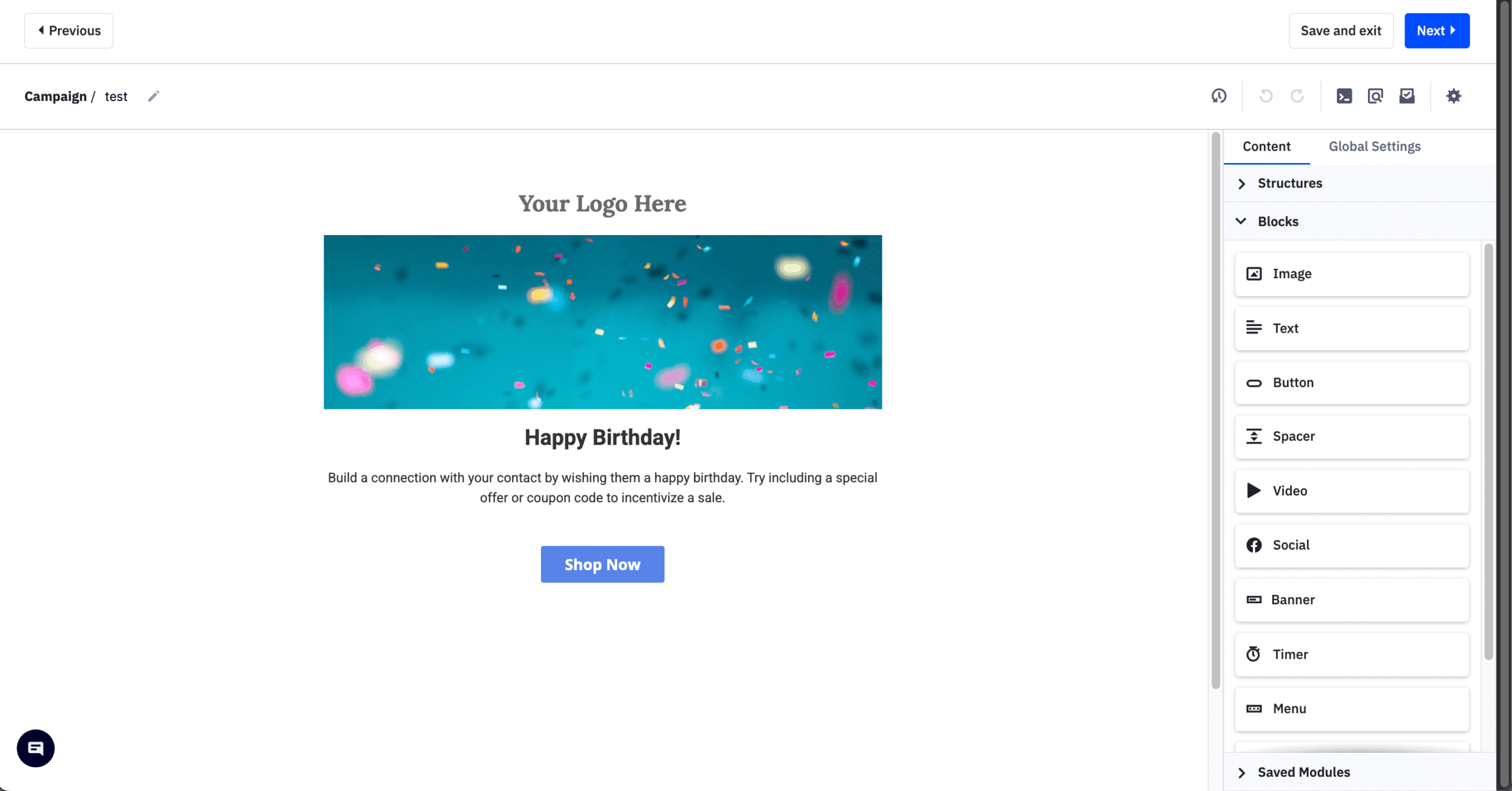
During testing, I configured a lead scoring model where email opens scored 1 point, link clicks scored 3, and product page visits scored 5. Once contacts crossed 15 points, they moved into a pipeline and triggered a higher-intent sequence. Setup took around 60 minutes, mostly because scoring rules aren’t prominently surfaced in the main builder – finding them required more digging than expected for a core feature.
The features that make this worthwhile – CRM, lead scoring, advanced segmentation – sit behind the Plus plan at $49/month. For behavior-driven campaigns with budget to match, the depth is there.
Key Features
- Conditional automations. Create complex sequences with “if/then” logic and multiple paths.
- Send-time optimization. Automatically deliver emails when each subscriber is most likely to open.
- Contact scoring. Prioritize leads based on engagement or behavior across email and site activity.
- Advanced reporting. Dive into performance metrics for each automation, campaign, or goal.
Honest weaknesses
- Cumbersome automation – the builder is powerful, but takes time to learn and isn’t intuitive for new users;
- Pricing scales quickly – costs increase as contacts grow and key features are tied to higher-tier plans;
- Reporting isn’t as deep as expected – standard metrics are there, but attribution and analytics feel lighter compared to some competitors.
Best for
- Teams building complex, behavior-driven automation across long customer journeys;
- Experienced marketers running experiments with split paths and detailed targeting;
- Agencies or B2B teams managing leads alongside sales pipelines;
- High-volume senders working with large, segmented contact lists.
Not a Good Fit
- You don’t need advanced automation, CRM, or behavior-based workflows;
- You prefer a fast, intuitive setup without a learning curve.
Pricing
- Free Trial: 14-day trial only (no permanent free plan);
- Starter Plan: $15/month for 1,000+ contacts and unlimited emails;
- Plus Plan: $37/month for 1,000+ contacts and unlimited emails;
- Pro Plan: $79/month for 1,000+ contacts and unlimited emails;
- Enterprise Plan: $145/month for 1,000+ contacts and unlimited emails.
*Pricing scales with contact count. Verify current tiers at https://www.activecampaign.com/pricing.
Brevo
Honest positioning: An affordable, all-in-one marketing platform with solid email, SMS, and CRM features – best for small businesses needing multichannel tools, but not the most advanced choice for deep automation or enterprise-scale workflows.

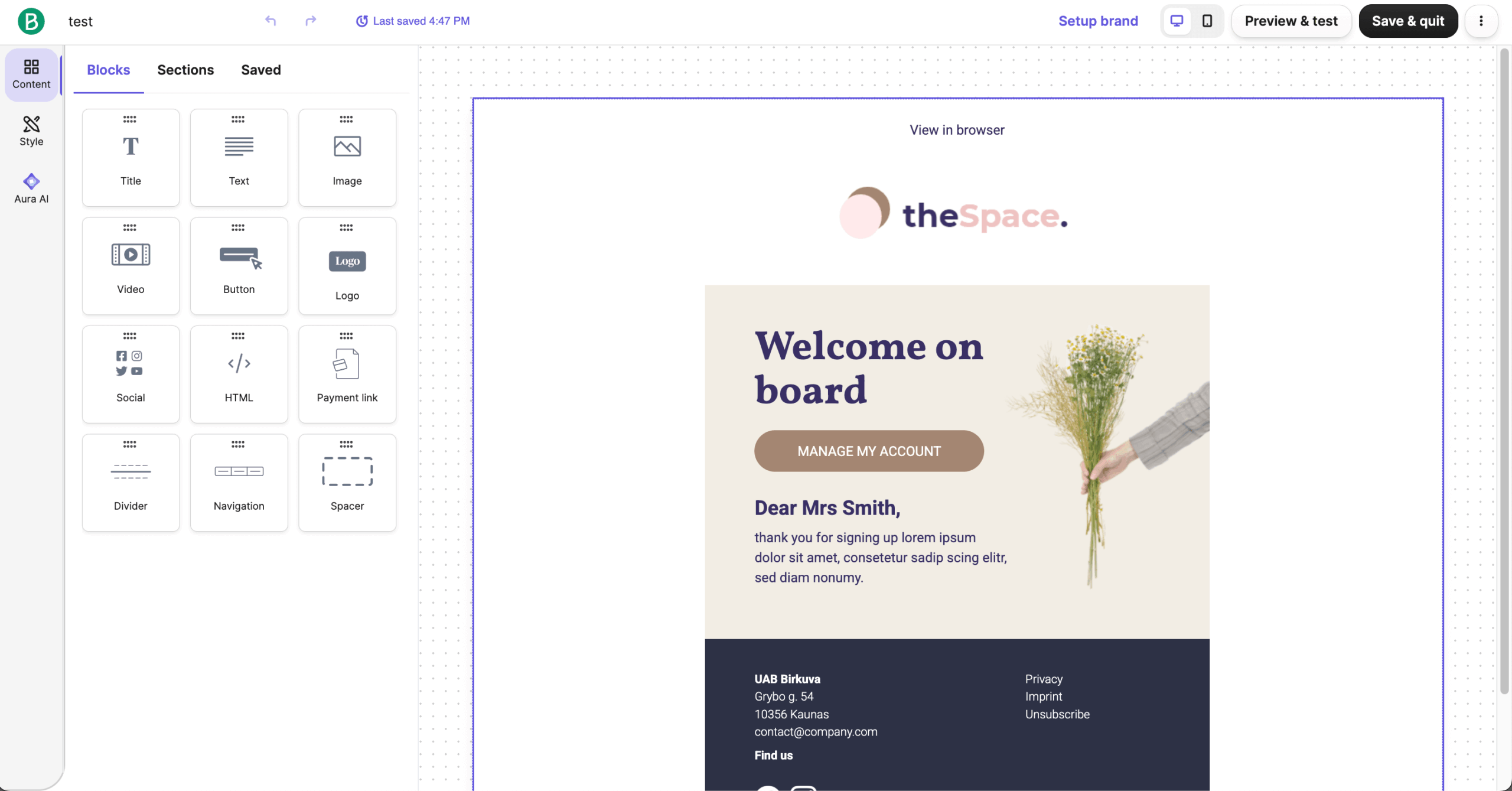
To kick off Brevo’s testing, I set up a multichannel flow – welcome email, SMS reminder, and conditional follow-up – in around 30 minutes without connecting separate tools. Transactional emails like order confirmations ran from the same dashboard, keeping suppression lists and contact records unified.
Where the limitation showed up was branching logic – routing contacts based on which specific link they clicked isn’t supported natively, adding manual overhead for multi-CTA sequences.
Finally, I was happy to see that the free plan includes a 300-email daily sending limit – enough for testing flows and validating early campaigns before committing to a paid tier. For straightforward multichannel campaigns without complex conditional logic, it covers the essentials cleanly.
Key Features
- Flexible pricing. Pay for emails sent, not the number of contacts stored in your account.
- Transactional email support. Use the same platform for marketing and order notifications via SMTP or API for transactional emails.
- Drag-and-drop editor. Simple interface for building responsive newsletters without coding.
- Basic automation. Create follow-ups, welcome messages, or recurring emails easily on the free plan.
Honest weaknesses
- Automation has limits – capable for standard workflows, but lacks deeper branching and flexibility;
- Reporting is fairly basic – covers core metrics but falls short on attribution and revenue tracking;
- Template selection is somewhat limited – fewer advanced design and customization options;
- Integrations aren’t as extensive – may require workarounds or third-party connectors.
Best for
Budget-conscious teams that want predictable, volume-based pricing without surprise costs;
Small businesses relying on simple automations and ready-made templates for everyday campaigns;
Teams handling both marketing and transactional messaging in one streamlined platform.
Not a Good Fit
- Data-driven marketers who rely on detailed reporting, attribution, and granular performance analysis;
- Companies needing extensive integrations, since connecting a larger tech stack to Brevo may require workarounds or relying on tools like Zapier.
Pricing
- Free Plan: Up to 300 emails/day;
- Starter Plan: $8/month for up to 5,000 emails/month;
- Standard Plan: $16/month for up to 5,000 emails/month;
- Professional Plan: $449/month for up to 15,000 emails/month;
- Enterprise Plan: Custom pricing.
*Pricing scales with monthly email count. Verify current tiers at https://www.brevo.com/pricing/.
Substack
Honest positioning: The most accessible plug-and-play paid newsletter platform, but limited for advanced marketing automation or ecommerce.
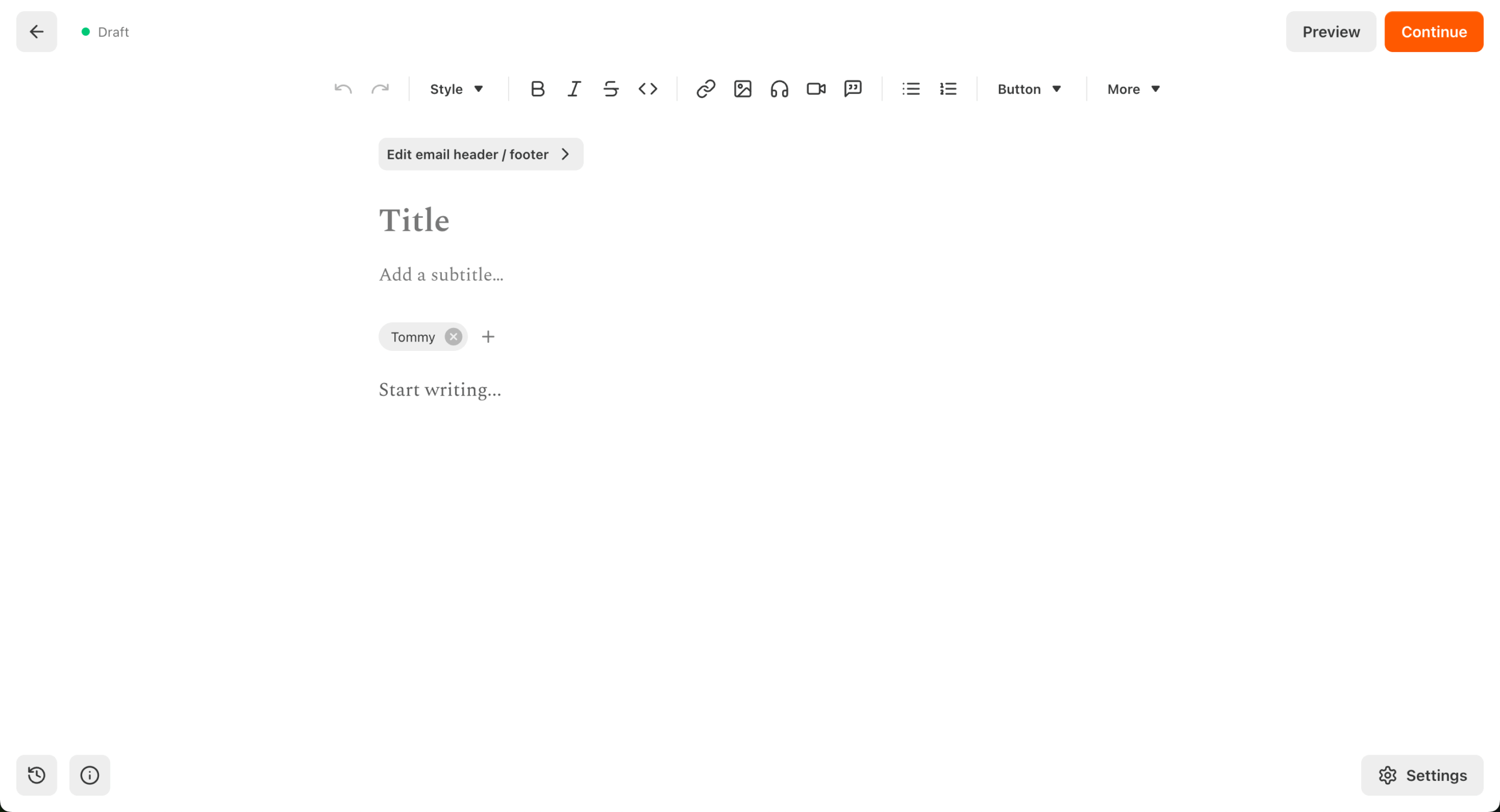
I tested Substack over a month by running a bi-weekly newsletter, with a healthy split of paywalled and free content. The goal was to evaluate its publishing flow, subscription management, and growth mechanics.
Setup with Substack is frictionless. You can go from zero to published in under an hour, with hosting, payments, and email delivery handled out of the box. The writing experience feels closer to a blogging platform than a traditional ESP, which is exactly the point.
What stands out immediately is how opinionated the product is. Substack assumes you’re a writer building an audience – not a marketer running campaigns. That clarity makes it incredibly easy to use, including seeing analytics of your posts, but also constraining once you want more control.
Key features
- Built-in publishing + native paid subscriptions. Substack combines a CMS, newsletter tool, and paywall in one system. You write once and publish to web and inbox simultaneously, with payments, subscriber access, and archives handled automatically – no plugins, integrations, or formatting workarounds required.
- Discovery and Notes feature. Growth is partially network-driven. Recommendations, cross-promotion, and the Notes feed (think X sized-posts) surface your content inside the Substack ecosystem. While the reader app helps convert casual readers into subscribers without relying entirely on external acquisition channels.
- Minimal setup required. There’s virtually no configuration overhead. Hosting, email delivery, payments, and subscriber management are preconfigured, so you can launch immediately.
Honest weaknesses
- There’s almost no real automation. Compared to tools like Klaviyo or Mailchimp, you can’t build meaningful behavioral flows or segmentation beyond basics;
- Design flexibility is limited. You’re largely constrained to Substack’s default look and feel;
- Platform dependence is real. You don’t fully “own” the environment the way you would with a self-hosted stack;
- Monetization comes with a hefty cut. Substack takes 10% of your revenue (the biggest cut out of all creator-focused platforms) from paid subscriptions, which can and will ramp up with growth.
Best for
- Writers, journalists, and creators who want to launch quickly without technical overhead;
- Writer-first newsletters where the primary goal is audience growth and paid subscriptions;
- Solo operators who value simplicity over customization.
Not a Good Fit
- You need advanced email marketing (segmentation, A/B testing, automation flows) – Substack’s tools are basic, with limited segmentation and no real automation or testing;
- You want full control over branding, data, and infrastructure – customization is limited, and you’re tied to Substack’s platform for design, distribution, and monetization.
Pricing
- Free to use for publishing;
- 10% fee on paid subscriptions (plus Stripe fees);
*No traditional tiered pricing – cost scales with your revenue, not your list size.
Newsletter Platform Comparisons: Which One Wins?
Beehiiv vs. Substack
This is the most frequently searched comparison in the creator newsletter space, and it’s largely absent from most platform roundups – likely because Substack doesn’t have an affiliate program and generates no referral revenue. That omission is editorially dishonest, so here it is.
The fundamental difference: Substack is a publishing platform with email built in; Beehiiv is an email platform with publishing built in. That distinction sounds semantic until you try to do something at the edges.
Newsletter monetization model: Substack takes 10% of paid subscription revenue with no monthly fee; you only pay when you earn. Beehiiv charges a monthly platform fee ($49/mo for the Scale plan) but takes no revenue cut. At low paid subscriber counts, Substack is cheaper. Above a certain threshold – roughly $500–600/month in subscription revenue – Beehiiv’s flat monthly fee becomes more economical than Substack’s 10% cut.
Ownership of subscriber data: On both platforms, you can export your subscriber list. The practical difference is that Beehiiv treats your list as yours explicitly and makes export frictionless. Substack’s export process works, but the platform’s social graph (recommendations, Substack network features) creates a degree of platform dependency that some creators find uncomfortable.
When to choose Substack: You’re writing for an existing Substack audience, you value the built-in discovery network, you want zero upfront cost before you have paying subscribers, or you want the simplest possible setup without configuration decisions.
When to choose Beehiiv: You want full brand control, you’re building toward a paid subscriber base where the revenue split math favors a flat fee, or you want the referral network and ad monetization tools that Beehiiv offers.
Sender vs. Mailchimp
The most relevant comparison for new senders with limited budgets:
| Free plan comparison | Sender | Mailchimp |
| Contacts (free) | 2,500 | 250 |
| Emails/month (free) | 15,000 | 500 |
| Automation (free) | Unlimited automation | Limited |
| Branding removed (free) | No | No |
Sender’s free tier is materially more useful for a growing newsletter. Mailchimp’s 250-contact cap means most senders will hit the paywall before they’ve had time to properly evaluate the platform.
What you lose when you upgrade: On Mailchimp, upgrading from Free to Essentials adds more contacts and removes daily limits, but A/B testing and advanced segmentation are locked to Standard ($20/mo+). On Sender, meanwhile, be aware that the Standard plan’s base-tier subscriber limit is lower than the free plan, but upgrading even to the lowest tier plan (Standard) unlocks full multi-channel automation and advanced email A/B testing.
Deliverability comparison: In my two-week test conducted in late April-May 2026, Sender averaged 90% inbox placement vs. Mailchimp’s 89.5%. The gap was barely noticeable on Gmail, though on Outlook and Apple Mail, even Yahoo, Sender pulled ahead by 8% on average on inbox placement, suggesting its infrastructure handles most providers more reliably*.
*As deliverability varies from user to user, it’s best to test the platform’s deliverability yourself or use a third-party service.
Recommendation by use case:
- Zero-budget start, list under 2,500: Sender free plan;
- Want the most widely-supported integration ecosystem: Mailchimp;
- Growing quickly toward 5,000+ subscribers: Sender, thanks to its pricing scaling more gradually with list growth, solid automation that is not restricted early on, and fewer feature paywalls.
ActiveCampaign vs. GetResponse
Automation depth: ActiveCampaign’s automation builder is deeper in every meaningful way: more trigger types, more conditional logic options, goal-based branching, and native site tracking. GetResponse’s builder covers the most common use cases (welcome sequences, nurture drips, tag-based branching) but doesn’t support the kind of multi-variable conditional logic that B2B marketing operations teams need.
Price at scale (5,000 contacts): ActiveCampaign Starter at 5,000 contacts: $79/month. GetResponse Email Marketing at 5,000 contacts: $46/month. The gap narrows at higher tiers where GetResponse’s bundled webinar feature can eliminate a separate tool cost.
Who each is actually for: GetResponse is the right choice for coaches, course creators, and educators who need email + webinar in one place and don’t require deep conditional automation. ActiveCampaign is the right choice for B2B teams running multi-touch nurture campaigns where behavioral triggers, lead scoring, and CRM integration are core to the workflow – not optional add-ons.
Best Newsletter Platforms: Pricing Compared
Most newsletters hit their first real pricing decision somewhere between 2,500 and 5,000 subscribers. That’s the point where free plans run out, entry-tier limits get tight, and the platform you chose for convenience starts costing real money. Here’s what each platform charges at that mark.
| Platform | 5,000 subscribers/mo | How it’s priced |
| Substack | $0 + 10% of subscription revenue | Revenue share |
| Flodesk | $48 | By subscriber count |
| Beehiiv | $49 (Scale) | Flat rate |
| Brevo | $26 | By send volume |
| Sender | $23 | By subscriber count |
| GetResponse | $46 | By subscriber count |
| ActiveCampaign | $79 | By subscriber count |
| Omnisend | $81 | By subscriber count |
| HubSpot | $164 | By subscriber count |
| Campaign Monitor | $74 | By subscriber count |
| Mailchimp | $75 | By subscriber count |
| Klaviyo | $100 | By subscriber count |
| MailBluster | N/A | By send volume via AWS |
FAQs for Top Newsletter Platforms
Which newsletter platform is best for beginners in 2026?
Sender or Mailchimp are the best newsletter platforms for beginners, thanks to simple setup, free plans, and ready-to-use templates. If you’re a writer, Beehiiv or Substack offer a more intuitive, publishing-first newsletter experience.
Is Beehiiv worth paying for?
Beehiiv is worth paying for if you’re building a newsletter as a business, not just sending emails. Beehiiv’s paid plans unlock monetization (ads, paid subscriptions, Boosts) and growth tools that free plans don’t include, which is where most of its value comes from.
Which platforms support paid newsletters?
The strongest paid-newsletter platforms are Substack and Beehiiv. Both let creators charge subscribers for premium content, manage paid memberships, and monetize directly through the platform. Substack is simpler to launch but takes a revenue cut, while Beehiiv offers more growth and monetization tools on paid plans.
Can I switch newsletter platforms without losing my subscribers?
Yes, you can export your subscriber list (usually via CSV or API) and import it into a new newsletter platform. You’ll need to recreate automations, segments, and suppression lists, plus reconnect forms and integrations. On the technical side, set up SPF, DKIM, and DMARC, and warm up your new sending domain gradually to maintain deliverability.