



Valentine’s Day has a rich and fascinating history, from its humble beginnings in the Middle Ages to the modern-day Saint Valentine frenzy of heart-shaped chocolates and candy-making machines.
But it’s not all that. Today, V-Day is also filled with heartwarming traditions that bring family members and loved ones closer together.
As we approach this time of year, when sentiments fill the air and romantic love flows freely, it’s the perfect occasion to explore the enchanting world of Valentine’s Day celebration statistics.
According to latest Valentine’s Day participation statistics, 55%* of consumers plan to celebrate Valentine’s Day, and if you’re one of the marketers who help these folk fulfill their lovey-dovey duties – grab your favorite chocolate box, pen a sweet note to your dear Juliet or lovely Romeo, and let’s embark on a journey through the statistics that make Valentine’s Day unique.
Top Valentine’s Day Statistics at a Glance
- Valentine’s Day spending in the US reached a record $29.1 billion in 2026, with consumers spending roughly $199.7 per person on average;
- Candy remains the most common Valentine’s gift, with about 56% of shoppers planning to purchase it;
- Greeting cards and flowers are tied in popularity, each chosen by around 41% of consumers;
- Online shopping continues to dominate Valentine’s purchases, with 38% of consumers buying gifts through digital channels;
- Around 30% of all holiday flower sales happen during Valentine’s Day;
- Dining out remains a central tradition, as roughly 52% of Americans plan to celebrate the day at a restaurant;
- Every year, approximately 145 million Valentine’s Day cards are exchanged across the US.
Valentine’s Marketing Statistics
Let’s start with some numbers no marketer could pass by – Valentine’s marketing statistics. We’ll look closer at the two most popular channels – email and social media.
But first, let’s see what types of loyalty program rewards are the most important to customers this Valentine’s Day. This is how it looks ranked based on what customers had to say:
- Product discounts – 55%;
- Special expedited shipping – 34%;
- Better return policies – 30%;
- Free samples with purchase – 26%;
- Complimentary gift wrapping – 20%.
Valentine’s Day Email Marketing Stats
Our colleagues* did a nice job by researching Valentine’s Day email campaigns sent between January 15 and February 14. It showed that the flower businesses were the most active in sending email campaigns, followed by chocolatiers:
- Flowers: 38.3 emails on average
- Chocolate: 21.3 emails on average
- Mass merchants: 21 emails on average
- Jewelry: 7.4 emails on average
Open rates of these email campaigns also show a story – hinting at the most famous Valentine’s Day gifts:
- Flowers: 17.2%
- Chocolate: 11%
- Mass merchants: 15.2%
- Jewelry: 9%
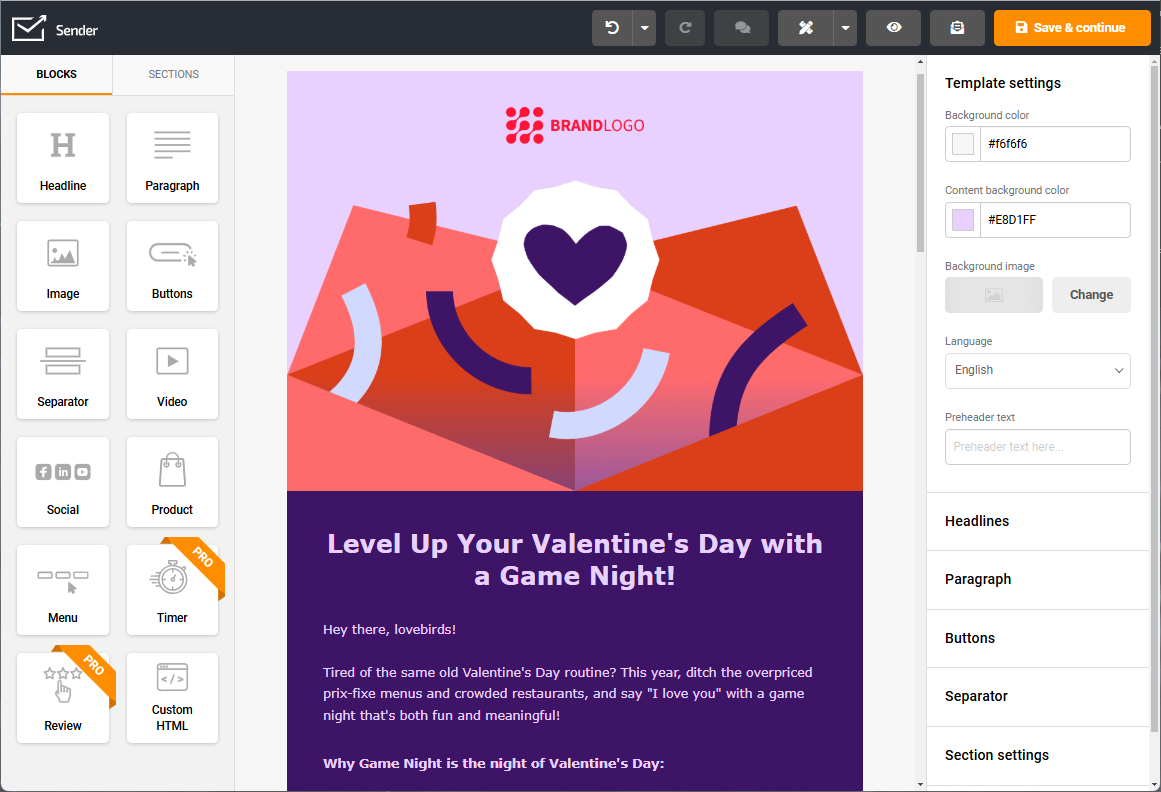
Want to rock Valentine’s Day sales through email marketing? Use Sender’s easy drag-and-drop email builder to create awesome newsletters!
Also read: Email Marketing Statistics: Insights on Effectiveness and ROI
Valentine’s Social Media Engagement
Here are some fun Valentine’s Day facts and statistics you might find useful for your Valentine’s social media campaigns:
- Chocolate received 189,000 social media mentions on Valentine’s Day 2025, slightly ahead of flowers at 187,000 mentions;
- 21% of social media users bought a product based on an influencer recommendation in the prior three months;
- In 2024, 54% of TikTok users cited using TikTok to find and discover something new, like gift ideas.
Valentine’s Day Spending Statistics
As noble as the idea behind Valentine’s Day is, the fact is that people are still going to spend money. Better questions are – what and how much will they spend it on? Let’s have a look.
Spending per Capita
According to recent Valentine’s Day revenue statistics, Americans spent a record $29.1 billion* on Valentine’s Day in 2026, more than $199.7 per person.
Spending on Flowers
According to the Society of American Florists, Valentine’s Day accounts for 30%* of all holiday flower purchases, beating out Christmas, Mother’s Day, and Thanksgiving. In fact, approximately 250 million* roses are grown each year just for Valentine’s Day.
Spending on Candy
Valentine’s Day is the dream time for sweet tooths as a surprising $2.5 billion is spent on candy. Not a single candy-making machine is probably resting!
Spending on Cards
A whopping 145 million* Valentine’s Day cards are exchanged every February 14. Just imagine the number of Valentines!
Spending on Jewelry
Candy and flowers might be some of the most common gifts for Valentine’s Day, but the category that we typically spend the most on for February 14 is jewelry, at a whopping $7 billion in 2026!
Spending on Dining and Experiences
What’s Valentine’s Day without candle-lit dinners, drive-in movies, or a cozy sip-and-paint night? Recent Valentine’s Day consumer trends crystallize the fact that experiences and dining out remain central to how many Americans celebrate the holiday.
- 52% of Americans intended to dine out at a restaurant for Valentine’s Day in 2025*;
- Dining on Valentine’s Day rose 33% year over year in 2025, with an estimate of $5.4 billion spent on wining and dining last year;
- 35% of consumers planned to give an “evening out” as a Valentine’s Day gift in 2025*;
- Last year, 51% of diners were considering a double date for Valentine’s Day, suggesting group dining experiences are becoming more common.
Spending on Online vs. In-Store Shopping
Latest Valentine’s Day retail statistics highlight how consumers split their purchases between online and in-store shopping. While digital channels dominate gift buying, traditional retailers remain an important part of the holiday shopping experience.
- Valentine’s Day shopping traffic statistics revealed the top shopping destination remains online (38%), followed by department stores (35%), which is in line with previous years’ data;
- A total of $7 billion was predicted to be spent on jewelry, followed by $3.5 billion on clothing and $3.1 billion on flowers;
- Recent Valentine’s Day ecommerce statistics show that online shopping has led Valentine’s Day for several years, reaching 40% in 2024, 38% in 2025, and 38% again in 2026.
Valentine’s Day Demographics
Before we look closer at demographic statistics related to Valentine’s Day, let’s begin with a heartwarming fact – roughly 6%* of all annual engagements in the US occur on Valentine’s Day.
Valentine’s Day self-gifting statistics also show that the holiday is not just about romantic partners — many people also treat themselves and their pets. In fact, 62% of 16–34-year-olds bought something for themselves* for Valentine’s Day.
Now, let’s explore some interesting differences in men’s and women’s behavior around this romantic day:
- Men are more likely to spend more on gifts, with an average spending of $249*;
- Women, on the other hand, have an estimated spending of $57;
- One-third (32%) of consumers also plan to purchase gifts for friends;
- 28% of men and 19% of women purchase flowers for Valentine’s Day*;
- Valentine’s Day pet gift statistics show that 32% also plan to purchase gifts for their pets.
Valentine’s Day Gift Statistics
Valentine’s Day Gift Shopping Statistics
Just like last year and the years before that, Valentine’s Day shopping extends beyond romantic partners: 58%* of American consumers hoped to buy gifts for family members in 2026. At the same time, shoppers were budgeting an average of $199.78 for gifts.
Popular Valentine’s Day Gifts
Statista’s Valentine’s Day poll revealed their Valentine’s Day shopping plans. These Valentine’s Day purchase intent statistics highlight what consumers plan to buy for the holiday.
- 56% of shoppers say they will purchase candy.
- 41% plan to buy greeting cards and flowers.
- 35% plan an evening out.
- 25% intend to purchase jewelry.
The survey also revealed not-so-popular choices for the occasion:
- 8% of Americans buy clothing items and perfume.
- 7% go for lingerie or pajamas;
- 5% choose a romantic holiday, and 4% choose beauty products;
Also read:
- SMS Marketing Open Rates & Statistics
- 30+ SMS Marketing Statistics You Must Know
- 14 Best Email Marketing Platforms Compared (2026)
*Sources:
- https://www.statista.com/statistics/217820/plans-to-celebrate-valentines-day-in-the-united-states
- https://www.ebbo.com/insights/blog/new-data-how-loyalty-programs-will-impact-holiday-shopping-habits/
- https://moosend.com/blog/valentines-statistics/#demographics
- https://www2.deloitte.com/us/en/insights/industry/retail-distribution/holiday-retail-sales-consumer-survey.html/#travel-key-findings
- https://www.statista.com/statistics/285028/us-valentine-s-day-sales/
- https://safnow.org/aboutflowers/holidays-occasions/valentines-day/valentines-day-floral-statistics/
- https://corporate.hallmark.com/holidays-occasions/valentines-day/
- https://www.huffpost.com/entry/valentines-day-proposals_n_2617650
- https://capitaloneshopping.com/research/valentines-day-shopping-statistics/
- https://www.statista.com/chart/8061/the-most-popular-valentines-day-gifts-in-the-us/
- https://nrf.com/media-center/press-releases/nrf-survey-valentine-s-day-spending-reaches-record-27-5-billion
- https://www.opentable.com/c/top-restaurants/
- https://nrf.com/media-center/press-releases/valentine-s-day-spending-expected-to-reach-new-records
- https://www.brandwatch.com/blog/social-media-holidays-february
- https://www.emarketer.com/content/valentines-day-spending-surges-consumers-redefine-how-celebrate
- https://party.alibaba.com/valentine/how-many-marriage-proposals-are-there-on-valentines-day?
- https://www.theknot.com/content/popular-day-to-get-engaged
- https://www.theshelf.com/the-blog/valentines-day-spending-trends-infographic/
- https://www.socialsamosa.com/report/influenced-brand-campaigns-indians-plan-valentine-day-spends-11093878
- https://www.performancemarketingworld.com/article/1948260/valentines-day-2026-data-finds-word-love-reduces-campaign-performance-–-so-wins-consumers-hearts