



Your landing page defines the make-or-break moment in your digital marketing funnel. It converts visitors into valuable leads or customers. But how much impact do landing pages have on your sales funnel and revenue?

We’ve gathered relevant user engagement metrics and landing page stats to give you an idea. So, roll up your sleeves and start taking notes as we share top landing page trends and what matters the most.

Top Landing Page Statistics at a Glance

  • The median landing page conversion rate is 6.6% across all industries;
  • 83% of landing page visits happen on mobile, yet desktop converts 8% better;
  • Email traffic converts 60% more than paid social and 370% more than display ads;
  • Businesses with 40+ landing pages generate 500% more leads than those with fewer than 10;
  • Personalized CTAs convert 202% better than generic ones;
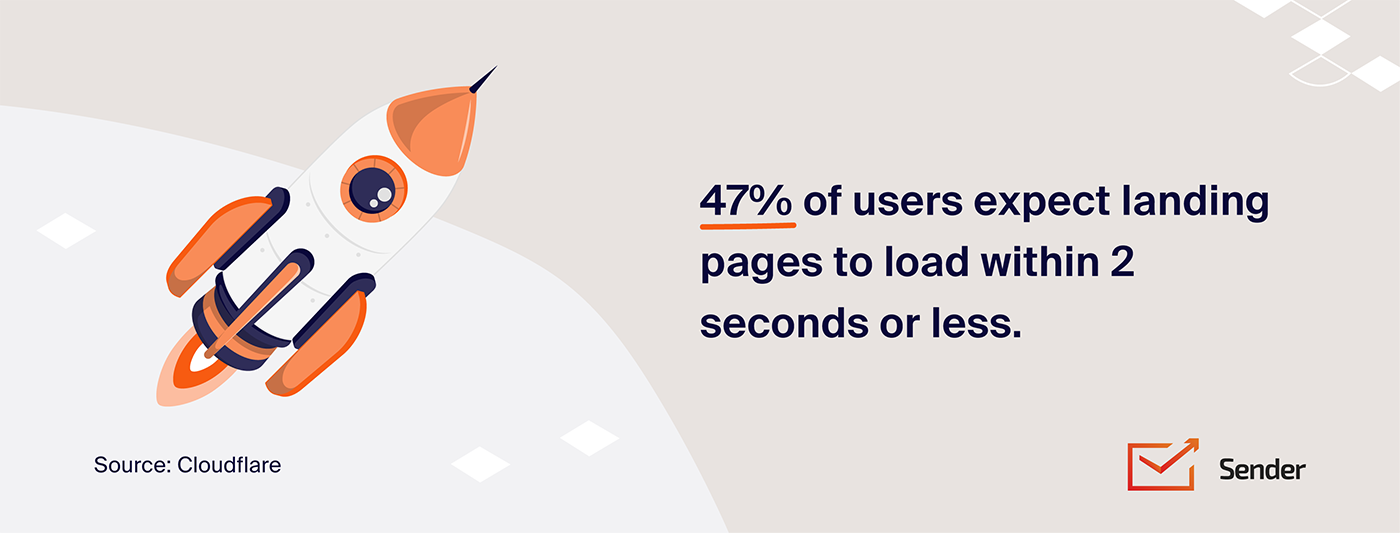
  • 53% of mobile users abandon a page that takes over 3 seconds to load;
  • Only 12% of A/B tests win on the primary metric;
  • Top-performing landing pages reach 15–20% conversion rates with warm email traffic.

General Landing Page Statistics

Are you always concerned about your landing page performance? Do you keep building multiple landing pages to test things out? From landing page traffic statistics to conversion benchmarks, data can help you understand your business’s landing page ROI. Here are some vital statistics:

  • Landing pages written at a 5th to 7th grade reading level convert at 11.1%—56% higher than pages written at an 8th and 9th grade level and more than 2x higher than professional-level writing which converts at 5.3%;
  • There is a -24.3% correlation between the number of difficult words used and conversion rates;
  • Attention spans have decreased from roughly 2.5 minutes in 2004 to just 47 seconds in 2024;
  • Businesses with more than 40 landing pages generate over 500% more leads compared to those with fewer than 10 (Invesp);
  • Visitors who reach a landing page via email convert 60% more than those from paid social, 77% more than paid search, and 370% more than display ads (Unbounce).

Average Landing Page Conversion Rate

When it comes to landing page conversions, you’ve got to carefully sync different elements. Focused messaging, clear CTAs, and personalization are critical reasons for outstanding performance. Here’s the data to help you create landing pages that perform:

  • The median landing page conversion rate is 6.6% across all industries;
  • The median landing page conversion rate across all industries was 6.6% in Q4 2024;
  • Financial services landing pages had a median conversion rate of 8.4%, while SaaS landing pages were at 3.8%;
  • Email generates the highest median conversion rate at 19.3%; paid social (12%) converts higher than paid search (10.9%), with display ads trailing at just 4.1% (Unbounce).

Good Landing Page Conversion Rate

When it comes to ideal landing page conversion rates, time to load, compelling copy, and visuals relevant to your target audience matter a lot. Here’s some insight to help you build your own landing pages:

  • Top-performing landing pages exceed 11% conversion rates; those with warm email traffic or highly targeted campaigns can reach 15–20% (Unbounce);
  • Landing pages containing fewer than 10 elements convert at around twice the rate of pages with 40+ elements (Landbase);
  • Personalized calls-to-action convert 202% better than generic ones (HubSpot).
landing-page-statistics-2

Sales Page Conversion Rate

If you need landing page lead generation statistics for landing page optimization, here’s some information that may help you in creating a high-converting sales page:

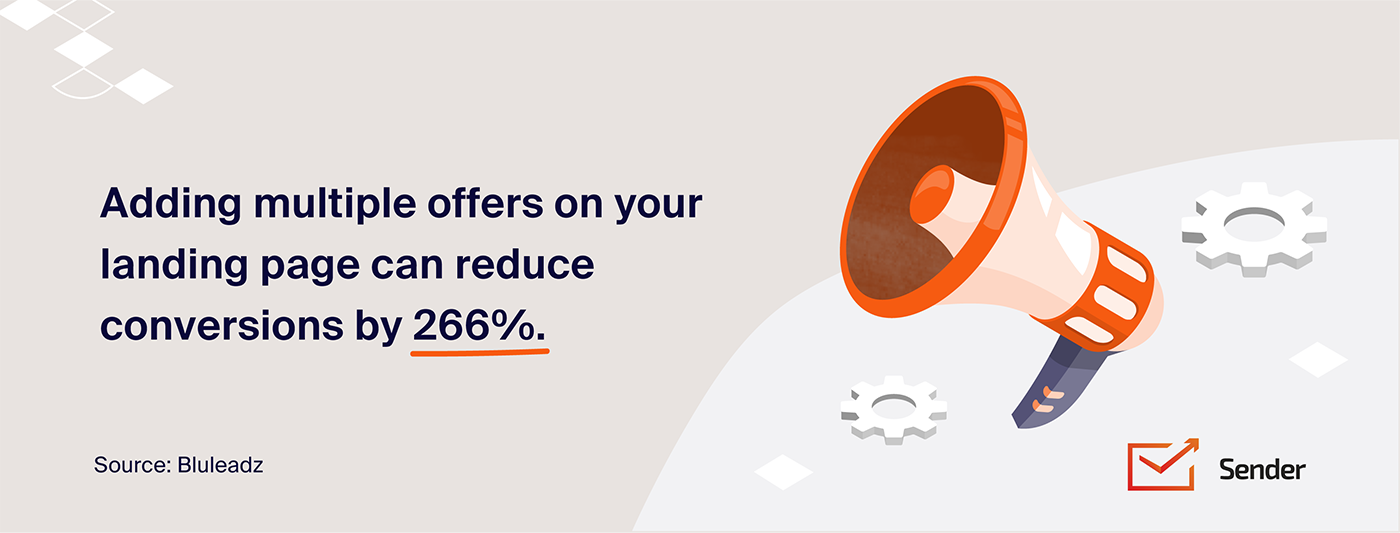
  • Adding multiple offers on your landing page can reduce conversions by 266%;
  • Reducing one field on a sales page form can increase conversions by up to 50%;
  • The average conversion rate for ecommerce product pages is 2.86%;
  • 10% of the top landing pages in ecommerce convert at 11.45% or higher.

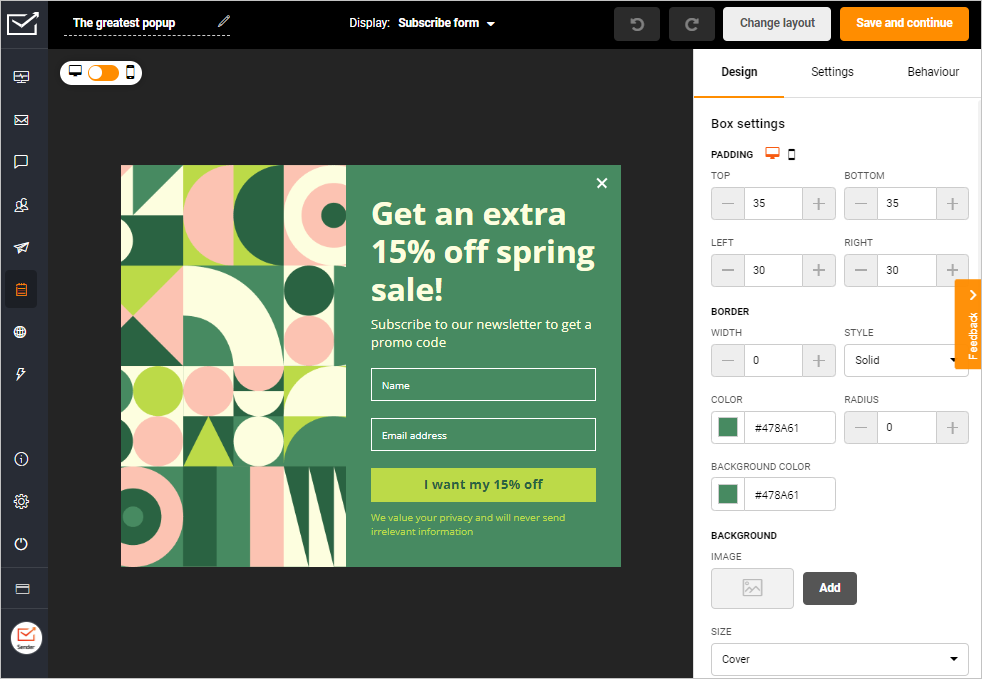
Use Sender to integrate a sign-up form into your landing page to capture quality leads and grow your contact list.
Sender-popup-templates2

Landing Page Loading Time Statistics 

Landing page load time has a direct impact on the conversion rates. The landing page bounce rate statistics and load time data below show why speed optimization is non-negotiable:

  • Average bounce rate for landing pages ranges between 60–90%;
  • The average web page load time is 2.5 seconds on desktop and 8.6 seconds on mobile;
  • 53% of mobile users abandon sites that take over 3 seconds to display content, directly eliminating conversion opportunities before visitors reach the page (Firework);
  • As of September 2025, 53% of origins had good LCP, CLS, and INP together, showing that only about half of sites are meeting modern speed and responsiveness benchmarks across Core Web Vitals.

Impact of Page Speed on Conversions

Page speed directly influences how users interact with your landing page and whether they complete a desired action. The landing page user experience statistics below highlight how even small delays can significantly impact performance:

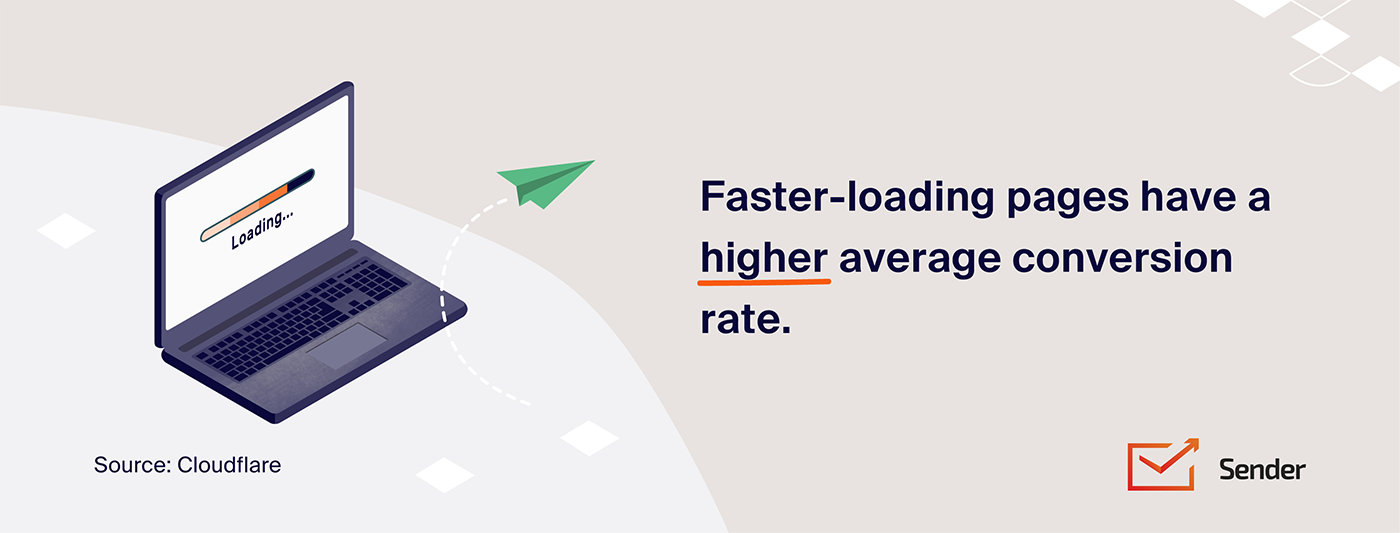
  • A site that loads in 1 second has an ecommerce conversion rate 2.5x higher than a site that loads in 5 seconds;
  • Ecommerce conversion rate decreases by an average of 0.3% for every additional second it takes a site to load;
  • Users who experienced good INP had a 25% better conversion rate than users with poor INP.
landing-page-statistics-4

Ideal Landing Page Load Time

The ideal landing page load time is no longer just about speed—it’s about meeting modern user expectations and performance benchmarks. Faster load times improve user experience, reduce bounce rates, and increase conversions, especially on mobile devices where performance gaps are more noticeable. The following data highlights current benchmarks for optimal load times:

  • Google recommends that landing pages achieve a Largest Contentful Paint (LCP) of 2.5 seconds or less for a good user experience;
  • The average website displayed its main content in 1.3 seconds in 2024, with desktop at 1.1 seconds and mobile at 1.4 seconds;
  • In 2025, 74% of desktop pages and 62% of mobile pages achieved a “good” LCP score, showing that meeting optimal load time benchmarks is still more challenging on mobile devices.

A/B Testing in Optimizing Landing Pages

A good landing page builder gives A/B testing features for optimizing your pages and improving conversion rates. It involves running experiments between two variants to check which one performs better. Here are some statistics about A/B testing for landing pages:

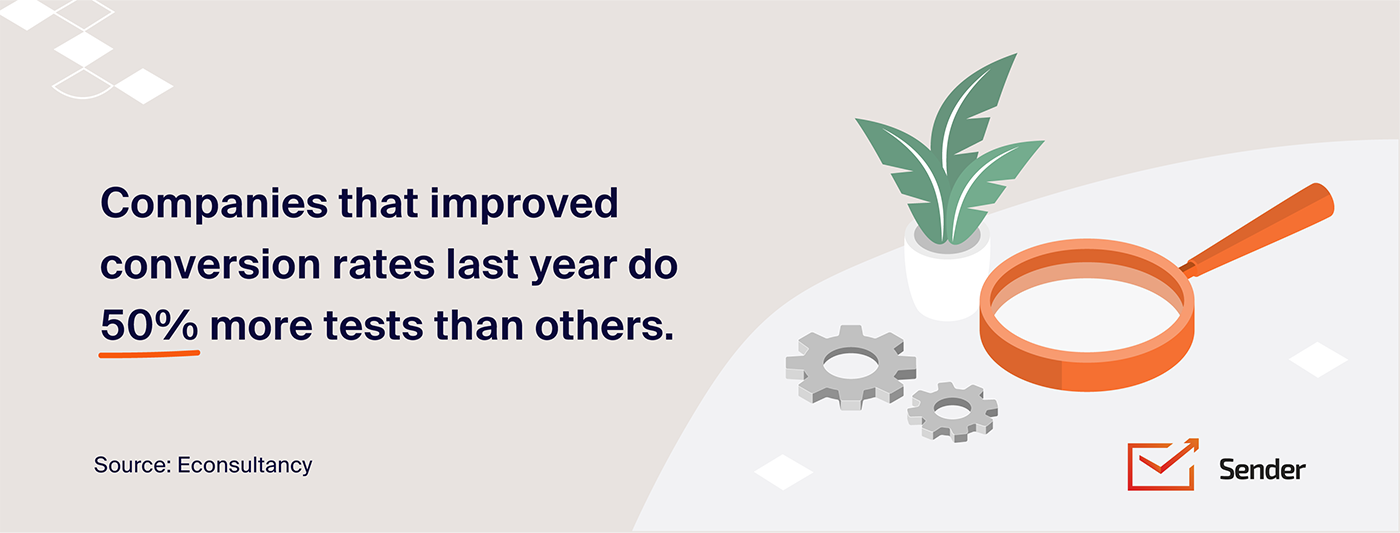
  • There was a 55% increase in experiments run versus two years earlier;
  • 52% of businesses have no formal QA process for experiments before launching them — a gap that explains why so many testing programs struggle to prove ROI (Speero, Experimentation Maturity Program Report, 2025);
  • The median company runs 34 experiments per year, while the top 10% run 200+ annually;
  • Landing page heatmap statistics show that analyzing where visitors click and scroll can directly shape redesign decisions: one brand repositioned its quote form to the hero section after heatmap data revealed most visitors never scrolled further, producing an immediate 15% conversion lift (Hotjar / Blogging Wizard).

A/B Testing Conversion Impact

A/B testing remains one of the most effective ways to improve landing page performance, but results are often incremental and require continuous experimentation. Rather than relying on one-time changes, high-performing teams test multiple variations, iterate frequently, and use personalization to drive stronger conversion gains. The statistics below highlight how testing strategies influence outcomes:

  • Only 12% of A/B tests win on the primary metric;
  • Tests with 4+ variations are 2.4x more likely to win and deliver 27.4% higher uplifts;
  • Personalized experiences generate 41% higher impact than general experiences.
landing-page-statistics-5

Most Tested Landing Page Elements

A/B testing helps identify which elements of a landing page have the greatest impact on conversions. Marketers typically focus on high-visibility components, and both landing page headline statistics and landing page CTA statistics consistently point to these as the highest-leverage elements. The following data highlights what marketers prioritize when optimizing landing pages through testing:

  • 32% of marketers use A/B testing on landing pages;
  • 45% of marketers say conversion rate is one of the most important metrics when evaluating A/B test results;
  • Headlines, CTA buttons, and images remain the most commonly tested landing page elements in recent testing guides.

Landing Pages Visual Content Statistics 

A landing page’s design directly affects your page performance. The landing page engagement statistics and usability metrics below show how visual content drives conversion rates:

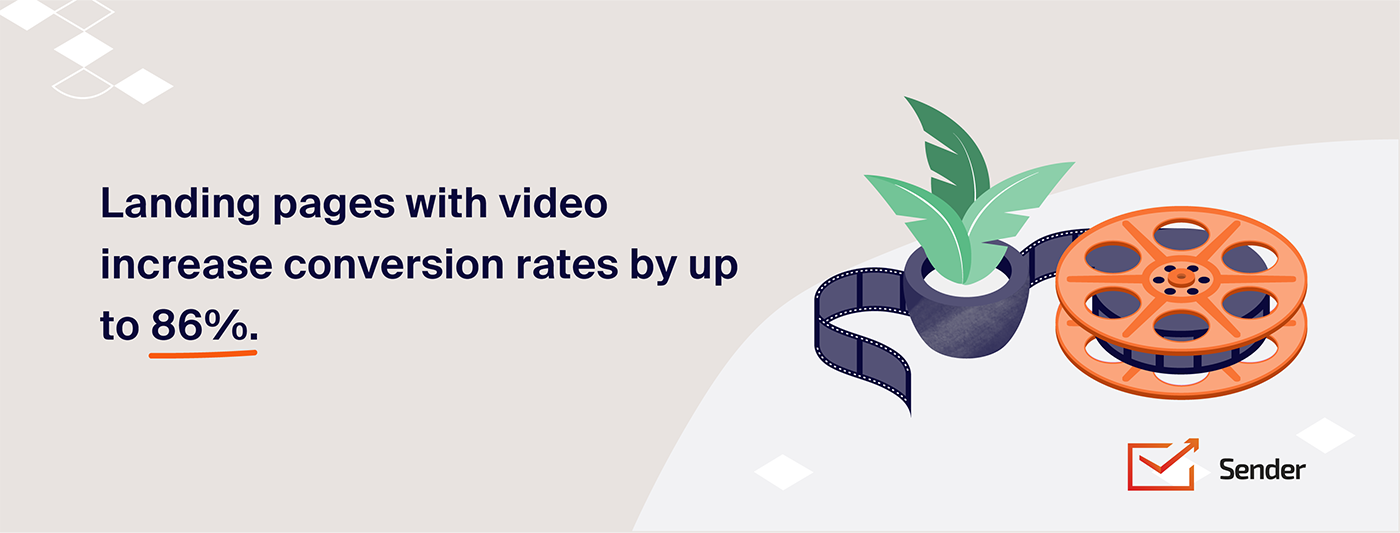
  • Videos on galleries, blog posts, and landing pages see engagement rates above 40% on average;
  • 38.6% of experienced marketers say videos make the biggest impact on landing page conversions, while 35.6% say images and graphics work best;
  • Desktop traffic converts 8% better than mobile, highlighting the importance of clear visual hierarchy and mobile-friendly landing page design.
landing-page-statistics-3

Mobile Responsiveness on Landing Pages

It’s a no-brainer that people want responsive landing pages. But how does it affect your landing page performance? Let’s look at some mobile landing page statistics:

  • 83% of landing page visits happen on mobile devices;
  • Dynamic (interactive) landing pages convert approximately 25.2% more mobile users than static versions (MarketingLTB);
  • In the 2025 Web Almanac, 81% of mobile pages achieved a “good” CLS score, showing that layout stability on mobile is improving even while speed remains a challenge.

Mobile Conversion Rates

Mobile traffic now dominates landing page visits, but higher traffic does not always mean higher conversions. In many cases, mobile users still convert at lower rates than desktop visitors, which makes responsive design, fast load times, and simplified mobile experiences essential. The statistics below highlight recent benchmarks that help explain the gap between mobile traffic and mobile conversion performance:

  • Core Web Vitals improvements contributed to 80–100% growth in mobile conversion rates;
  • A checkout redesign led to a 9% increase in mobile conversion rate for mobile users;
  • In January 2026, the average ecommerce conversion rate was 1.51%, down from 1.75% a year earlier.

Mobile vs. Desktop Landing Page Performance

Mobile devices now drive most landing page traffic, but desktop still tends to deliver stronger performance in key areas like conversion rates and page speed. This gap shows that while mobile responsiveness is essential, many landing pages still perform better on larger screens. The statistics below highlight how mobile and desktop compare in recent benchmark data:

  • Progressive web apps achieve 36% higher conversion rates than standard mobile sites by bridging the gap between mobile web and native app experience (Cropink);
  • Desktop converts 8% better than mobile on average;
  • In professional services, desktop converted at 11.6% compared with 8.3% on mobile;
  • Every 1-second delay on a mobile page increases its bounce rate by 8.3% in 2025 (SQ Magazine).

Landing Page Form Statistics

Forms and pop-ups are essential elements for capturing leads on landing pages, especially in lead generation and ecommerce funnels. From simple email forms to gamified pop-ups like spin-to-win wheels, these elements directly influence conversion rates by reducing friction and increasing engagement. The statistics below highlight how different form types and structures perform in real-world scenarios:

  • The average email popup conversion rate in 2025 was 2.1%;
  • Gamified popups such as Wheel of Fortune can reach 3.5%+ conversion rates;
  • Two-field popup forms convert at around 5% on average, while four-field forms can approach 9% in high-intent contexts.

Landing Page SEO Statistics

SEO plays a major role in whether landing pages get discovered, clicked, and visited in the first place. Strong rankings can drive consistent organic traffic, while technical performance signals like Core Web Vitals help support both search visibility and user experience. The statistics below highlight recent benchmarks that matter most for SEO-focused landing pages:

  • The #1 organic result in Google has an average CTR of 27.6%;
  • 96.6% of all clicks go to results on Google’s first page;
  • 48% of top-performing landing pages appear in organic Google listings or Map packs for their relevant search terms (Backlinko).

Webinar Landing Page Conversion Rate

Webinar landing pages need to do more than collect signups—they have to turn visitors into registrants and registrants into actual attendees.

Recent landing page personalization statistics show that tailoring the registration experience can significantly improve performance across the webinar funnel. The statistics below highlight newer conversion benchmarks for webinar landing pages:

  • Personalized webinar pages achieved a 45% visitor-to-registrant conversion rate, compared with 36% on traditional pages;
  • Personalized landing pages converted at 25% on average;
  • Average webinar registration-to-attendee conversion was 57% in 2024.

B2B Landing Page Conversion Rates

B2B landing page performance can vary widely depending on the traffic source, industry, and offer type. Recent benchmarks show that while some B2B categories convert below the all-industry average, well-optimized pages can still generate strong results. The statistics below provide newer benchmarks for B2B and B2B-leaning landing pages:

  • Well-optimized B2B landing pages for search traffic typically convert in the 2–5% range;
  • SaaS landing pages have a median conversion rate of 3.8%;
  • Commercial and professional services landing pages have a median conversion rate of 6.1%;
  • Landing page trust signal statistics reveal that 66% of customers say social proof increases their likelihood to buy, and 61% have abandoned a purchase because trust seals were absent from the page (KlientBoost / ActualInsights).
With Sender, it’s free as long as you want it
Send up to 15,000 emails to 2,500 subscribers completely free. Automation, segmentation, email templates, landing pages and popups included.
Start With Free Plan

Industry Benchmarks for Landing Page Performance

Landing page conversion rates vary a lot by industry, traffic source, and offer type. Recent benchmark data shows that some industries, such as education, convert well above the overall median, while others like SaaS tend to face more friction and lower baseline rates. The statistics below provide newer benchmarks for comparing landing page performance across industries:

  • Events & Entertainment tops all industries at a 12.3% median conversion rate, while SaaS sits at the bottom at 3.8% — a spread of more than 3x between the best and worst-performing sectors (Unbounce Q4 2024);
  • SaaS landing pages had a median conversion rate of 3.8%;
  • Education landing pages had a median conversion rate of 8.4%, with online course pages reaching 18.3%.

That’s all for now. Did any landing page statistic here shocked you? Here are some more articles you will love: 


Sources:

  • https://unbounce.com/average-conversion-rates-landing-pages/
  • https://www.getresponse.com/resources/reports/email-marketing-benchmarks#landing-page-conversion-by-industry
  • https://blog.hubspot.com/marketing/personalized-calls-to-action-convert-better-data
  • https://unbounce.com/conversion-rate-optimization/how-to-optimize-contact-forms/
  • https://www.marketingprofs.com/charts/2024/52374/landing-page-conversion-benchmarks
  • https://techjury.net/blog/landing-page-statistics/
  • https://www.quicksprout.com/contact-form-conversion-rate/
  • https://www.cloudflare.com/learning/performance/more/website-performance-conversion-rates/
  • https://web.dev/learn/performance/why-speed-matters
  • https://www.customedialabs.com/blog/bounce-rates/
  • https://portent.com/blog/analytics/research-site-speed-hurting-everyones-revenue.htm
  • https://contentsquare.com/blog/interaction-to-next-paint
  • https://backlinko.com/google-ctr-stats
  • https://ahrefs.com/blog/serps
  • https://developers.google.com/search/docs/appearance/core-web-vitals
  • https://www.hubspot.com/marketing-statistics
  • https://econsultancy.com/reports/conversion-rate-optimization-report
  • https://www.invespcro.com/blog/the-state-of-ab-testing/
  • https://web.dev/articles/vitals
  • https://www.debugbear.com/blog/page-speed-2024
  • https://almanac.httparchive.org/en/2025/performance
  • https://unbounce.com/landing-page-examples/high-converting-landing-pages/
  • https://www.optimizely.com/insights/blog/10-best-ab-testing-examples/
  • https://promo.com/blog/does-video-increase-conversion-rate
  • https://keywordseverywhere.com/blog/landing-page-stats
  • https://ascend2.com/wp-content/uploads/2025/06/AB-Testing-in-Marketing-Research-Ascend2-250611.pdf
  • https://www.merkleinc.com/emea/blog/dynamic-landing-pages-relevance-made-easy
  • https://www.ruleranalytics.com/blog/insight/conversion-rate-by-industry/
  • https://unbounce.com/conversion-benchmark-report/
  • https://www.on24.com/blog/professional-services-marketing-must-know-trends-for-2026
  • https://www.marketingprofs.com/charts/2025/52917/b2b-webinar-benchmarks-conversion-attendance-personalization
  • https://blog.hubspot.com/marketing/2022-cpl-and-cac-benchmarks
  • https://www.invespcro.com/blog/the-state-of-ab-testing/
  • https://unbounce.com/conversion-benchmark-report/
  • https://firework.com/blog/landing-page-statistics
  • https://speero.com
  • https://bloggingwizard.com/landing-page-statistics/
  • https://marketingltb.com/blog/statistics/landing-page-statistics/
  • https://cropink.com
  • https://sqmagazine.co.uk/mobile-vs-desktop-statistics/
  • https://backlinko.com/landing-page-stats
  • https://www.klientboost.com/landing-pages/landing-page-testimonials/