

An email marketing funnel is a structured sequence of emails that moves subscribers through five stages of the customer journey: awareness, interest, consideration, conversion, and retention. It uses targeted content, marketing automation, segmentation, and behavioral triggers to guide people from initial signup toward purchase, repeat engagement, and long-term customer value.
This guide is for SMB and ecommerce marketers building or growing an email list and want a clearer system for turning subscribers into customers. It covers funnel strategy and step-by-step build instructions, but not email deliverability or inbox placement.
What is an Email Marketing Funnel?
An email marketing funnel is a structured sequence of emails that moves subscribers through the customer journey, from first discovering your brand to becoming repeat customers. Each stage reflects a different level of intent, so the message, email type, and goal should change as subscribers move closer to – or beyond – a purchase.
At the awareness stage, people are just getting to know your brand, so the focus is on capturing leads and delivering the value that encourages them to subscribe. During the interest stage, the goal shifts to nurturing that initial attention with useful, relevant content that builds trust.
In the consideration stage, subscribers are actively evaluating their options. Emails such as testimonials, case studies, and product-focused content can help demonstrate why your offer fits their needs. The conversion stage focuses on turning that intent into action using clear calls to action, pricing, trials, discounts, or abandoned cart emails.
The funnel doesn’t end after a purchase. At the retention stage, post-purchase, re-engagement, personalized recommendations, and loyalty emails help keep customers engaged and encourage repeat purchases. Tracking engagement, clicks, conversions, and customer value at each stage helps you see where subscribers progress – and where the funnel needs improvement.
| Stage | Reader mindset | Goal | Email types | Key metric |
| Awareness | I’m getting to know this brand | Capture leads and deliver initial value | Welcome emails, lead magnet delivery | Signup conversion rate |
| Interest | I want to learn more | Build trust and keep subscribers engaged | Welcome series, nurture emails, drip campaigns | Click-through rate |
| Consideration | I’m comparing my options | Demonstrate product or service value | Case studies, testimonials, product demos | Click-through rate |
| Conversion | I’m deciding whether to buy | Turn subscribers into customers | Offers, free trials, abandoned cart emails | Conversion rate |
| Retention | I’ve bought – give me a reason to stay | Encourage loyalty and repeat purchases | Post-purchase, re-engagement, win-back emails | Customer lifetime value |
Email Funnel vs. Sales Funnel vs. Marketing Funnel
- Marketing funnel: If you’re looking at the full customer journey across channels, the marketing funnel covers touchpoints such as email, social media, ads, search, and content.
- Sales funnel: If your focus is moving prospects toward a purchase, the sales funnel tracks the pipeline from initial interest through qualification and conversion.
- Email funnel: If you’re focusing specifically on email, the email funnel is the email layer across the customer journey, from awareness and nurturing to conversion and retention.
Why it Matters
An email marketing funnel helps you automate the communication between you and your prospects, and it works 24/7.
Here are other benefits of building one for your business:
- Simplifies the customer journey. Email funnels automate personalized email sequences based on customer behavior, guiding them from awareness to purchase. This automation ensures the right message reaches the right person at the optimal time;
- Allows for personalization in email marketing. Craft highly targeted emails by personalizing elements like subject lines, greetings, and content. This tailored approach enhances engagement and builds stronger connections with prospects;
- Easy to track. Monitor key metrics at each stage of the funnel, such as email opens, click-throughs, and conversions. This data-driven approach allows you to refine your strategies and maximize your return on investment.
The 5 Email Marketing Funnel Stages
The five email marketing funnel stages – awareness, interest, consideration, conversion, and retention – reflect how subscribers move from first discovering your brand to becoming repeat customers. Each stage has a different goal, so the emails you send should match the subscriber’s intent, questions, and readiness to take action.
Awareness
The awareness stage captures leads by offering something valuable in exchange for an email address. This is your first impression on a target audience that doesn’t know you yet, so the incentive has to be worth the address – think ebooks, checklists, or webinars offered through a simple opt-in form or sign-up form.
Interest
The interest stage keeps new subscribers engaged with content that addresses their pain points and shows your expertise. Deliver it through lead nurturing sequences built with email automation. A welcome series is the usual starting point: it establishes the relationship before you ask for anything.
Consideration
At this point in the funnel, subscribers are actively comparing options, so emails should show how your product solves the problem they’re evaluating it for. Case studies, testimonials, and product demos work best for the consideration stage because they let existing customers make the argument instead of you.
Conversion
The conversion stage turns subscribers into paying customers using clear calls-to-action (CTAs), transparent pricing, and time-limited offers. Remove every step between the email and the checkout.
One of the great email marketing funnel examples here is using abandoned cart emails to bring back those who almost bought something.
Retention
The retention stage turns one-time buyers into repeat customers through exclusive discounts for existing customers, feedback requests, and loyalty program invitations. By keeping an eye on your email analytics, like click-through rates (CTR) and open rates, you can see what’s working and adjust your email marketing strategy based on customer behavior. This helps optimize your conversion rates even further.
Email Marketing Funnel Examples by Stage
Each handpicked example below pairs a real email – from Athletic Brewing, Flavcity, True Grit Texture Supply, Apple, and Dinnerly – with the email type, its goal, and why it works at that stage.
Awareness Example
A new subscriber has just joined your email list – congrats! Now, deliver the valuable content they signed up for, such as a free ebook, checklist, or discount code.
This email is crucial for establishing a positive first impression and reinforcing the value you offer. Direct them to other relevant resources on your website or blog to further pique their interest.
In its welcome email, Athletic Brewing delivers the promised first-order discount and invites to purchase (or at least explore the product range):
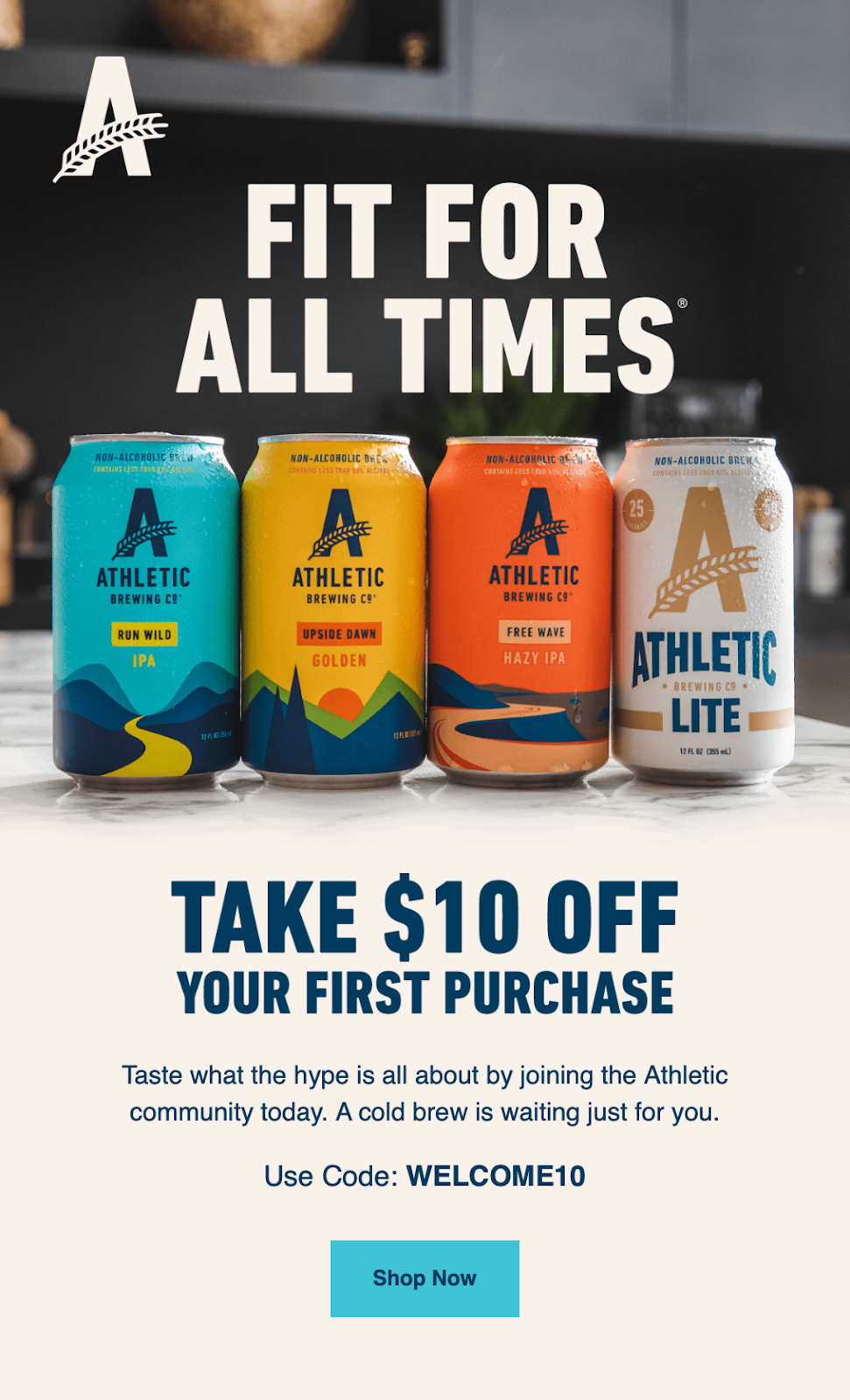
| Type of email | Welcome email with free offer |
| Goal | Showcase the product and turn a lead into a customer |
| Why it works | The welcome gift is front and center, just like the main product |
Engagement Example
Keep those new subscribers engaged with a series of follow-up emails that provide valuable information related to their interests and pain points. This is a prime opportunity to showcase your knowledge and build trust. Drip campaigns work well here, delivering content gradually over time to nurture the relationship.
Here Flavcity is doing exactly that by giving away a recipe that uses one of their products in exchange for a conversion:
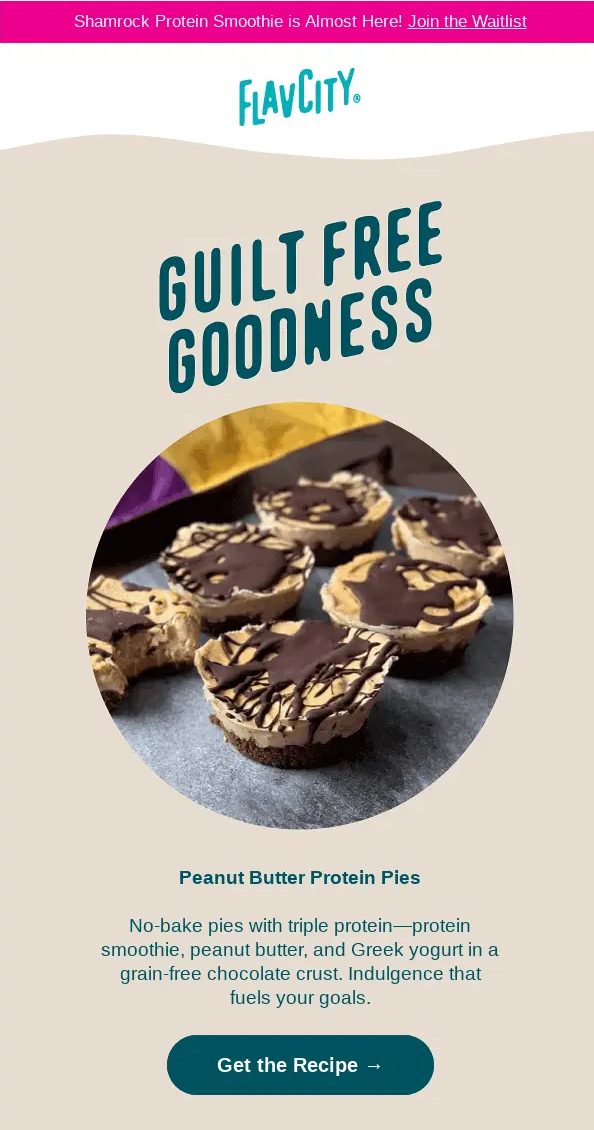
| Type of email | Nurture sequence with educational content |
| Goal | Build relationships and establish expertise |
| Why it works | Engages subscribers with a free recipe they might be interested in |
Consideration Example
Prospects are now weighing their options, so it’s time to show them what you can do! Share compelling email funnel examples like customer success stories, case studies, or glowing testimonials. Highlight how your product or service has helped others overcome similar challenges and achieve positive outcomes.
Knowing how well positive reviews work, True Grit Texture Supply shared a handful of them:

| Type of email | Case study or testimonial email |
| Goal | Demonstrate the value of your product or service |
| Why it works | Highly visible customer praise builds trust and validates promoted product/brand quality |
Conversion Example
Give those on the fence a nudge with a compelling offer they can’t refuse! Promote a limited-time discount, a free trial of your product, or a bonus for signing up. Use strong calls-to-action and create a sense of urgency to encourage immediate action.
Apple chose the straightforward way and offered a considerable discount for new Apple device users on the whole Creator Studio package:
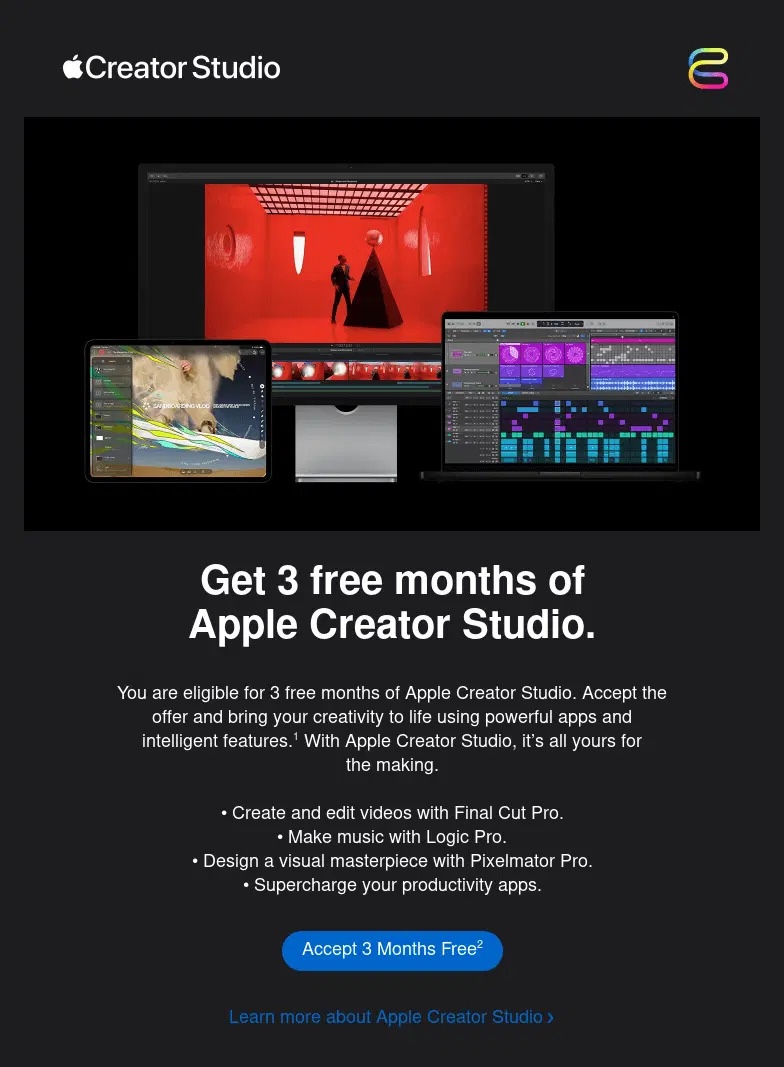
| Type of email | Limited-time offer or free trial email |
| Goal | Convert leads into paying customers |
| Why it works | Free 3-month trial of the product as an incentive to get the user to subscribe for the long term |
Retention Example
Don’t forget about your existing customers! Re-engagement emails can reignite interest from those who haven’t purchased in a while.
Consider offering personalized recommendations based on their past purchases or sending exclusive discounts to show your appreciation. Building a strong customer relationship through consistent and relevant communication is key to long-term success.
Here Dinnerly chose to reignite the conversation by offering a Black Friday deal you can’t say no to:
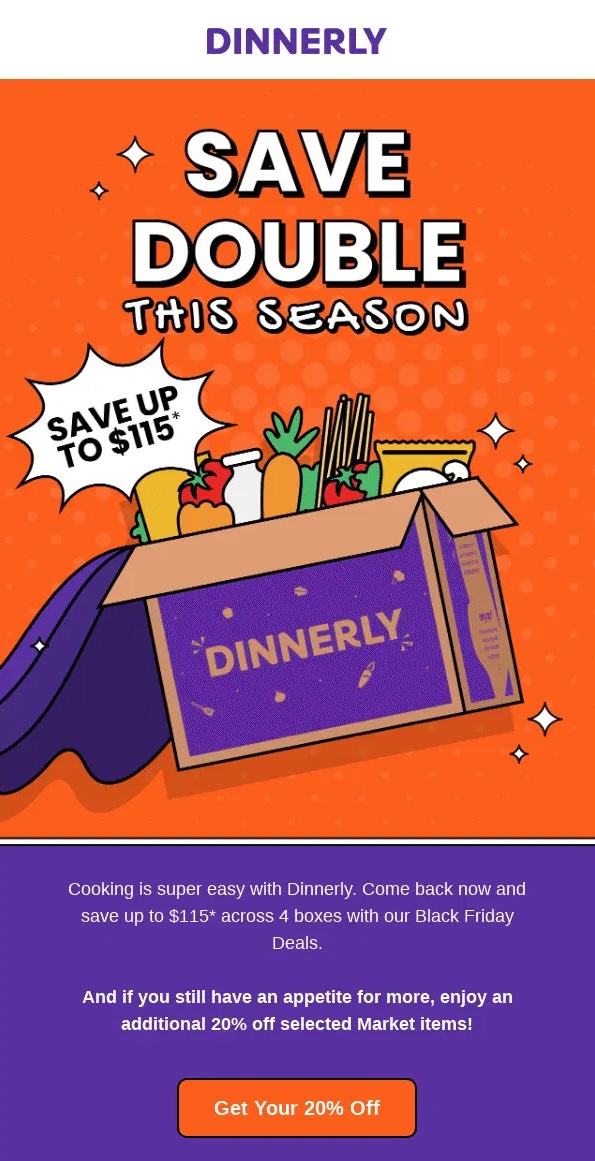
| Type of email | Re-engagement campaign or customer appreciation email |
| Goal | Increase customer lifetime value and build brand loyalty |
| Why it works | Tries to get back dormant user with an aptly timed Black Friday discount (+ the extra 20% off for regular Market items) |
How to Build an Email Marketing Funnel in 7 Steps
Finally, with some practical examples, let’s discuss building an email marketing funnel for your business.
1. Map Customer Journey and Set One Goal
Before writing your emails, map the path you want subscribers to follow. Include the entry point, the key messages they’ll receive, any decision points, and the action that ends the sequence.
Next, choose one primary goal for the funnel, such as completing a purchase, starting a trial, booking a demo, or registering for an event. Connect that goal to a measurable metric so you can evaluate the funnel’s performance. A simple visual map is all you need.
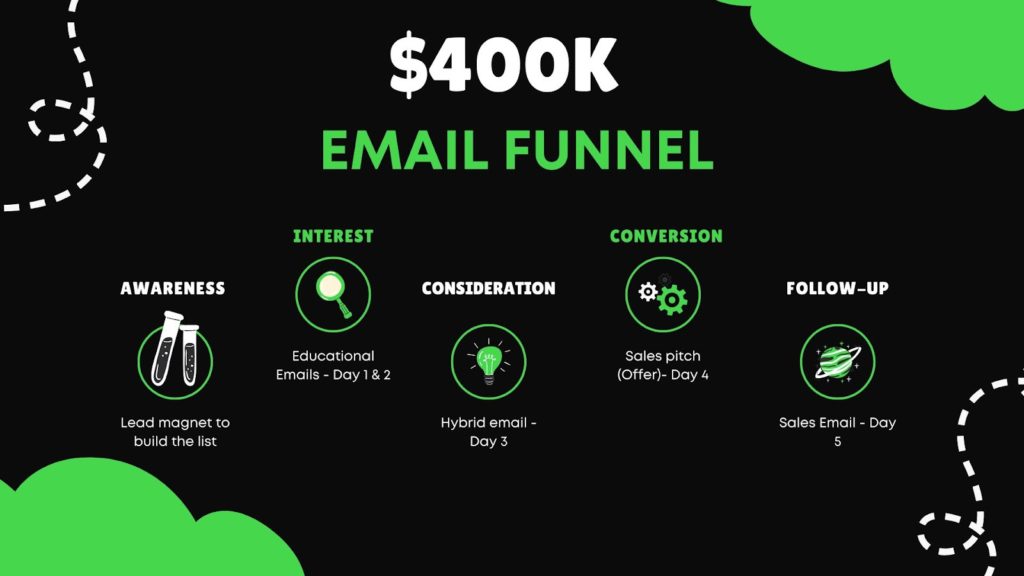
For example, GrowthLab says its five-day sales sequence generated $400,000 from a single product launch. The funnel moved subscribers from educational emails to a product offer and final sales follow-up over five days.
When making a funnel map, a critical question to answer is how long you want your funnel to be. A simple, low-cost offer may require only a few emails, while a complex or higher-priced product may need weeks or months of nurturing. The right length depends on your buying cycle, offer complexity, audience behavior, and whether the funnel includes multiple offers or upsells.
2. Set Up Your Lead Capture
The email funnel often begins when someone joins your email list newsletter.
Hence, a crucial step in creating your email funnel is collecting leads. And to do that, you need some incentives (lead magnets) to draw them in.
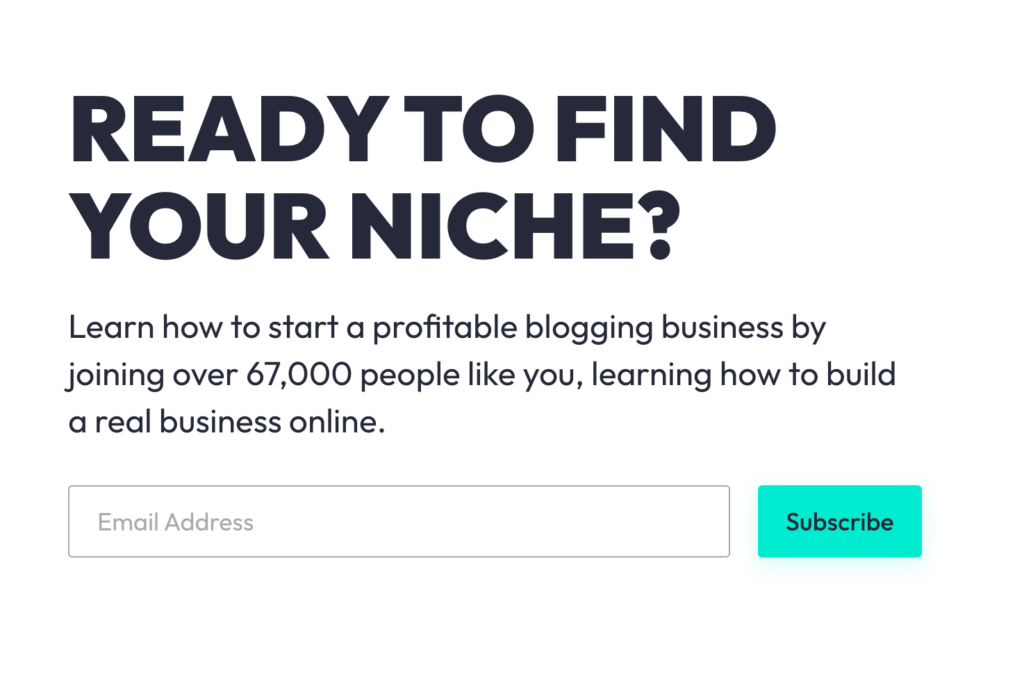
There are several ways to use a lead magnet. You can serve your lead magnet through newsletter signup forms and popups on your website or landing page.
Here is an example from NichePursuits:
3. Create Two or Three Lead Magnets
One of the mistakes people make is creating just a single lead magnet and expecting the best results.
It’s been proven that having multiple lead magnets increases the success of capturing a bigger pool of different segments.
Create two or three lead magnets aimed at different segments, then split-test them. This way you can see how each one performs before sticking with the winners.
If you don’t know where to start, here are some lead magnet ideas you can try:
- Free training and webinar;
- Free workbook and worksheet;
- Industry statistics;
- Case studies of past clients;
- Free consultation call;
- Free audit and strategy session, and so on.
You can find more freebie funnel examples here.
4. Choose Your Email Software
Choose email marketing software that supports event-based triggers, branching logic, audience segmentation, and clear analytics. These capabilities let you start workflows based on subscriber actions, send people down different paths, target relevant groups, and measure how each part of the funnel performs.
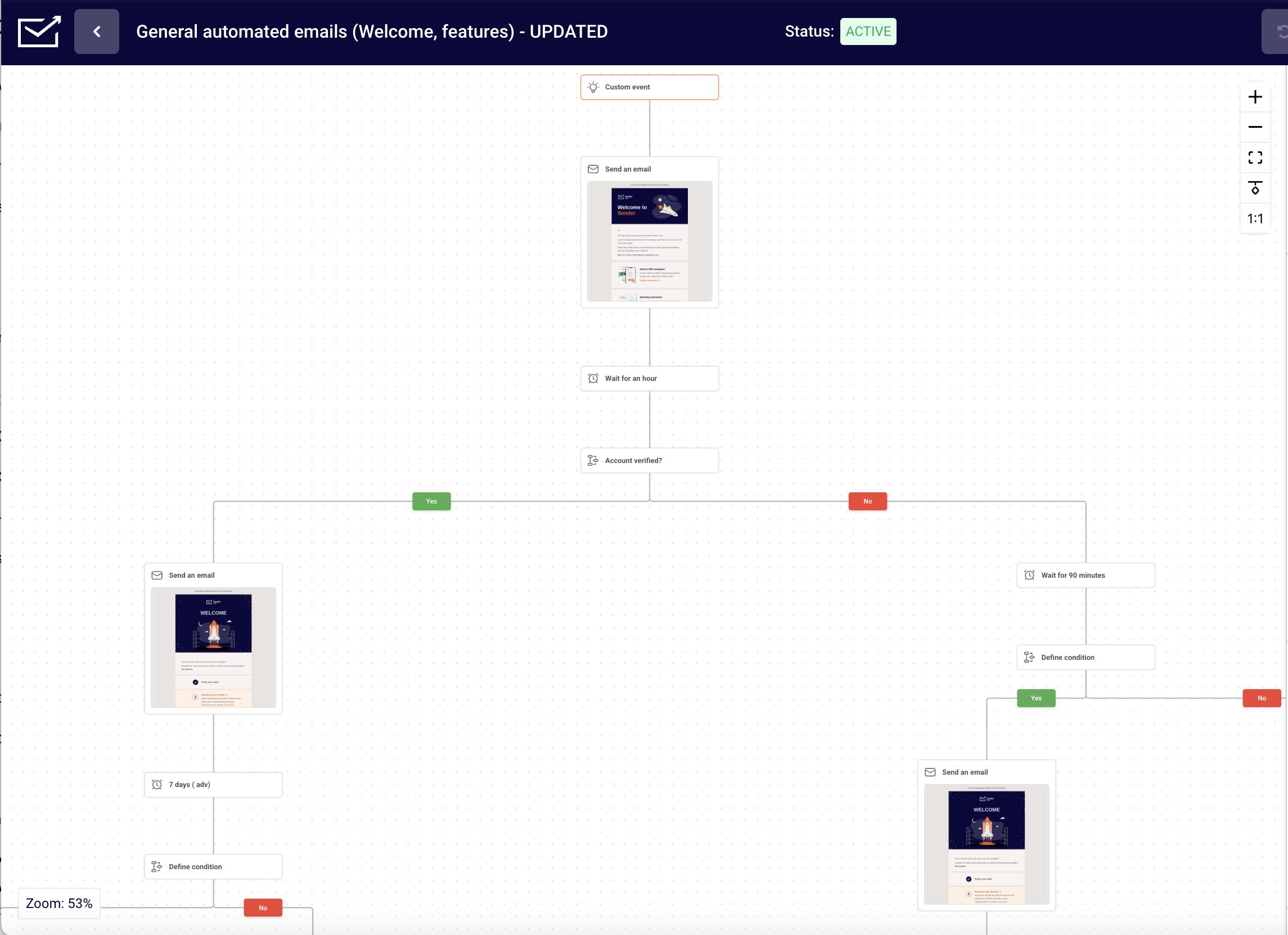
Sender includes these core automation features and lets you build email marketing workflows from one platform.
5. Build the Nurture Sequence
The lead-nurturing stage is where you build relationships with your subscribers. You’ve attracted them with your lead magnet and initial welcome email, but they aren’t ready to buy yet. This stage bridges the gap.
Here’s how to nurture your leads effectively:
- Deliver valuable content consistently. Provide useful information related to your lead magnet and eventual product/service. This could be through a series of emails, blog posts, videos, or a combination;
- Segment your audience. Divide your subscribers into smaller groups based on their interests, demographics, or behavior. This allows you to send more targeted content that resonates with each specific segment, leading to higher engagement;
- Personalize your messages. Use the information you’ve collected to personalize the experience for each subscriber. Tailor your content to their specific needs and interests based on their segment or past interactions;
- Build anticipation for your product/service. While you’re providing valuable content, subtly weave in information about your offering. Highlight its benefits and how it solves the problems your audience faces;
- Monitor your results and adjust accordingly. Track your open rates, click-through rates, unsubscribe rates, and conversions. If something isn’t working, don’t be afraid to change your approach. Experiment with different content formats, sending frequencies, and calls to action to find what resonates best with your audience.
6. Automate the Funnel
Once your emails are written, connect them with automation rules so subscribers move through the funnel based on what they do. A basic workflow needs three things: entry email triggers, branch conditions, and exit rules.
- Entry triggers decide when someone joins the funnel. This could happen when they submit a signup form, download a lead magnet, make a purchase, or meet another condition you define.
- Branch conditions split subscribers into different paths based on their behavior or attributes. For example, you might send one follow-up to people who clicked a product link and another to those who didn’t engage.
- Exit rules determine when someone should leave the workflow. A subscriber might exit after making a purchase, completing the sequence, unsubscribing, or moving into a different automation.
For example, imagine someone signs up for your newsletter and immediately receives a welcome email. After that email, the workflow checks whether they clicked the main link. If they did, they move to a more product-focused follow-up. If they didn’t, they receive another helpful email designed to build interest before the funnel checks their behavior again.
This keeps the funnel responsive instead of sending every subscriber the same sequence regardless of intent.
7. Add Post-Purchase and Win-back Flows, then Verify
When a lead becomes a customer, remove them from the sales-focused sequence and move them into a post-purchase flow. This prevents them from receiving irrelevant sales messages and starts the next stage of the relationship.
Post-purchase emails might include an order confirmation, onboarding guidance, product tips, a feedback request, and relevant cross-sell recommendations. If a prospect finishes the original funnel without buying, place them in a longer-term nurture or lead re-engagement flow.
Reserve win-back emails for previous customers who haven’t purchased or engaged within a defined period. Preview your emails across major email service providers, such as Gmail, Outlook, and Yahoo Mail, to identify formatting problems before sending.
Email Marketing Funnel FAQs
An email marketing funnel is a series of emails that guides subscribers through awareness, interest, consideration, conversion, and retention, with messaging matched to each stage of the customer journey.
The 80/20 rule generally means making about 80% of your emails helpful, educational, or engaging and around 20% directly promotional. It’s a guideline rather than a strict formula.
The best choice depends on your budget, audience, and required features. However, most email marketers praise Sender, Mailchimp and Klaviyo. Sender is a strong fit for SMBs that want affordable email and automation; Mailchimp suits businesses looking for a familiar all-round platform. While Klaviyo stands out for ecommerce brands that need deeper segmentation, customer data, and automation.
The five stages of the marketing funnel are awareness, interest, consideration, conversion, and retention. See the table in the What is an Email Marketing Funnel? section for the reader mindset, goal, email types, and key metric at each stage.