


The average inbox sees over 100 emails a day, and your subscribers are deleting most of them in under three seconds. The ones that survive aren’t the ones with the loudest subject lines. They’re the ones that show up at the right moment with something the reader actually wants. That’s a planning problem, not a copywriting problem.
Generic, last-minute sends are what happens when you’re planning your Mother’s Day campaign on May 5. The offer feels rushed because it is. The subject line is whatever you typed first. The send time is “now, before I forget.” Subscribers can tell the difference between an email that was planned three weeks out and one that was assembled that morning, even if they couldn’t tell you why one feels better than the other.
An email marketing calendar fixes this. Not the spreadsheet itself, but the year of pre-mapped seasonal moments that turns “what should we send next week” into “we already know what we’re sending next week.”
This article gives you both pieces. First, a light three-step framework for setting up the calendar. Then a month-by-month walkthrough of every major holiday and seasonal moment in 2026, with execution-ready resources for each one.
What Is an Email Marketing Calendar?
An email marketing calendar is a single planning document that tracks every broadcast email you’re sending across a given period, usually a quarter or a year. Think newsletters, promotional sends, product announcements, holiday campaigns.
It does not track triggered flows like welcome series, cart abandonment, or post-purchase sequences, since those run on automation logic rather than calendar dates. Some teams call it an email content calendar, others call it an email marketing schedule, but the function is identical: one place that holds every planned send.
At minimum, your calendar should include five fields per campaign: send date, campaign name, owner, primary goal, and current status. Some teams add segment, subject line drafts, and offer details, but those five are the non-negotiables. Skip any of them and you’ll feel it within a month.
The format matters less than the discipline. A shared Google Sheet works. So does Notion, Airtable, ClickUp, or whatever your team already lives in. The point is that one place exists where anyone can look and know what’s going out, when, and who’s responsible.
For small and mid-sized teams, the upside is mostly about reducing chaos. When your email manager also handles paid social, and your founder occasionally swoops in with “can we send something about this today,” a calendar keeps everyone aligned without requiring three Slack threads to confirm what’s already scheduled.
How to Build Your Email Marketing Calendar
Building a calendar comes down to three steps: define what success looks like for each send, anchor the year around fixed dates, then assign owners and a default cadence. That’s the system, and it’s the foundation of any email campaign planning process worth running. The rest of this article fills it with seasonal content month by month, so right now you’re just building the container that holds everything.
Set Goals and KPIs per Campaign
Every campaign on your calendar needs one primary goal and one metric. A Mother’s Day promo might target revenue per recipient. A re-engagement send targets click-through rate from dormant subscribers. A product launch might prioritize forwards and replies over clicks.
Write the goal in the calendar itself, next to the send date. When you review performance later, you’re comparing each campaign against what it was actually meant to do, not against a generic “open rate good, unsubscribe rate bad” scorecard that flattens every send into the same shape.
Map Key Dates Before Filling Gaps
Start with the immovable stuff. Black Friday, Cyber Monday, Christmas, your industry’s trade show, your own product launches, any flash sales already on the books. Block those first. Then look at what’s left and fill it with newsletters, educational content, customer stories, anything that builds the relationship between promotional moments.
This sequence matters because it stops you from over-scheduling brand content in November and then realizing you have nothing planned for a quiet stretch in late February. The month-by-month sections below give you the anchor dates worth blocking for 2026, including a few you might forget about until they’re suddenly next week.
Assign Owners and Lock Cadence
Every campaign gets a named owner and a deadline that sits earlier than the send date. “Marketing team” is not an owner. “Priya, draft due Tuesday” is.
Then set a default rhythm so subscribers know what to expect. Email send frequency is one of the bigger drivers of unsubscribe behavior, so picking a cadence and sticking to it matters. One newsletter a week with promotional sends layered on top is a common starting point for ecommerce. B2B teams often run lighter, around twice a month.
Whatever you pick, the broadcast calendar holds it. Triggered flows like welcome series and abandoned cart sit in your ESP and don’t belong here.
January: New Year, Fresh Start
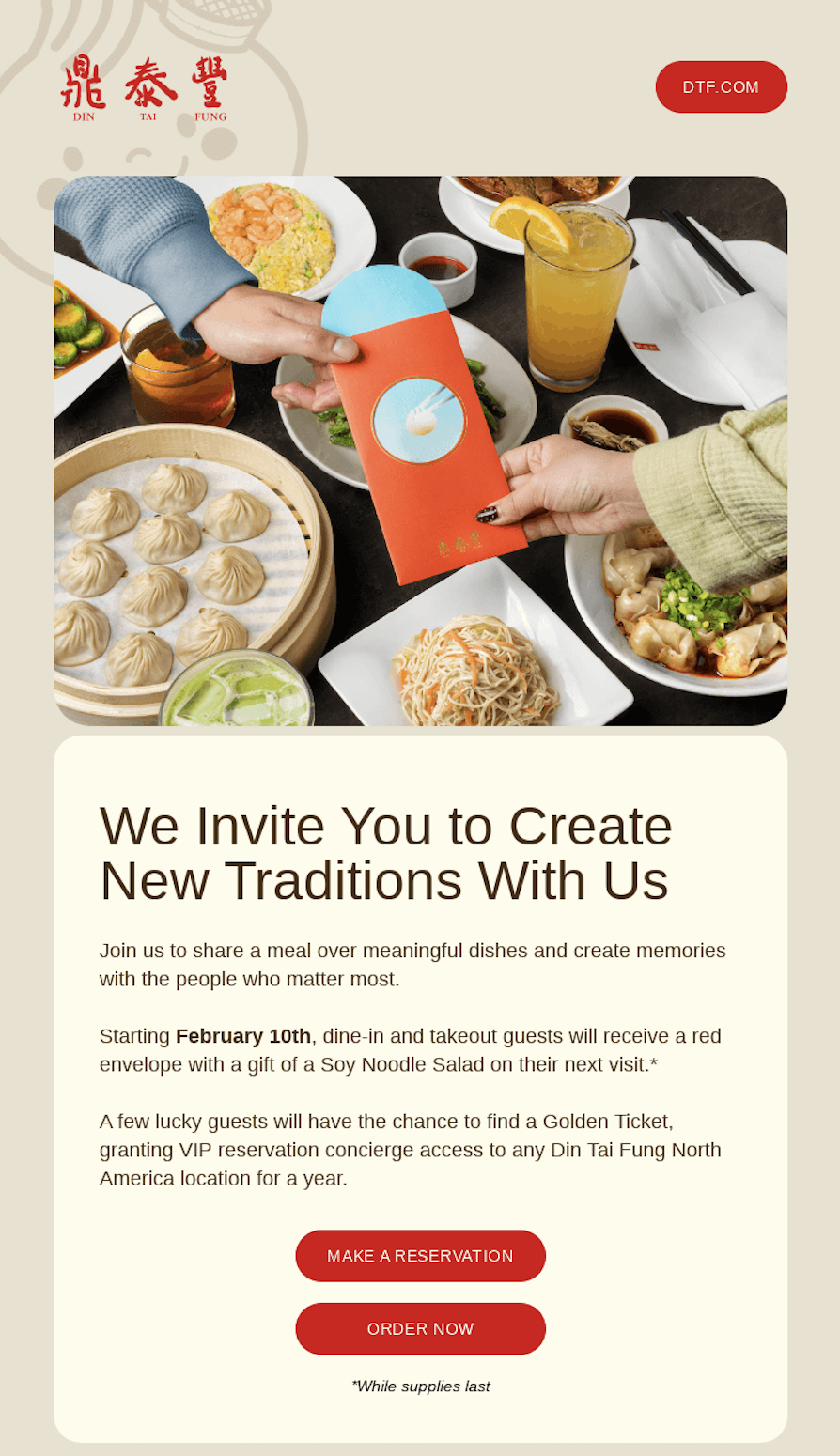
January subscribers fall into two camps: people who ignored every email you sent in December because their inbox was on fire, and people in active goal-setting mode looking for tools, products, or services to back up their resolutions. Both camps want something different from your usual sends.
The first two weeks of January belong to fresh-start messaging. Resolutions, new habits, planning for the year ahead, “things to try in 2026” angles. This is where you lead with aspirational content. Tools that help readers stick to a goal, products tied to self-improvement, content that frames the year as a clean slate.
For specific campaign ideas, get inspiration from these new year newsletter examples that work for the first two weeks of January.
After mid-January, the resolution energy fades fast and you’re back to regular programming. Plan newsletters that lean into planning content, year-ahead guides, and product education.
Explore more January newsletter ideas to fill the rest of the month around your New Year campaigns.
January is also the right time to clean your list. After the BFCM and December send volume, you’ve likely added thousands of new subscribers and burned through some older ones.
Run a re-engagement campaign at any subscribers who didn’t open anything across Q4, give them two or three chances to come back, and then sunset the rest. Your sender reputation will thank you in February when you’re trying to land in inboxes for Valentine’s Day.
February: Love, Loyalty, and Late-Winter Pushes

Valentine’s Day is the commercial center of February, and the spend is bigger than most brands plan around. Before you build your campaign, the numbers behind the spend are worth knowing. See these Valentine’s Day marketing statistics before planning your campaign so you’re sizing the opportunity correctly rather than guessing.
Most brands wait too long to send. The first Valentine’s email should land in inboxes by January 28 or 29, giving subscribers a full two weeks to browse, decide, and order with shipping buffer.
From there, plan three to five sends across the run-up: an early gift guide, a mid-cycle reminder with social proof or bestsellers, a shipping cutoff alert around February 10 or 11, then a last-minute digital or in-store push on February 13 and 14 for the procrastinators. Each send should feel different. Same offer in five emails kills engagement faster than too few sends ever will.
For angles that fit your category, draw from these Valentine’s Day marketing ideas to find one that actually fits your brand. A skincare company sells self-love bundles. A B2B SaaS tool runs a partnership or referral angle. A pet brand leans into pets as the loved ones. The category fit matters more than the holiday itself.
Subject lines do most of the work here because every other brand is also sending. Pair your campaign with proven Valentine’s Day subject lines to lift open rates against a crowded inbox.
Not every brand fits the romance angle, and forcing it shows. If Valentine’s isn’t your fit, these February newsletter ideas cover the rest of the month with content angles around late winter, Black History Month, Super Bowl tie-ins, and the quiet stretch before March.
March: Spring Awakening and Women’s Month

March is a softer commercial month. There’s no Valentine’s-scale spending event and Easter usually pushes into April, which makes March the right time to focus on brand-building content and one major calendar moment: International Women’s Day on March 8.
Women’s Day campaigns require more care than most holidays. The line between celebration and tokenism is thin, and subscribers can spot a brand that’s showing up only because the date is on a marketing calendar.
The brands that get it right tend to spotlight women in their own community, founders they work with, customers, team members, or run a campaign tied to a concrete action like donating proceeds or amplifying women-led businesses. A discount code with “Happy Women’s Day” slapped on top tends to land badly.
Take cues from these International Women’s Day email examples to strike the right tone for March 8.
Outside of Women’s Day, March is your spring runway. Lighter color palettes, fresher photography, content angles around renewal, decluttering, getting outside, planning for warmer months ahead. Subscribers are mentally checking out of winter even when the weather hasn’t caught up.
Use the back half of March to set up April. Tease your Easter campaign, start a spring product drop, or run a “what’s coming” newsletter that gives subscribers a reason to stay engaged. April moves fast once it starts, and the brands that plan for it in March send better campaigns when the holiday actually hits.
April: Easter, Renewal, and Spring Sales
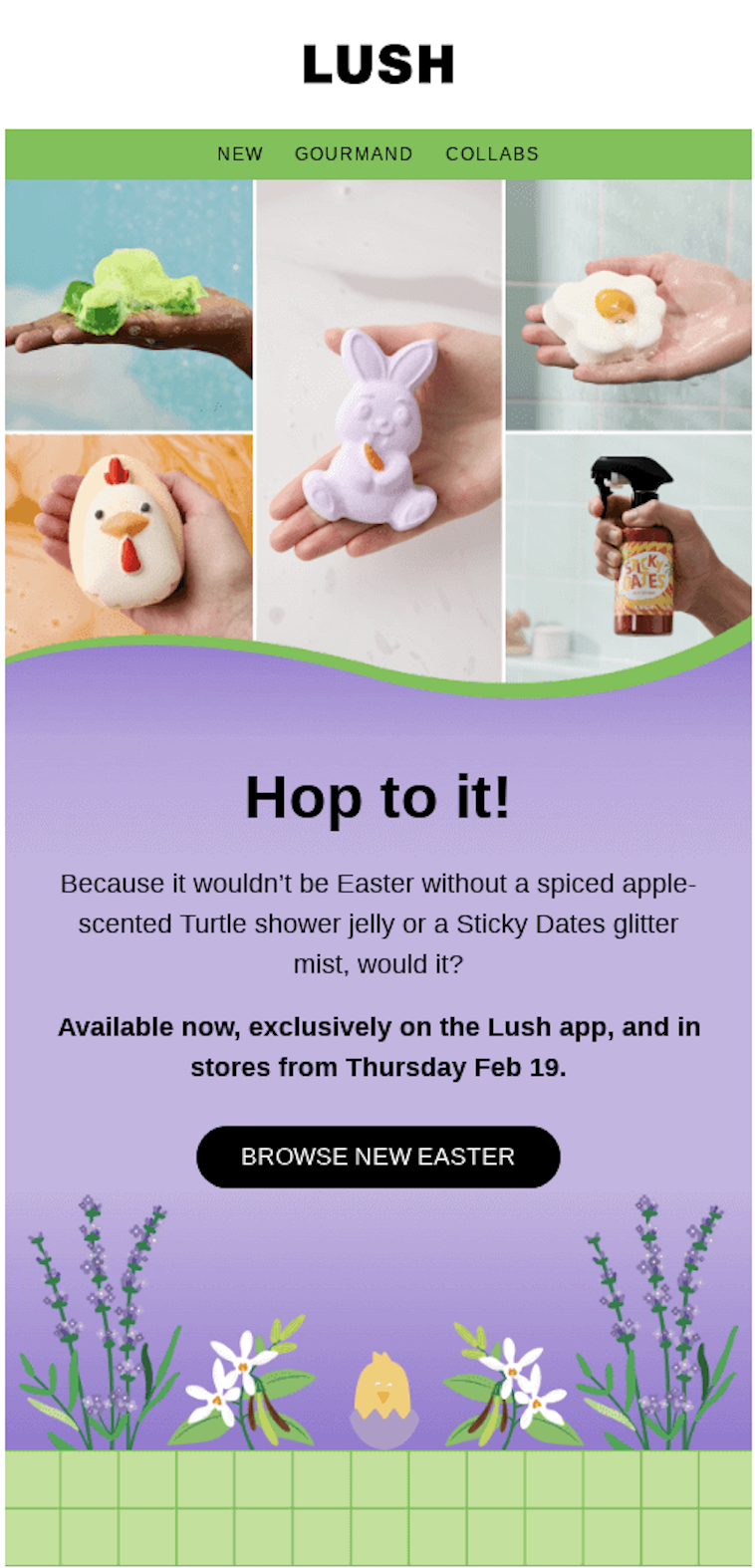
April runs on Easter. The complication is that Easter moves around the calendar each year, landing anywhere from late March to late April, so the campaign window shifts with it. In 2027, Easter Sunday falls on March 28. Plan from this section regardless of when it lands, since the timing logic stays the same: start your campaign one to two weeks out and build the rest of the month around it.
Easter Campaigns
Easter splits cleanly into two audience modes: gift shoppers looking for baskets, chocolates, and family-table products, and everyone else who’s just in a longer-weekend, family-time headspace. Your campaign mix should reflect that. A promotional sale email and a softer, lifestyle-focused send can run in the same week to different segments without stepping on each other.
Start sending one to two weeks before Easter Sunday, with a final push 48 hours out for last-minute shoppers. For broad campaign strategy, see these Easter marketing ideas for angles that fit retail and non-retail brands alike.
For format inspiration, these Easter email examples show the formats working in inboxes today. Or build a softer touch with these Easter newsletter ideas when a hard sell doesn’t fit your brand.
Not every brand should run a sale on Easter, and forcing one feels off in B2B and service categories. If a sale doesn’t fit, these Easter messages for business work as a relationship send that acknowledges the holiday without pushing product.
General April Content
Outside of Easter, April gives you April Fool’s Day (April 1), Earth Day (April 22), and tax season for finance, accounting, and small-business brands. April Fool’s works for brands with a personality already established. Earth Day works for brands with a real sustainability story, not a one-day greenwash. Round out the calendar with these April newsletter ideas for non-Easter content.
May: Mother’s Day and Memorial Day
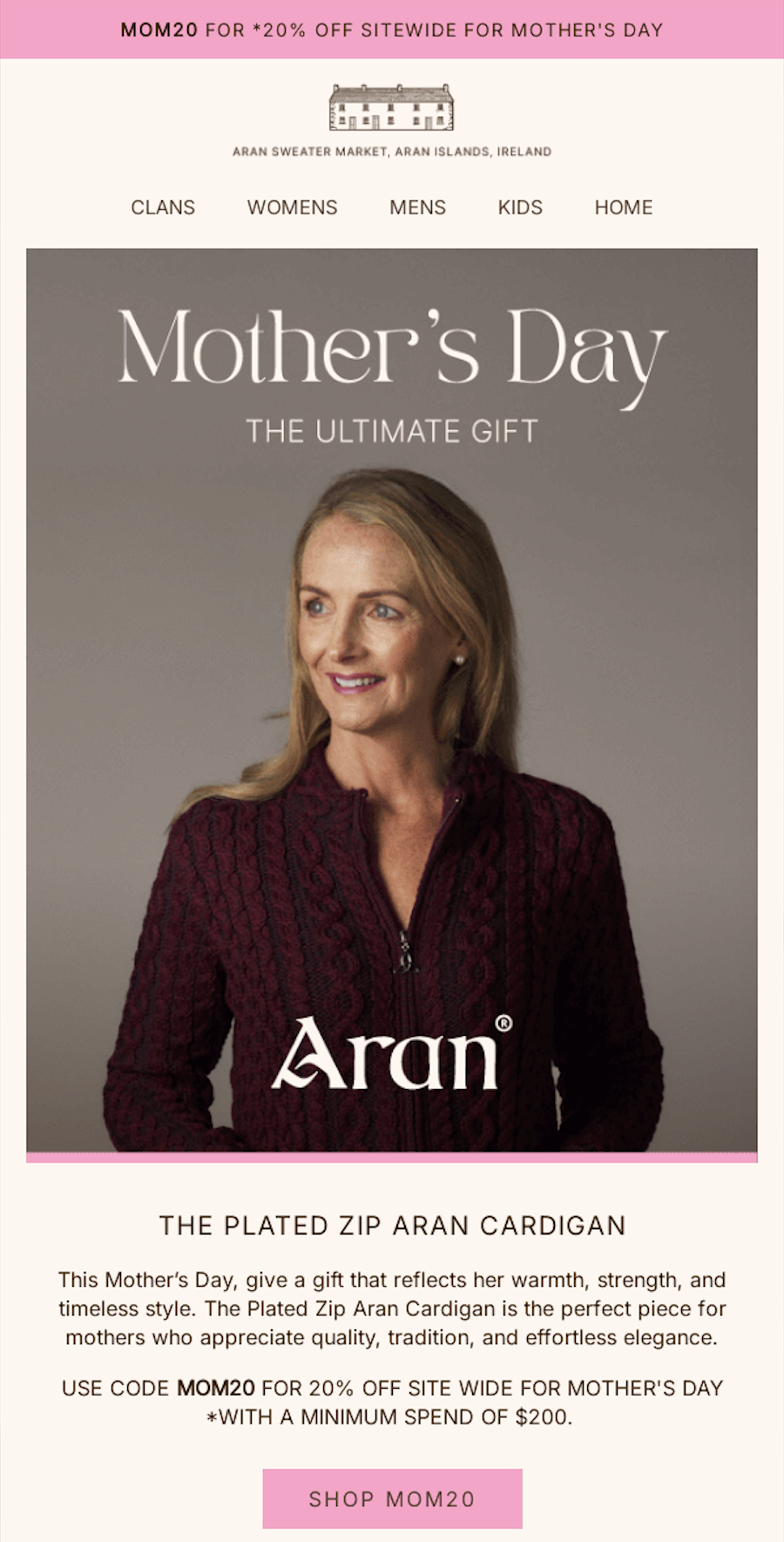
May is the heaviest commercial month of spring, anchored by two US events with completely different tones. Mother’s Day on the second Sunday (May 10 in 2026) is celebratory and gift-driven. Memorial Day on the last Monday (May 25 in 2026) is a remembrance holiday that doubles as the unofficial start of summer. Treat them as the same kind of campaign and you’ll get one of them wrong.
For general month context, see these May newsletter ideas to fill the weeks between the two events.
Mother’s Day
Mother’s Day campaigns should start two to three weeks out, with shipping cutoff reminders building urgency in the final week. Build a sensitive-content opt-out into your sends. Subscribers who’ve lost a mother or have complicated family situations appreciate the option to skip Mother’s Day emails without unsubscribing entirely, and most ESPs make this a five-minute setup.
For full-funnel promotion, these Mother’s Day advertising ideas cover paid and organic angles together. For offer structure, pull from these Mother’s Day promotion ideas to shape the discount or bundle. For format inspiration, see Mother’s Day email examples for layout and copy that converts.
If you’re in B2B, professional services, or any category where mom-focused gifting feels forced, skip the sale. A business message for Mother’s Day keeps you in the conversation without forcing a sale that won’t land.
Memorial Day
Memorial Day is the trickier of the two. The day itself is for remembrance, but the long weekend functions as summer’s commercial kickoff and most retail brands run sales around it. The fix is timing. Send promotional emails on the Friday before, frame them as long-weekend or summer-prep sales rather than “Memorial Day deals,” and reserve the day itself for quieter, respectful content if you send anything at all.
For email execution, see Memorial Day email examples for tone-appropriate layouts. A Memorial Day message for business works when a sale would feel off-brand for your category.
June: Father’s Day and Summer Kickoff

Father’s Day on the third Sunday (June 21 in 2026) is June’s commercial anchor, but it’s worth setting expectations upfront: spend is meaningfully lower than Mother’s Day across most categories. Plan a campaign, but don’t build the month around it the way you would for May. Two to three sends in the lead-up is plenty for most brands, with a final push 48 hours out for last-minute shoppers.
The angle matters more than the volume. Tools, grooming, tech, grilling, outdoor gear, whiskey, hobby-adjacent products all fit naturally. Categories that don’t have an obvious dad-gift fit can either skip the holiday entirely or run a soft acknowledgment send without a hard offer attached. Forced fits read as forced.
For campaign ideas, draw from these Father’s Day marketing ideas to find an angle that fits your audience. For email execution, pair with Father’s Day email examples to ground the design and copy. For B2B and service brands, a Father’s Day message for business works without leaning into a sale.
The rest of June is your summer launchpad. Vacation guides, outdoor activity content, summer product drops, travel essentials, hot-weather skincare, anything that taps into the seasonal mindset shift now that school’s wrapping up and weekends are getting longer. This is also a good window to start teasing summer sales without committing to dates yet.
To round out the calendar, these June newsletter ideas cover content angles for the weeks Father’s Day doesn’t touch.
July: Independence Day and Mid-Summer Sales
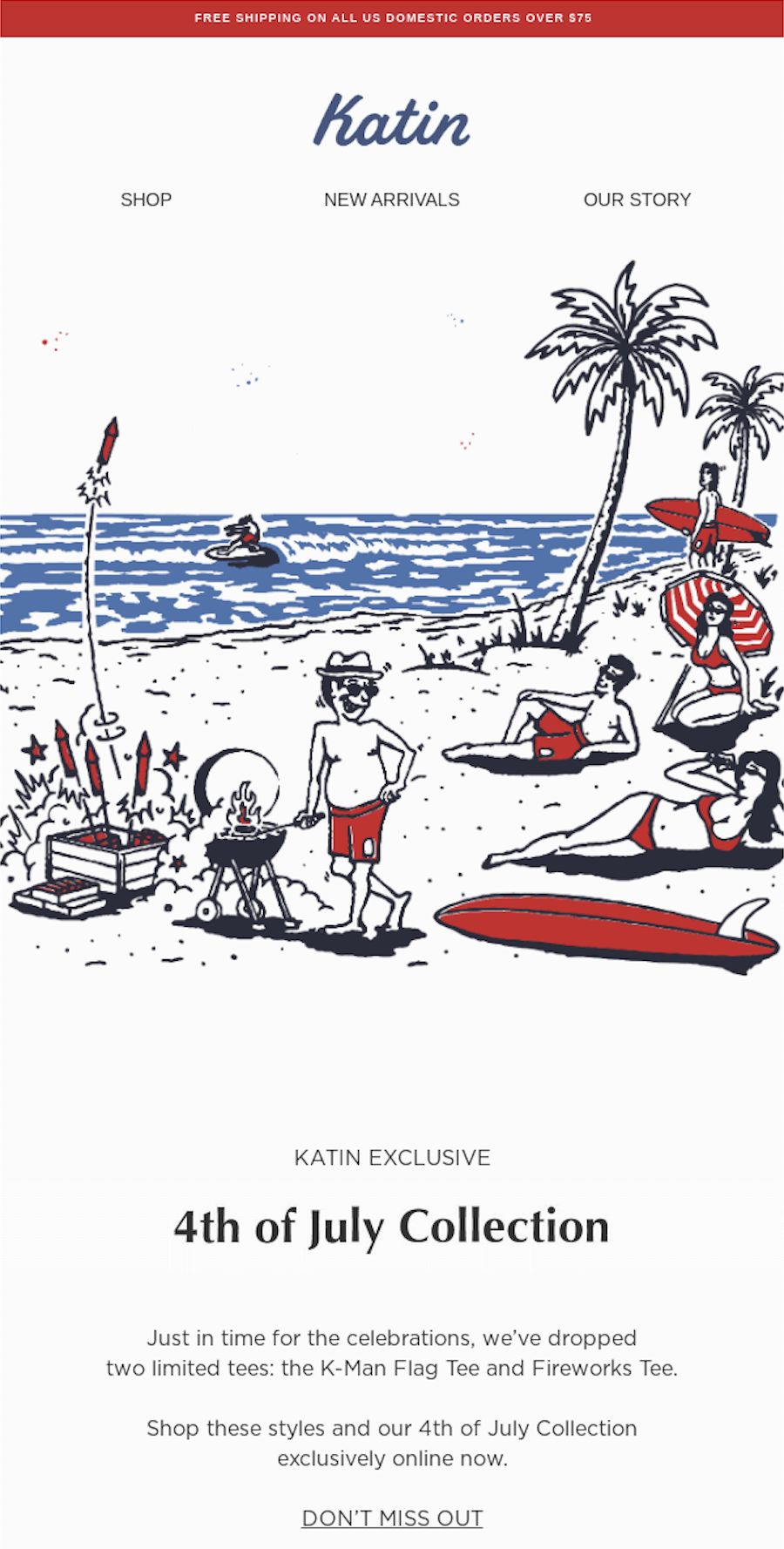
Independence Day on July 4 is the commercial anchor for US audiences, with the holiday week functioning as one of summer’s biggest sales windows. The prep window matters: promotional sends should land before the 4th itself, while emotional or patriotic content can run day-of without feeling sales-y.
Non-US brands can lean into mid-summer content for the same week and skip the patriotic angle entirely.
4th of July Campaigns
The 4th of July inbox is loud. Most retail brands are running a sale, most subject lines look the same (red, white, blue, “freedom,” “stars and stripes”), and most subscribers tune out by July 2. The brands that win the week either send earlier than everyone else or pick a sharper angle than “Independence Day Sale 25% Off.”
Start your campaign by June 28 or 29. Run two to three sends across the lead-up, with the strongest offer landing on July 1 or 2 before inbox saturation peaks. July 3 and 4 work for last-call urgency, but expect engagement to drop on the day itself when subscribers are at barbecues and pools rather than checking email.
For campaign concepts, these 4th of July marketing campaigns cover both retail and service-brand angles. For format inspiration, see 4th of July email examples for layouts that land in a crowded inbox. Pair your sends with proven 4th of July subject lines to lift opens during a high-volume week.
For B2B and service brands where a sale doesn’t fit, a 4th of July business message works as a low-key acknowledgment of the holiday.
General July Content
The back half of July gets quieter, which is actually an advantage. Inbox competition drops, opens tick up, and it’s a good window for product launches, mid-summer sales, vacation content, and longer newsletter sends that wouldn’t survive in November.
Fill the calendar around your 4th of July push with these July newsletter ideas.
August: Back-to-School Prep

Back-to-school is August’s commercial center, and the sale window runs longer than most other holidays. Plan for a four to six week campaign starting in early August and stretching through Labor Day weekend. That’s a long runway, which means rotating angles and audience segments matters more than running the same offer on repeat.
The audience splits four ways, and your campaigns should reflect at least two of them. Parents shopping for K-12 kids care about supplies, clothing, lunch gear, and dorm-adjacent items for older kids. College students shop later (mid-to-late August) and care about tech, dorm setup, and budget-friendly basics. Teachers buy classroom supplies, often out of pocket, and respond well to teacher-specific discounts.
And there’s a fourth segment most brands miss: lifelong learners who treat fall as a personal reset and buy planners, books, courses, productivity tools, anything that frames the season as “back to focus” without involving a child.
If you don’t sell to families, the lifelong-learner angle is the one to lean on. It opens back-to-school messaging up to brands in productivity, wellness, professional development, and creative tools that would otherwise sit out the month.
For full campaign coverage, these back-to-school marketing ideas cover the major audience segments and offer types. To layer in non-back-to-school content, August newsletter ideas handle the rest of the month around your main push.
September: Fall Begins, BFCM Planning Starts
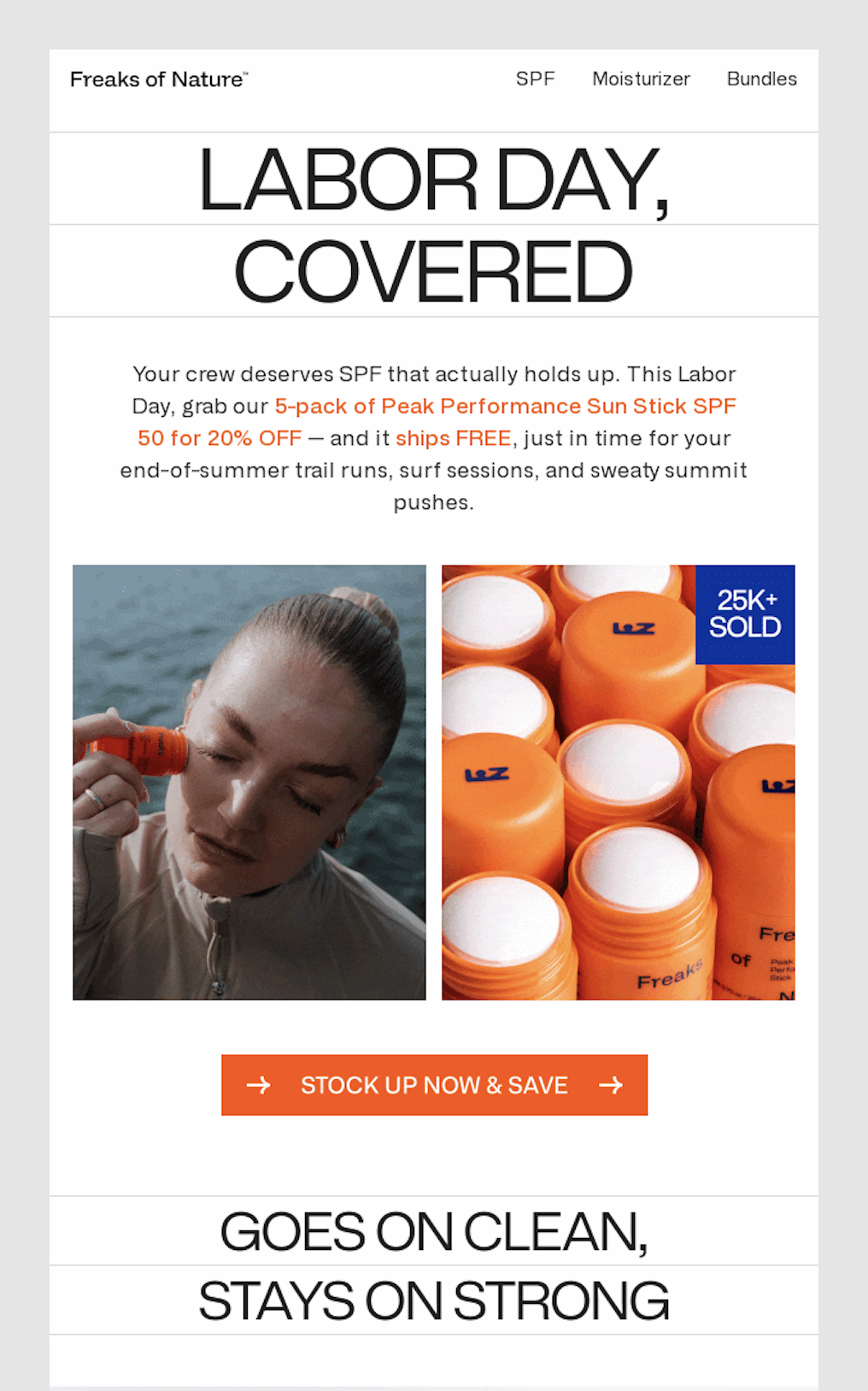
September splits in two. Labor Day on the first Monday (September 7 in 2026) is the visible commercial moment, but the more important shift is invisible to subscribers: this is when your BFCM planning starts. Not November. If you’re booking creative, locking offers, briefing copy, and warming up your list in November, you’re already behind.
September is also when fall onset reshapes content tone, with audiences moving from summer mode into routine mode. This is the month your Q4 email marketing strategy should be locked, not drafted.
Labor Day Campaigns
Labor Day functions as summer’s last major sale weekend, and most retail brands run promotions from the Friday before through Monday itself. The window is short, so the campaign needs to move quickly: a teaser send on Wednesday or Thursday, the main offer landing Friday morning, a mid-weekend reminder, and a final-hours push Monday afternoon.
Tone calibration matters. Labor Day honors workers, which means the holiday-meaning angle exists if your brand fits, but most subscribers experience it as a long weekend rather than a reflective day. “End of summer” framing tends to outperform “thank you to workers” framing for retail, while service and B2B brands can use the worker-acknowledgment angle more comfortably.
For campaign strategy, draw from these Labor Day marketing ideas for retail and service-brand angles. For email execution, see Labor Day email examples for layouts that fit the holiday weekend. Pair with Labor Day subject lines to land in a quieter inbox before BFCM volume kicks in.
For non-retail brands, a Labor Day message or wish works as a relationship send without a sale attached.
General September Content
After Labor Day, September pivots fast into fall content and BFCM prep. Run a re-engagement campaign now, clean your list, and start teasing November to your most engaged subscribers.
To round out the calendar with non-Labor Day content, these September newsletter ideas cover the rest of the month.
October: Halloween and Pre-Holiday Warm-Up

October runs on two tracks. Halloween on October 31 is the visible commercial anchor, with retail and lifestyle brands building campaigns around it for most of the month. The strategic priority running underneath is BFCM warm-up: re-engaging dormant subscribers, cleaning your list, and getting deliverability tight before November’s send volume hits.
Halloween Campaigns
Halloween is bigger than most brands plan around. The Halloween spending statistics are worth checking before sizing the campaign, since costume, candy, decor, and party spend together push it into top-five-holiday territory for many retail categories.
The campaign window is roughly three weeks, with peak engagement landing in the final ten days. A typical structure: a teaser or theme-launch send around October 10, two to three mid-month sends with offers or themed content, then a final push October 28 through 31 for last-minute shoppers and same-day decisions. Subject line restraint pays off here. Inboxes fill with pumpkin emojis and “spooky savings” by mid-month, so anything sharper than the average lifts opens.
Non-retail brands can play the theme too, with design treatments, themed copy, or a “scary truths about [your category]” newsletter angle that doesn’t require a sale.
For campaign concepts, pull angles from these Halloween marketing ideas that fit retail and non-retail brands. For format inspiration, see Halloween email examples for design and copy patterns that work the theme without going over the top.
General October and BFCM Warm-Up
The other half of October is prep work. Run a re-engagement campaign at subscribers who’ve been quiet for 60+ days, send a “mark your calendar” teaser to your most engaged segment so they’re watching for November, and clean your list now rather than during BFCM.
To fill the calendar around Halloween, these October newsletter ideas cover the rest of the month.
November: Black Friday, Cyber Monday, Thanksgiving
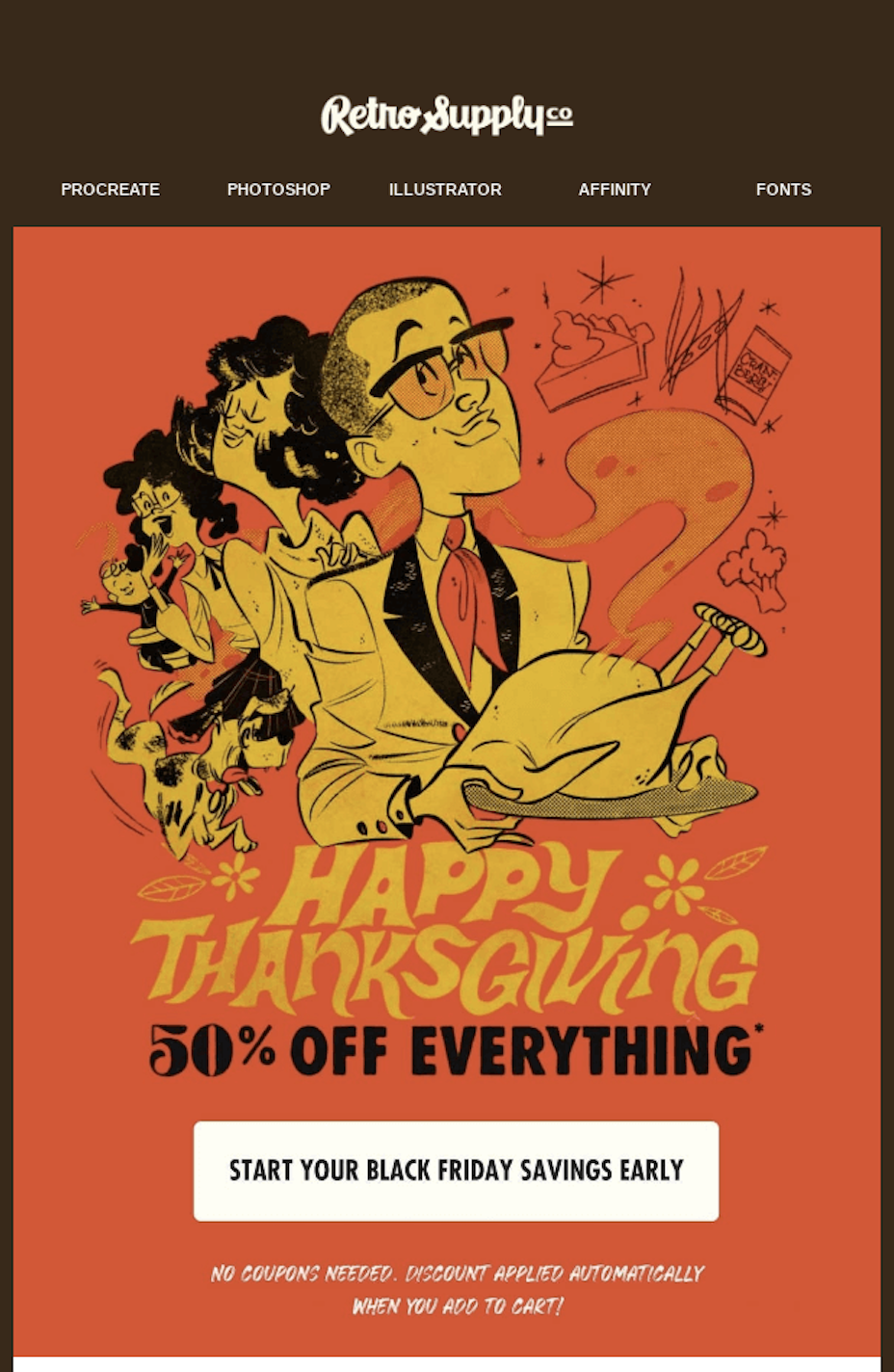
November is the commercial peak of the year for most consumer brands, and the calendar gets crowded fast. BFCM weekend (Black Friday on November 27, Small Business Saturday on November 28, Cyber Monday on November 30 in 2026) drives the bulk of revenue, while Thanksgiving on November 26 sits in the middle of the same window with a completely different tone. By early November, your planning should be locked. Execution is the only job left, and your holiday email marketing should already be in production rather than concepting.
Black Friday and Cyber Monday
BFCM is one campaign window, not three separate sends. Plan it that way. The Black Friday spending statistics set realistic benchmarks before planning sends, since spend levels, open rates, and inbox saturation all shift dramatically across the weekend.
Most strong programs run a tiered drop: early access for VIP segments around November 23 or 24, the main Black Friday send on November 27, a Small Business Saturday angle for brands that fit, then Cyber Monday extension on November 30 with a final-hours push that evening. Cart abandonment flows should be tightened in October and left alone during the weekend itself. This is not the moment to test new logic.
For campaign structure, draw from these Black Friday marketing ideas to shape the offer structure and timing. A high-noise inbox needs sharp Black Friday subject lines to earn the open. Pair with these Black Friday email templates to ground the design, since starting from a proven email marketing template saves hours during the busiest send week of the year.
SaaS and B2B play differently. Discounts on annual plans, extended trials, and credit grants tend to outperform percentage-off framing.
See these Black Friday SaaS deals for offer types that fit subscription pricing.
Thanksgiving
Thanksgiving sits inside BFCM weekend but earns its own send. The angle is gratitude, not commerce: a founder thank-you note, a customer spotlight, a recap of what the brand achieved this year with the community, or a donation tied to the holiday. Skip the discount entirely on Thursday itself.
A thank-you send needs a different tone. These Thanksgiving subject lines get the calibration right.
General November Content
The first three weeks of November aren’t BFCM yet, even if it feels that way. Run normal newsletter content, mark Veterans Day on November 11 if it fits your brand, and use early-month sends to bridge from October’s warm-up into the main event.
To fill the early-month calendar, these November newsletter ideas cover the non-BFCM weeks.
December: Christmas, Year-End, and New Year Prep
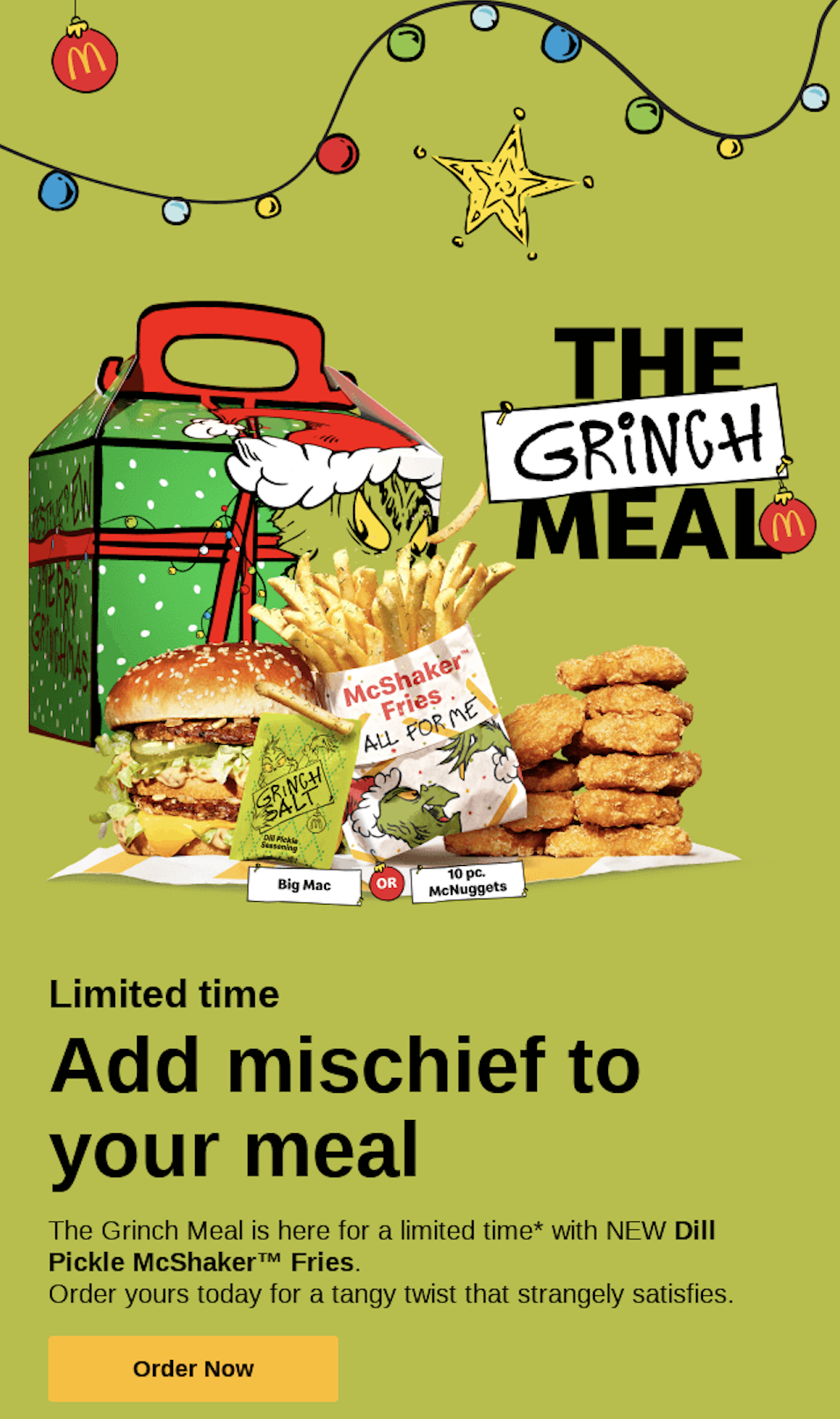
December breaks into three distinct phases. December 1 through 25 is the Christmas commercial window, with gift-shopping urgency building toward shipping cutoffs. December 26 through 31 shifts into year-end sales, reflection content, and pre-Jan-1 New Year wishes. By mid-December, inbox fatigue is at its peak after BFCM and the first wave of Christmas sends, so quality beats volume in the back half of the month. Cutting a planned send is often the better call than forcing it through.
Christmas Campaigns
The Christmas spending statistics help size the campaign realistically, since spend patterns shift meaningfully year over year and shape how aggressive your offer structure should be.
Christmas campaigns run roughly four weeks, with three clear phases. Early December (Dec 1 to 10) is gift-guide territory: curated product roundups, gift-by-recipient framing, and educational content that helps shoppers decide. Mid-December (Dec 11 to 20) shifts to urgency: shipping cutoff reminders, last-call promotions, and segment-specific pushes for shoppers who haven’t purchased yet.
The final stretch (Dec 21 to 24) belongs to digital products, gift cards, and emotional sends. December 24 in particular is one of the highest-engagement send days of the year for brands that lean into a quieter, more sentimental tone instead of one last sales blast.
For newsletter format, these Christmas newsletter examples show the formats earning attention. Pair with proven Christmas subject lines to earn the open in a saturated inbox. For B2B and service brands, a Christmas message for clients works without leaning into a sale.
Year-End and New Year Prep
The week between Christmas and New Year’s is its own window. Year-in-review content, gratitude sends, and pre-Jan-1 New Year wishes close the year warmly and set up January’s reactivation work. Send a business New Year wish to customers before Jan 1 to end the year on a relationship note rather than a transactional one.
General December Content
For non-Christmas December moments, plan around Hanukkah (December 4 to 12 in 2026), the winter solstice on December 21, and brand-specific December angles like year-end gift-with-purchase or members-only drops. Fill the calendar with these December newsletter ideas.
Seasonal Themes That Span Multiple Months
Some content doesn’t belong to one holiday or one month. Season-wide mood and cross-cutting holiday strategy run across multiple months at once, and they’re worth treating as their own layer of your calendar, sitting on top of the date-specific campaigns the months above already cover. Seasonal email campaigns work best when the mood arc is planned alongside the holiday calendar, not bolted on after.
Seasonal Newsletter Angles
Seasonal mood is the connective tissue between holidays. A summer newsletter doesn’t need to mention Independence Day to feel like summer, and a fall send doesn’t need Halloween to feel like fall. The tone, photography, color palette, and content angles shift with the season, and that shift gives you content for the in-between weeks where no major holiday is doing the work for you.
Use seasonal angles two ways. First, as filler content for quiet weeks: a March newsletter about spring decluttering, a July piece about road trip essentials, a late-October send about fall comfort food. Second, as a tone layer over holiday campaigns: a Mother’s Day email feels different in May than a Father’s Day email in June, even with similar offer structures, because the seasonal mood underneath them shifts.
For winter mood, pull from these winter newsletter ideas to shape January through February sends with a coziness angle. These spring newsletter ideas work across March through May for renewal and refresh themes.
Shape June through August around these summer newsletter ideas, and pair with summer subject lines for tone that fits the season.
Fall-themed sends across September through November draw from these fall newsletter ideas for tone and these fall marketing ideas for campaign angles that fit the season-long arc.
Holiday and Ecommerce Planning
Some planning doesn’t fit a single month either. Bundling strategies, gifting angles, and category-specific holiday moves cross the whole Q4 stretch. For general holiday strategy, see these holiday marketing ideas for angles that work across the calendar. An ecommerce holiday calendar adds the retail-specific moves worth planning around.
Conclusion
The framework is straightforward: anchor your calendar with fixed dates, fill the gaps with seasonal and brand content, and assign owners and deadlines to every send. The discipline is in keeping the system updated when your week gets messy, not in making the system itself complicated.
The months above give you a full year of execution-ready content to plug in. Bookmark the sections you need most, since most teams reference January in early December and forget about August until late July, and that’s fine. The calendar’s job is to be there when you need it, not to be reread cover-to-cover.
The hard part isn’t planning. It’s writing the email by Tuesday when you said you would. A solid calendar takes the planning question off the table so the only thing left is execution, which is the part you’re better at anyway.Ready to build yours? Sender gives you a free email marketing platform with templates, segmentation, and marketing calendar built in, so the calendar you’ve planned ships actually. Start free with Sender and turn the plan into sends.